
 English
 Español
 Deutsch
 日本語
 Italiano
 Português
 Русский
 简体中文
 한국어
 Polski
 ภาษาไทย
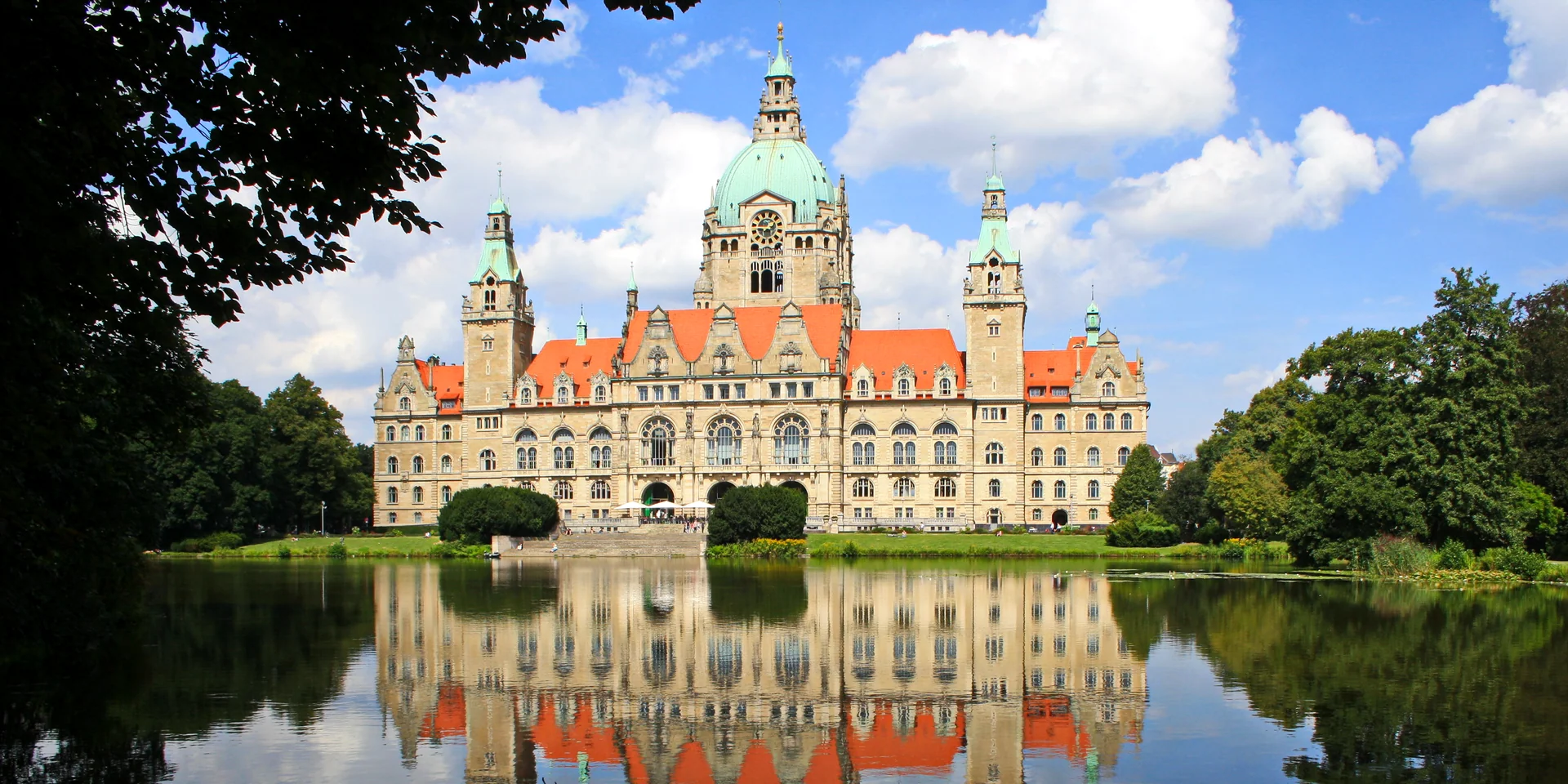
Hannover, on the river Leine in northern Germany, is the capital of Lower Saxony and has about 560,000 inhabitants (city figures for the end of 2025). It is first recorded around 1150 as "Hanovere" and received its town charter in 1241. From 1714 to 1837 the rulers of Hanover were also kings of Great Britain. Most visitors know the city for its trade fairs, but it also has one of the finest baroque gardens in Europe, a lake in the middle of town and a large city forest.
Much of the centre is a post-war creation. Allied air raids, 88 of them from 1940 onwards, destroyed more than 90 per cent of the city centre and killed more than 6,000 people. Many buildings in this guide were rebuilt after 1945, and some half-timbered houses were moved into the Old Town from other streets.
Below are 20 things to do in Hannover: 18 places in the city, grouped by area so that you can walk or take a short tram ride between them, and 2 day trips by train, to Hildesheim and Celle. At the end you will find ideas for the evening and plans for one, two and three days. Hours and prices were checked against official websites on 25 November 2026. Many change with the seasons, so confirm them before you go.
Before you go: transport, tickets and seasons
From the airport.
S-Bahn line S5 runs from the station directly under Terminal C to the main station (Hauptbahnhof) in about 18 minutes. The airport is in fare zone B and the city in zone A, so you need a two-zone single ticket (€4.70).
By train.
Hannover is one of the main hubs of the German rail network: ICE trains take about an hour to Hamburg and about two hours to Berlin. The main station is on the edge of the Old Town.
Getting around.
Buses, the Stadtbahn (light rail, underground in the centre) and S-Bahn trains share one fare system. Zone A is the city, B the neighbouring towns and the airport, C the outer region. In 2026 a one-zone single ticket costs €3.70 and a one-zone day ticket €7.40. Tickets are sold in the ÜSTRA app and at machines.
HannoverCard.
The tourist card covers public transport in zones A, B and C, including the airport, and gives discounts of up to 50 per cent at museums, sights, tours and theatres. It costs €13 for one day, €20 for two and €26 for three; a group card for up to five people costs €22, €32 and €46.
Museums and money.
The big museums close on Mondays. On Fridays entry is free at the Sprengel Museum and the Museum August Kestner, and to the Landesmuseum collections from 2 pm. Cash is still widely used in Germany, so carry some euros for markets and kiosks.
When to go.
Average daily temperatures range from about 2 °C in January to about 18 °C in July. The main events in 2027 are the Hannover Messe trade fair (5–8 April, book hotels early), the Schützenfest marksmen's fair (2–11 July), the Kleines Fest in the Herrenhausen Gardens (8–25 July) and the Maschseefest (28 July to 15 August). The Christmas market around the Marktkirche runs until 22 December 2026, daily from 11 am to 9 pm.
The Old Town and the city centre
8 places
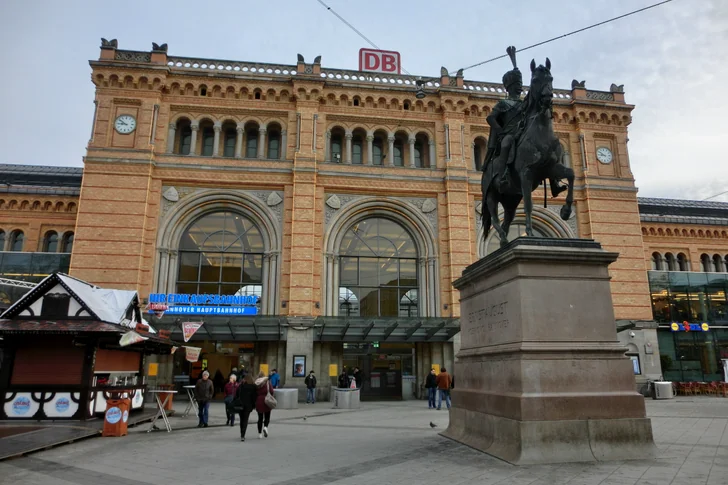
Ernst-August-Platz and the Red Thread
The square in front of the main station is where most visits begin. The equestrian statue of King Ernst August I was unveiled here in 1861, and locals arrange to meet "unterm Schwanz", under the horse's tail. The station building dates from 1879, and the Tourist Information office is on the square.
The Tourist Information is also the start of the Red Thread (Roter Faden), a red line painted on the pavement since 1970. It links 36 sights on a 4.2-kilometre circular walk, including the Opera House, the Aegidienkirche, the New Town Hall, the Nanas, the Leineschloss, the Marktkirche and the Markthalle, and ends back at the horse's tail. The walk is free, and a booklet describing the stops is available at the Tourist Information.
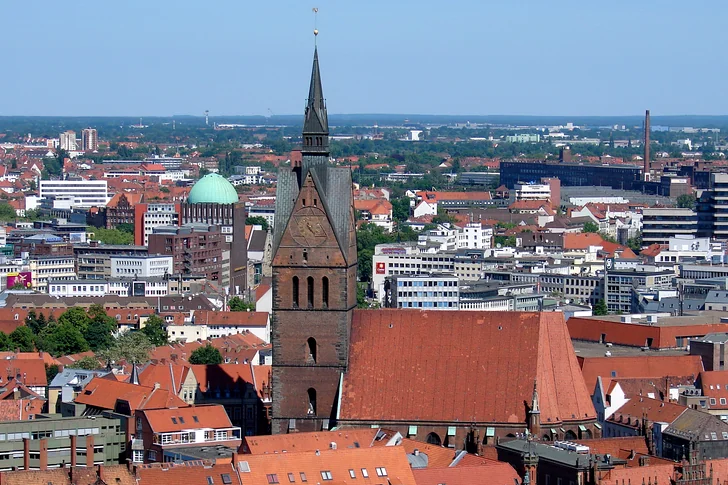
Marktkirche
The Gothic market church is the landmark of the Old Town. Its choir and nave were completed in 1388, and the parish describes it as the southernmost of the great brick Gothic churches of northern Germany. Bombs in 1943 destroyed the interior and the vaults, and rebuilding began in 1946. Its tower is the tallest structure in the city centre. It can only be climbed on a guided tour: about an hour and a half, more than 350 steps to a gallery at 75 metres, for ages 10 and up.
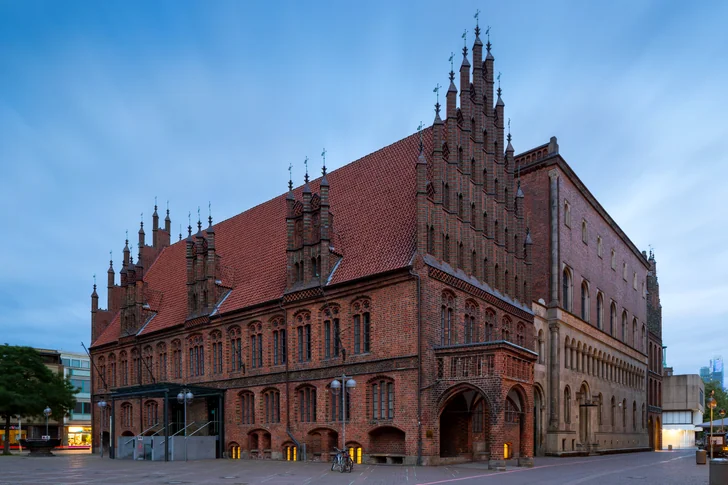
Old Town Hall (Altes Rathaus)
Next to the Marktkirche stands Hannover's oldest town hall, a brick Gothic building with stepped gables. The first parts were built in 1410, and the market wing in 1453–1455. The council moved out in 1863, and after the war the building was rebuilt in a simplified form. Today it houses restaurants and event rooms, and couples marry in its wedding room. Come for the facades and the courtyard.
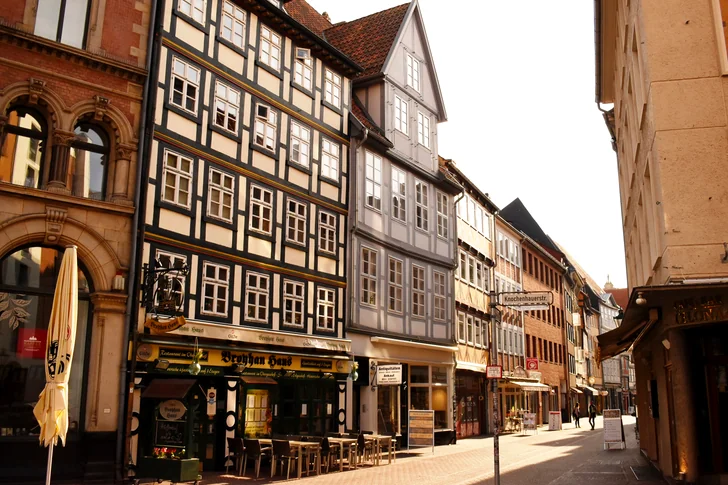
Half-timbered houses: Kramerstraße, Burgstraße and the Leibnizhaus
According to the city's tourist board, no more than 40 half-timbered houses in the historic centre survived the war, twelve of them around Kramerstraße, Knochenhauerstraße and Burgstraße. In the late 1950s the city moved surviving houses from other streets here, so today's Old Town mixes houses on their original sites with transplanted ones. On Burgstraße stands what the tourist board calls Hannover's oldest town house, built in 1566 with a carved Renaissance facade.
On the Holzmarkt square nearby is the Leibnizhaus, a reconstruction built in 1981–1983. The philosopher Gottfried Wilhelm Leibniz lived from 1698 until his death in 1716 in the original house on Schmiedestraße, destroyed in 1943. It is now a university guest house; the small Leibniz exhibition can be seen on request.
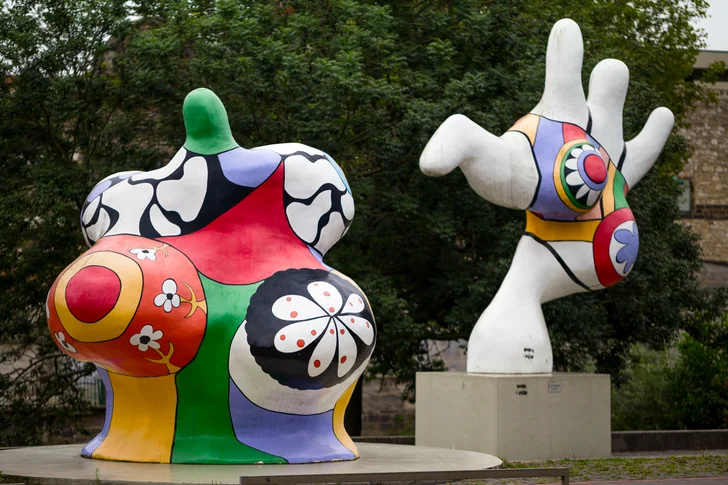
Hohes Ufer, the Nanas and the Leineschloss
The Hohes Ufer is the bank of the Leine on the western edge of the Old Town. The three brightly painted Nanas by Niki de Saint Phalle, named Sophie, Charlotte and Caroline, were installed on the Leibnizufer in January 1974. At first they caused an outcry, and a petition to remove them gathered almost 20,000 signatures. Today they are among the city's best-known sights. From March to October the Altstadtflohmarkt, which the city calls Germany's oldest flea market, is held here every Saturday from 10 am to 6 pm.
Nearby stands the Leineschloss, a former ducal residence and now the seat of the Lower Saxony parliament (Landtag). Georg Ludwig Friedrich Laves remodelled it between 1816 and 1844 and added its columned portico. It burned out on 26 July 1943 and reopened in 1962. On several open evenings a year, a free tour of the building starts at 6 pm at the portico, with no booking needed; dates are on the Landtag website. The Historical Museum next door is closed for renovation, with no reopening date announced.
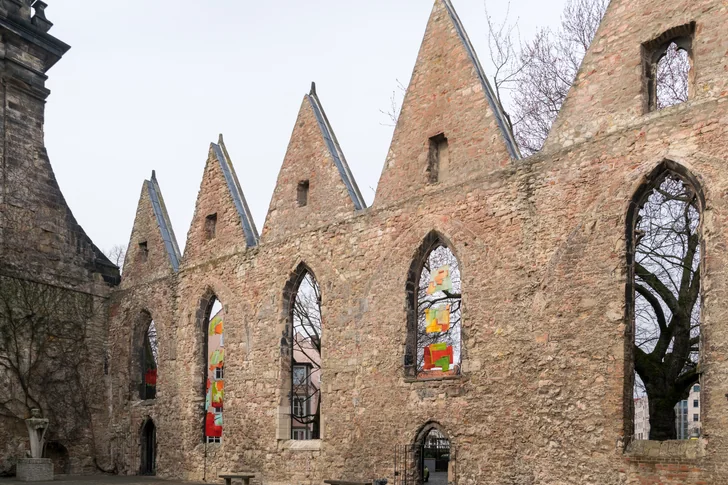
Aegidienkirche
The Church of St Giles was built in 1347. On the night of 8–9 October 1943 it burned down, and only the outer walls were left. Since the early 1950s the roofless ruin has been the city's memorial to the victims of war and violence. In 1985 Hannover's twin city of Hiroshima gave a peace bell that hangs in the tower; its identical twin hangs in Hiroshima, and every year on 6 August both are struck at the same time. The carillon plays four times a day, at 9:05, 12:05, 15:05 and 18:05.
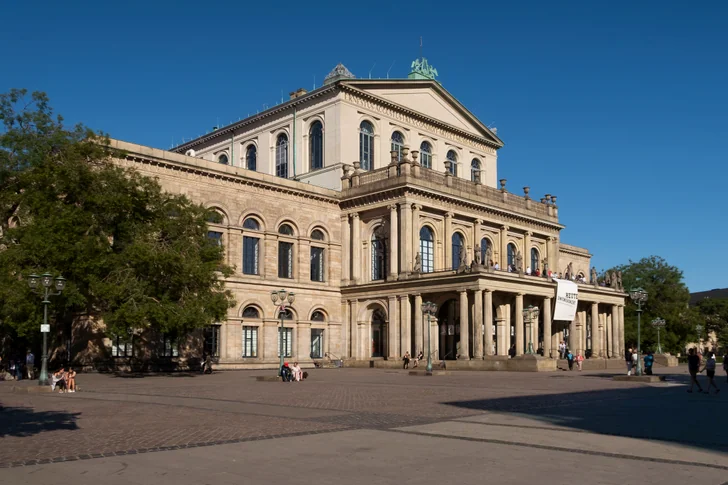
Hannover Opera House
The opera house was built in 1845–1852 as the royal court theatre to a design by Laves. It burned down in an air raid in 1943 and reopened in 1950 with its classical colonnade restored. Today it is the home of the Staatsoper Hannover. Public tours in German, about 90 minutes long, take place once or twice a month (€12 on 15 December 2026).
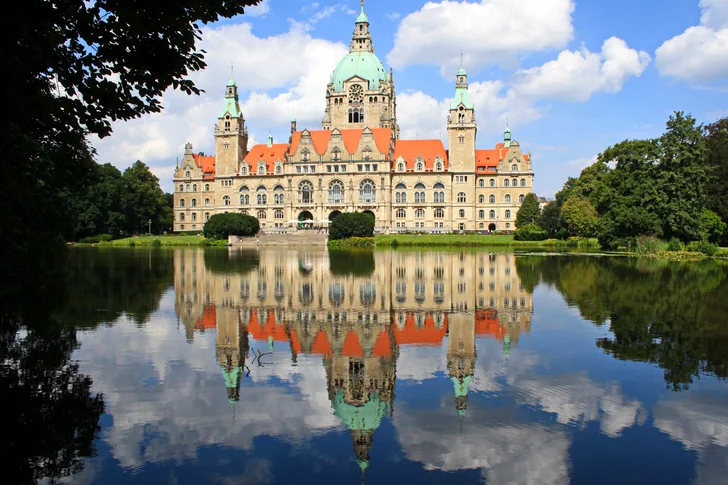
New Town Hall (Neues Rathaus)
The New Town Hall was opened on 20 June 1913 in the presence of Emperor Wilhelm II. Because the ground is marshy, it stands on 6,026 beech piles, and its tower reaches 97.73 metres. A lift that follows the curve of the dome, in service since 1913, tilts by 17 degrees during the one-minute ride up to a viewing platform at about 90 metres. In the entrance hall, four models show Hannover in 1689, 1939, 1945 and today; the 1945 model shows how much of the city was lost.
Museums and the Maschsee
4 places
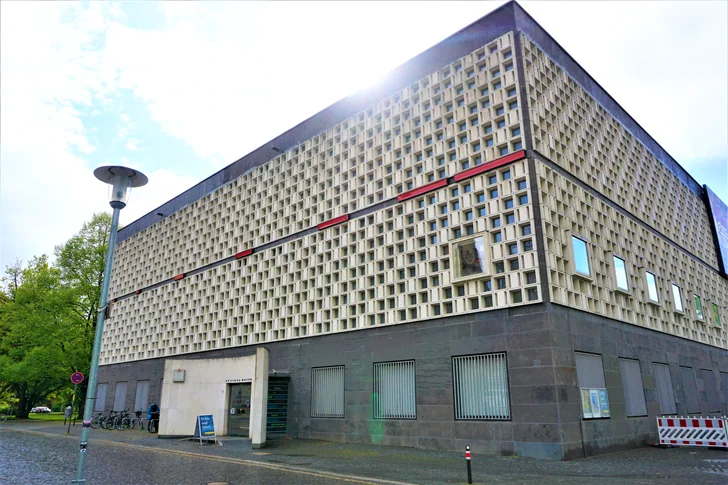
Museum August Kestner
The city's oldest municipal museum, next to the New Town Hall, opened in 1889. It is named after August Kestner (1777–1853), a Hanoverian envoy in Rome who collected Egyptian and Greco-Roman antiquities. Its four collections cover 6,000 years of applied art: Egyptian art, ancient cultures, applied art and design, and coins and medals. A listed glass-and-concrete facade from 1961 encloses what remains of the 1889 building.
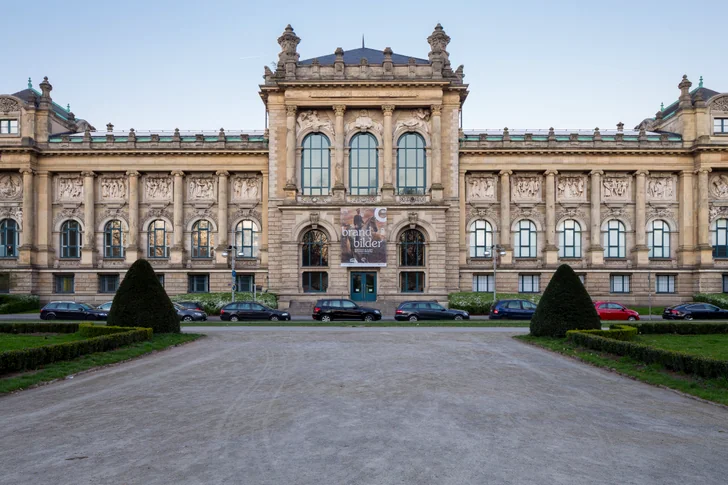
Landesmuseum Hannover
The state museum has stood on the Maschpark since 1902. It is divided into three "worlds": NaturWelten combines natural history with live animals, including aquariums with more than 200 aquatic species; MenschenWelten traces human history from its beginnings to non-European cultures; and the KunstWelten gallery shows European art from the Middle Ages to early modernism, from Cranach and Botticelli to Caspar David Friedrich, Monet and Paula Modersohn-Becker.
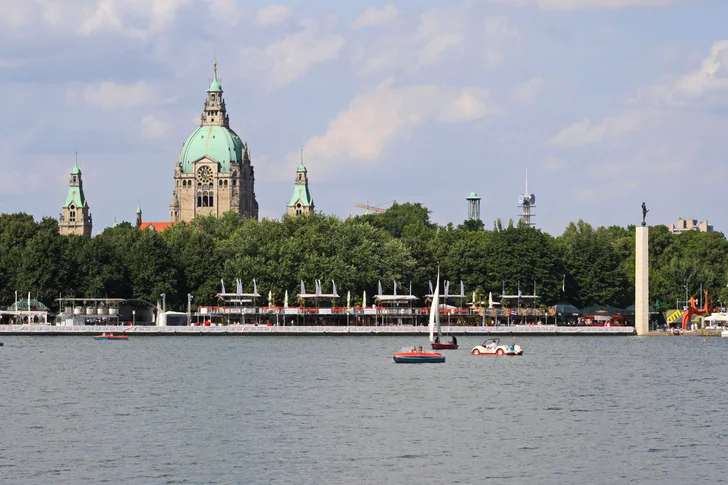
Maschsee
This artificial lake was dug in 1934–1936 as a Nazi-era job creation scheme and opened on 21 May 1936. It covers 78 hectares and is 2.4 kilometres long, and a path of about six kilometres, lit after dark, runs around it. In summer the lake fills with pedal boats and sailing boats. ÜSTRA's lake boats run from Good Friday to the end of October; in 2026 a 50-minute round trip cost €9, and transport tickets were not valid on board. In 2027 the Maschseefest, with food stalls and more than 200 performances along the shore, runs from 28 July to 15 August with free entry.
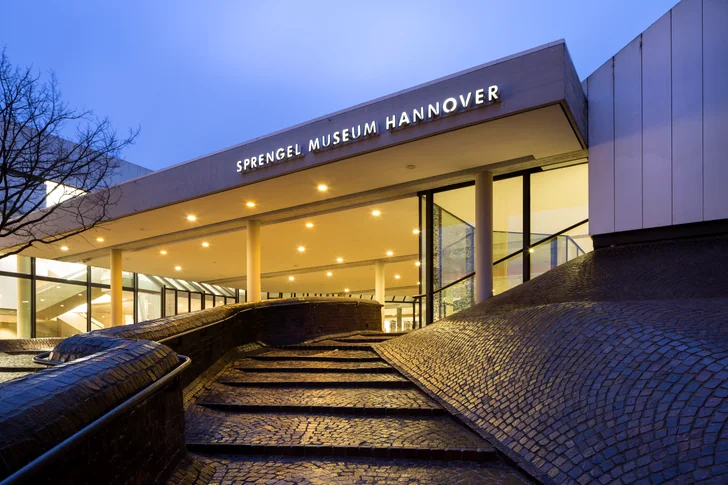
Sprengel Museum
On the northern shore of the Maschsee, the Sprengel Museum shows international art of the 20th and 21st centuries. Its core is the collection that the chocolate maker Bernhard Sprengel and his wife Margrit gave to the city in 1969; the museum opened in 1979 and gained an extension in 2015. It holds the world's largest collection of works by Kurt Schwitters, including a reconstruction of his Merzbau, and around 400 works donated by Niki de Saint Phalle, alongside Picasso, Léger, Kirchner, Macke and Marc.
Herrenhausen Gardens
3 places
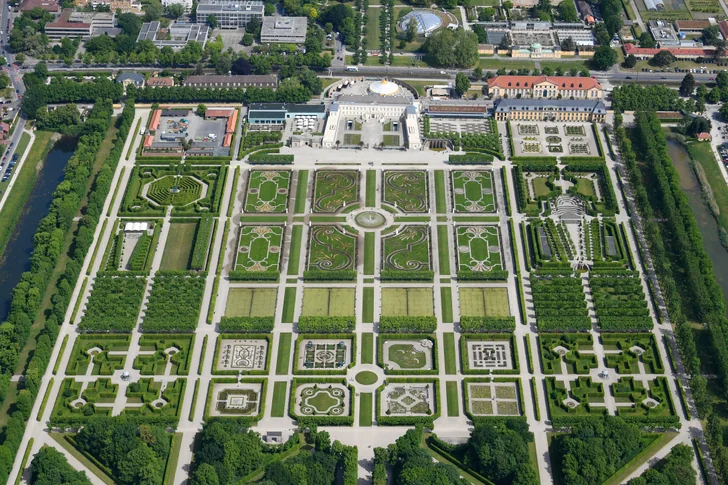
Great Garden (Großer Garten) and Herrenhausen Palace
The Great Garden, about 50 hectares, has survived almost unchanged as a baroque garden. It was shaped above all by Electress Sophie (1630–1714), who grew up in the Netherlands and followed Dutch models; she called the garden her life and died there in 1714. Highlights are the Great Fountain, up to 72 metres high on a windless day, the hedge theatre of 1689–1692 and the Grotto, redesigned inside by Niki de Saint Phalle. The palace, destroyed in 1943, was rebuilt by 2013 as a museum; since 2025 it has displayed the state coaches of the House of Hanover.
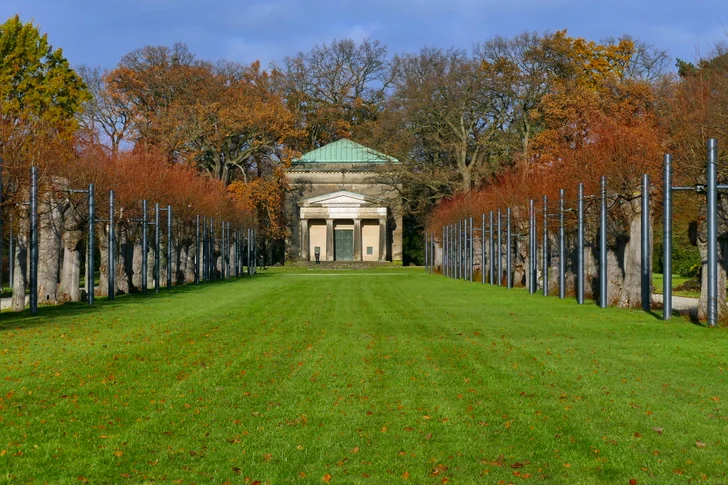
Berggarten
Across the road from the Great Garden is the botanical garden, begun in 1704 as a mulberry plantation. It grows more than 12,000 plant species, and its orchid collection, with 500 to 800 orchids in flower at any time of year, is one of the largest in the world. At the end of the lime avenue planted in 1727 stands the Guelph Mausoleum by Laves, where Electress Sophie and King George I were reburied in 1957; it is closed to the public. A separate ticket costs €5 (as of 25.11.2026), and the glasshouses close an hour before the garden.
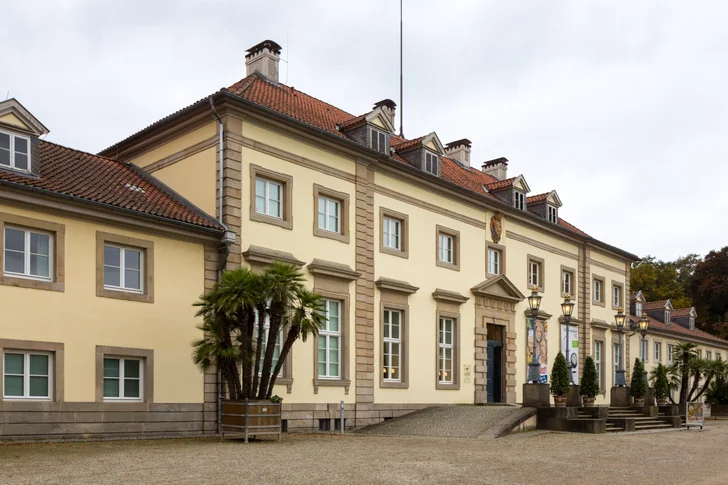
Georgengarten and the Wilhelm Busch Museum
The Georgengarten is an English-style landscape park laid out in 1835–1841 and named after King George IV. Unlike the Great Garden, it is free and open at all times. Among its meadows stands the Leibniz Temple, a round pavilion with a bust of the philosopher. The Georgenpalais in the park houses the Wilhelm Busch – German Museum of Caricature and Drawing, with the most important collection of work by Busch, the author of "Max und Moritz", and more than 50,000 satirical drawings and prints. Stadtbahn lines 4 and 5 take about 10 minutes from the centre to the Schneiderberg/Wilhelm-Busch-Museum stop.
East of the centre: forest and zoo
2 places
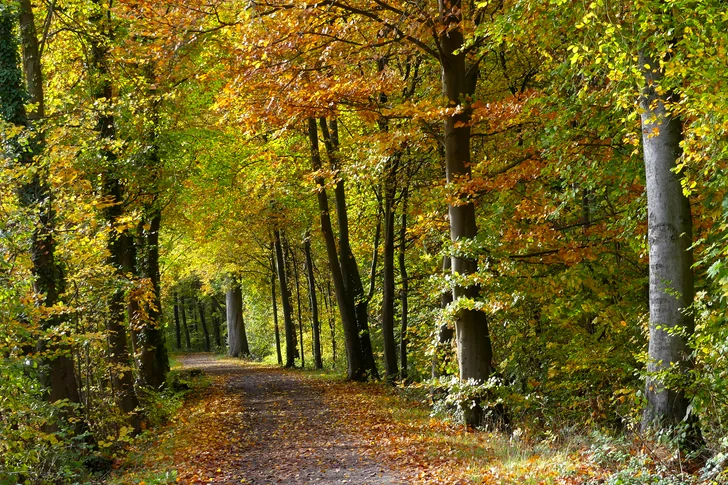
Eilenriede city forest
At about 640 hectares, the Eilenriede is one of the largest forests in Europe inside a big city; the city likes to point out that even London's Hyde Park cannot compete. It has belonged to the city for more than 600 years, and its name comes from "Ellernried", a wet alder wood. Paths for walking and cycling link ponds, meadows, playgrounds and forest inns, and roe deer and foxes live here. Entry is free, and the forest makes a pleasant walk to the zoo on its edge.
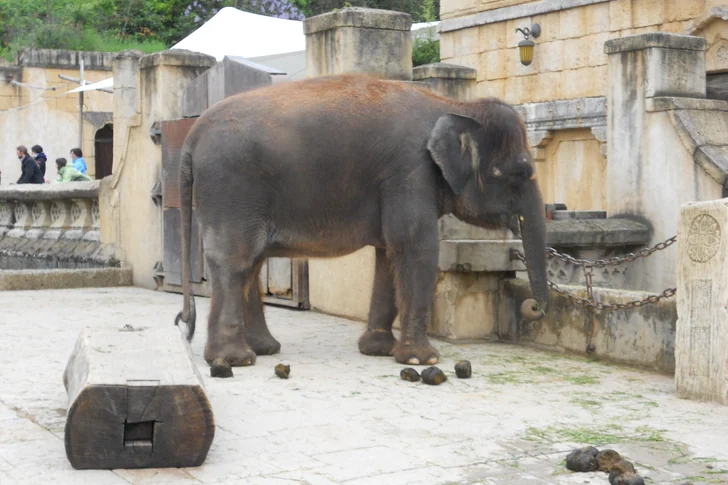
Hannover Zoo (Erlebnis-Zoo)
The zoo is divided into themed worlds. On the Sambesi a boat ride in summer passes zebras and antelopes, and hippos can be watched underwater. Yukon Bay recreates Canada with polar bears, wolves and penguins, and the Dschungelpalast, an Indian palace, is home to tigers, elephants and langurs. Meyers Hof is a village of seven historic Lower Saxon farmhouses with rare farm breeds. Take Stadtbahn line 11 to its terminus, Zoo.
West of the centre: Linden
1 place
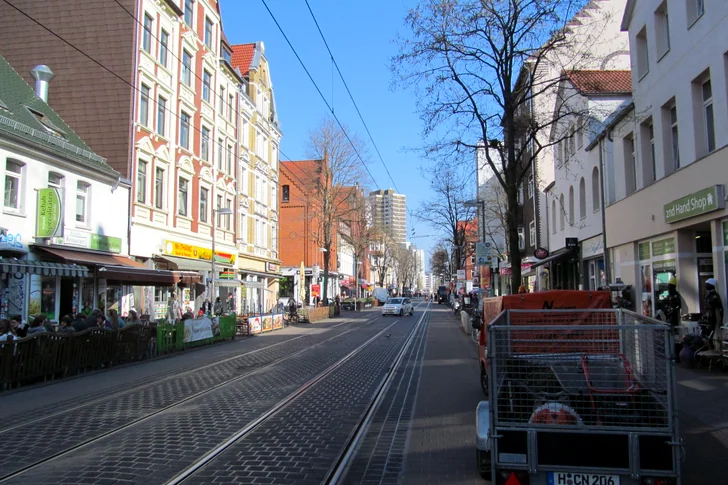
Linden: Limmerstraße and the Lindener Berg
Linden, across the river from the Old Town, is a multicultural district popular for nights out. On warm evenings Limmerstraße fills with people doing what locals call "Limmern": strolling from kiosk to kiosk with a drink, past snack bars, restaurants and bars. Nearby, the Faust cultural centre has hosted concerts since 1991 in a former bedding factory, with a beer garden open from March to November.
The Lindener Berg rises 35 metres above the city centre. On top stand the Lindener Turm, a medieval watchtower turned into a windmill in 1650–1652, and a water reservoir from 1878 with a public observatory on its roof; locals come up for the sunset. On the slope, the Bergfriedhof cemetery of 1862 turns blue with flowering squills for about two weeks from late March.
Day trips from Hannover
2 places
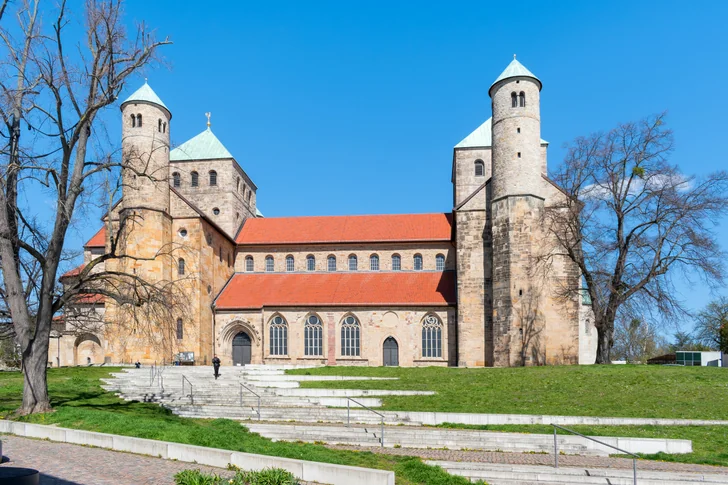
Hildesheim: St Mary's Cathedral and St Michael's Church
The fastest trains reach Hildesheim in 25 minutes. Its cathedral and St Michael's Church have been a UNESCO World Heritage Site since 1985. St Michael's, built in 1010–1020 to a symmetrical plan with two apses, is a key work of Ottonian Romanesque architecture. At the cathedral grows the "thousand-year rosebush": by legend, Louis the Pious founded a chapel here in 815. The rose burned in a bombing raid in March 1945, and eight weeks later 25 new shoots grew from its buried roots; it usually flowers at the end of May. The market square, destroyed in 1945, had its historic facades, including the carved Knochenhauer-Amtshaus, rebuilt by 1989.
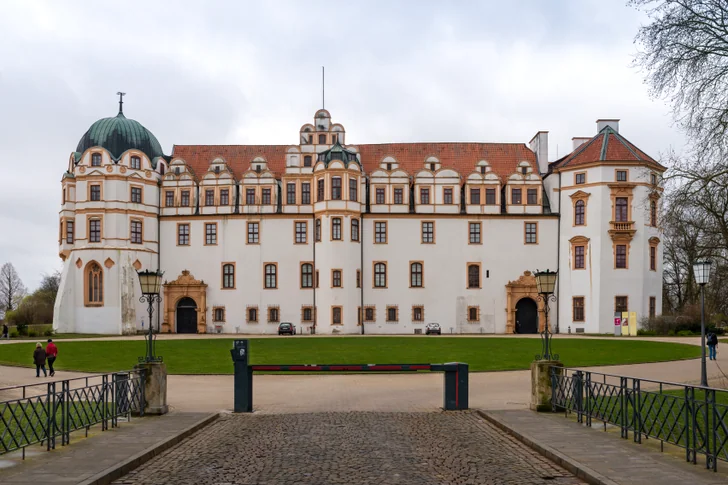
Celle: the Old Town and the castle
Celle is 18 minutes away by ICE and 27 minutes by regional train. Its Old Town has more than 480 half-timbered houses, most built between the late 15th century and around 1800. The castle, first mentioned in 1315, was the residence of the Dukes of Brunswick-Lüneburg until 1705, and its theatre is described as the oldest baroque theatre in Europe still in use. The castle kitchen, chapel and theatre can be seen only on a guided tour.
Where to go in the evening
Markthalle. The market hall near the Old Town Hall, nicknamed the "belly of Hannover", opened in its present form in 1955. You can eat and drink among the food stalls until 10 pm on Thursdays and Fridays; it is closed on Sundays.
Lüttje Lage. Hannover's signature drink comes in two small glasses, a light Broyhan beer and a shot of Korn schnapps. You hold both in one hand and drink them at once, letting the schnapps run into the beer, head tilted back so as not to spill. It is a tradition at the Schützenfest, at the Maschseefest and in Old Town pubs.
Shows and nightlife. Besides the opera, the GOP Varieté-Theater opposite the opera house combines variety shows with dinner; until 17 January 2027 its winter show runs in the Orangery at Herrenhausen. In summer the Great Garden's evening illuminations and the Kleines Fest are the big draws. For a casual night out, head to Limmerstraße in Linden.
What to see in one, two and three days
One day. Follow the Red Thread from the station: the Opera House, the Aegidienkirche, the New Town Hall (the dome lift in season and the city models), then the Marktkirche, the Old Town Hall, Kramerstraße, Burgstraße and the Nanas. Have lunch at the Markthalle, then take the Stadtbahn to the Great Garden at Herrenhausen. End with a walk along the Maschsee.
Two days. Do the Red Thread and the Old Town at an unhurried pace on the first day, adding the Museum August Kestner or the Landesmuseum. On the second, spend the morning in the Great Garden and the Berggarten, walk through the Georgengarten to the Wilhelm Busch Museum, and spend the evening on Limmerstraße.
Three days. Add the Maschsee and the Sprengel Museum (free on Fridays), then walk through the Eilenriede to the zoo. Or swap the third day for a trip to Hildesheim or Celle, both less than half an hour away by train.
 Russia

 France
 Montenegro
 Hungary
 Venezuela