
 English
 Español
 Deutsch
 日本語
 Italiano
 Português
 Русский
 简体中文
 한국어
 Polski
 ภาษาไทย
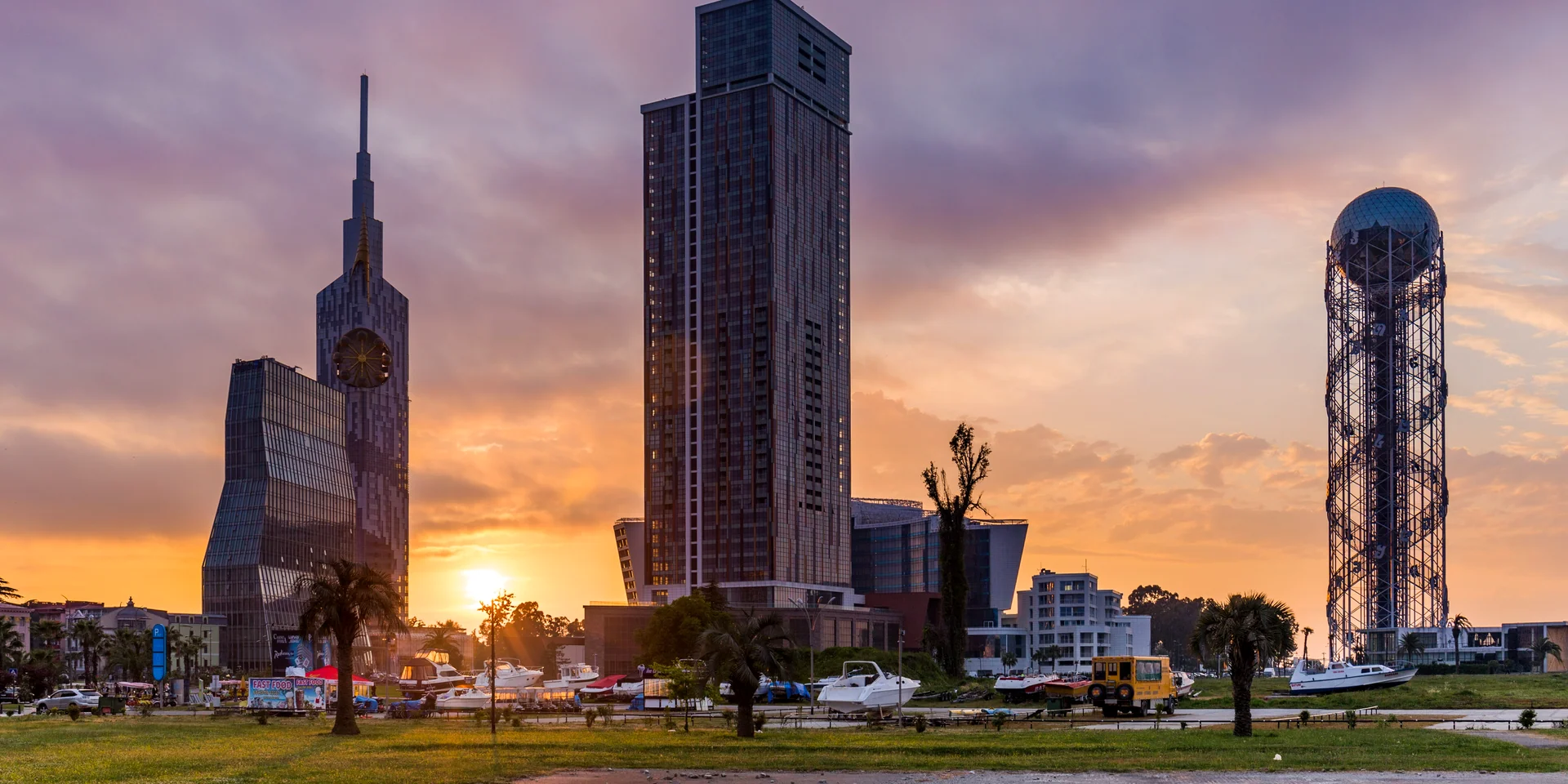
Batumi is Georgia's second-largest city and the capital of the Autonomous Republic of Adjara, on the Black Sea coast in the far south-west of the country, close to the border with Turkey. The municipality had 246,267 residents at the start of 2026, according to the national statistics office Geostat. Batumi's official tourism website traces the earliest mention of the city to Aristotle in the 4th century BC. The modern city grew after 1878, when Ottoman rule ended and Batumi passed to the Russian Empire: the port has worked since that year, a railway to Tbilisi and Baku followed in the 1880s, and in 1906–1907 an 885-km kerosene pipeline linked Baku with Batumi.
This guide covers 25 places to visit in Batumi and nearby. Seventeen are in the city, grouped into walks: the Old Town, the port and Miracle Park, and the boulevards. Eight are day trips to the coast and the mountains of Adjara. At the end are ideas for rainy days and evenings, the main festivals and routes for one, two and three days. Opening hours and prices were checked against official sources on 22 November 2026; where official sources disagree, we leave the figure out.
Before you go
From the airport.
Municipal bus No. 10 stops in front of the terminal of Batumi International Airport (BUS) and takes about 20 minutes to the centre. Since February 2026 a ride on city buses costs 0.70 lari with a transport card. A taxi takes 10–15 minutes; the city tourism portal puts the fare at about 10–15 lari, but there is no fixed tariff, so agree the price first.
By train from Tbilisi.
Two daily Georgian Railway trains leave Tbilisi at 08:00 and 17:10 and reach Batumi in 5 hours 35 minutes; return trains leave Batumi at 08:00 and 16:30. Tickets go on sale 20 days ahead, online and at stations; the railway's 2024 fare list gives 32–34 lari in second class. Batumi Central station is about 4 km from the centre, linked by bus No. 10.
Getting around.
The Old Town and the seafront are easy to walk. The Batumi Discount Card (15 lari, valid 10 days) includes four rides on city transport, a SIM card with 1 GB of data and discounts of up to 40%. It is sold at tourist information centres, for example next to the Argo cable car (09:00–23:00) and at the boulevard entrance, 2 Ninoshvili St (09:00–22:00).
Money and seasons.
The currency is the Georgian lari (GEL); most restaurants, shops and hotels in Batumi accept cards. The climate is humid subtropical: the coast averages +6.5 °C in January and +24.5 °C in August. Summer is the beach season, and the regional tourism portal calls autumn one of the best times to visit. Heavy rain is common, so keep an indoor plan in reserve. The Adjara Museum, which runs the state museums, does not publish hours, so the museum hours below come from the official Adjara tourism portal.
The Old Town: squares, churches and museums
8 places
All eight places in the Old Town, between the port and the old boulevard, are within walking distance of Europe Square.
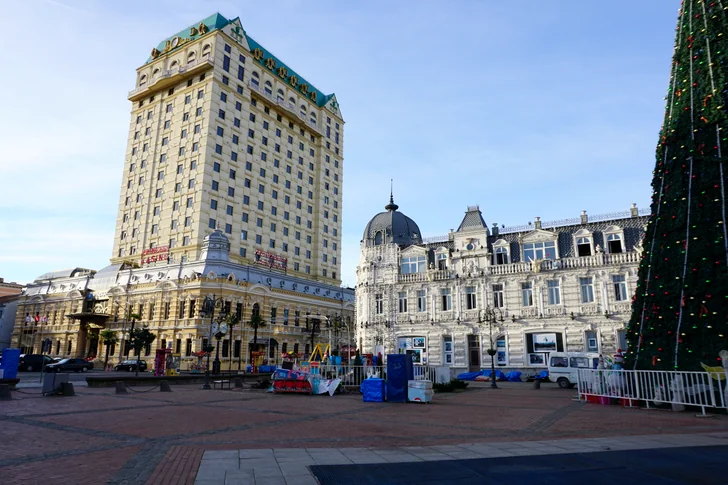
1. Europe Square
Europe Square, on Memed Abashidze Avenue, is the centre of the Old Town and lined with 19th- and 20th-century buildings. In the middle stands the statue of Medea holding the Golden Fleece, the symbol of ancient Colchis, made by Davit Khmaladze in 2007. On the tower of the National Bank building at the corner of Gamsakhurdia Street is an astronomical clock, made in Germany in 2010, which shows the Sun, the Moon, the planets and the zodiac.
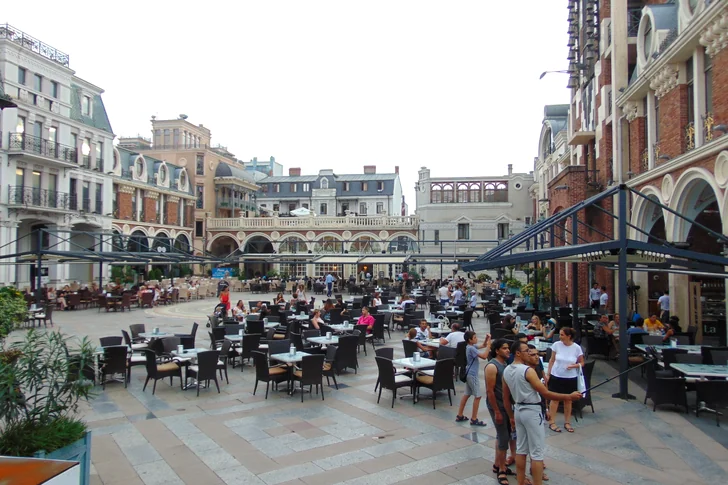
2. Batumi Piazza
Piazza, nicknamed Little Italy, is an enclosed square of cafés surrounded by Italian-style buildings, built in 2009 to designs by the Georgian architect Vazha Orbeladze. Look at the large mosaics designed by Natalie de Pita-Amirejibi and made in Abu Dhabi in 2010. The square is busiest in the evening.
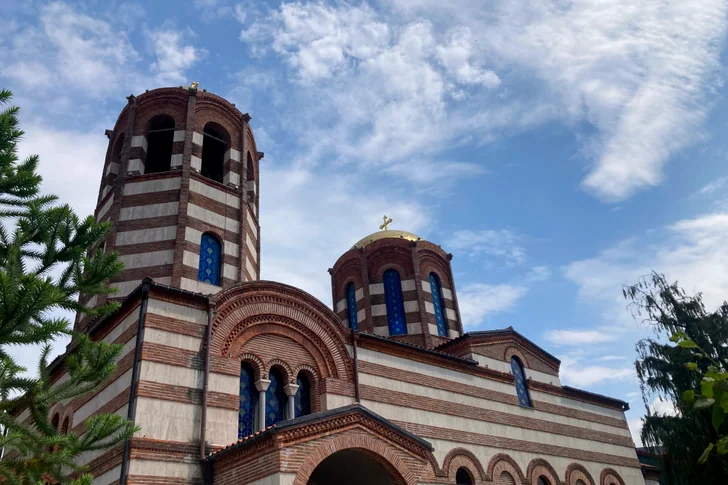
3. St. Nicholas Church
The church faces Piazza from Parnavaz Mepe Street. Batumi's Greek community built it under Ottoman rule: work began in 1865, and the first liturgy was held in 1871. The Sultan allowed it on condition that no bells would ring. Services stopped in Soviet times and resumed in 1946; today they are held in Georgian and Russian.
4. Orta Jame Mosque
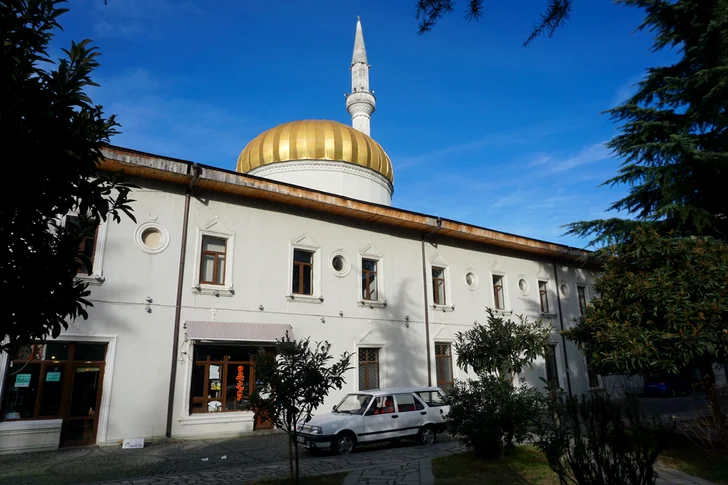
Orta Jame, on Kutaisi Street, was built under Ottoman rule in the second half of the 19th century. Its name means "the middle mosque": it once stood between two other mosques. The white building has a tall corner minaret and a hand-painted dome; in Soviet years it was a military warehouse. It is a working mosque, so come outside prayer times, dress modestly and expect to take off your shoes.
5. Batumi Synagogue
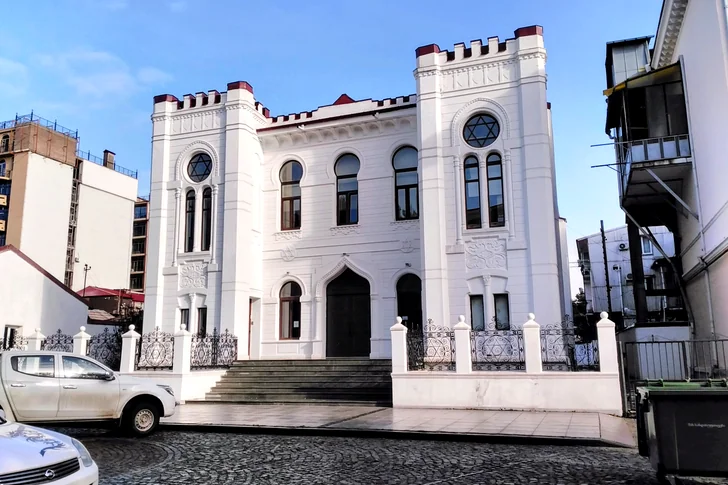
The stone synagogue at 33 Vazha-Pshavela Street was built in 1904 by the Batumi architect Volkovich, with permission from Emperor Nicholas II. In Soviet times it was closed and housed sports clubs. It returned to the community in the 1990s and is a working synagogue again; the Adjara tourism portal lists visiting hours of 10:00–18:00.
6. Batumi Cathedral of the Mother of God
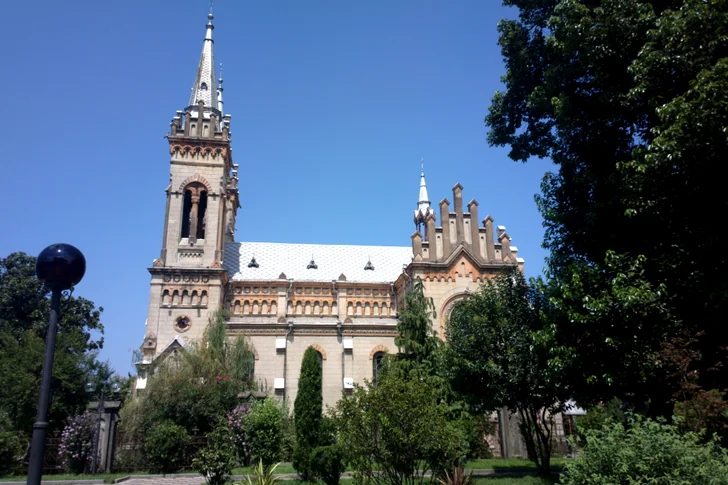
The neo-Gothic cathedral on Chavchavadze Street was built around 1900 as a Roman Catholic church, paid for by the Zubalashvili brothers at their mother's wish. Under Soviet rule it served as an archive and then as a high-voltage laboratory. It was handed to the Georgian Orthodox Church in 1980, and Catholicos-Patriarch Ilia II consecrated it on 16 May 1989.
7. Adjara Art Museum
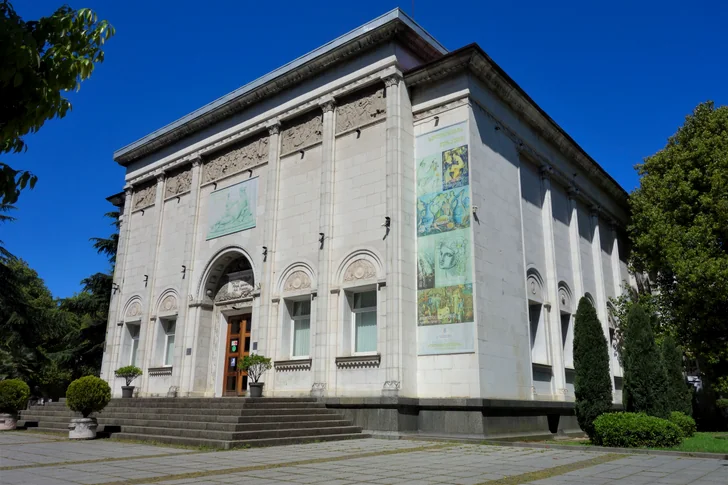
Adjara's main art collection is at 8 Gorgiladze Street, in a 1949 building. The permanent exhibition, renewed in January 2023, shows foreign masters on the ground floor and Georgian art upstairs: Niko Pirosmani, Gigo Gabashvili, Lado Gudiashvili, David Kakabadze and Elene Akhvlediani.
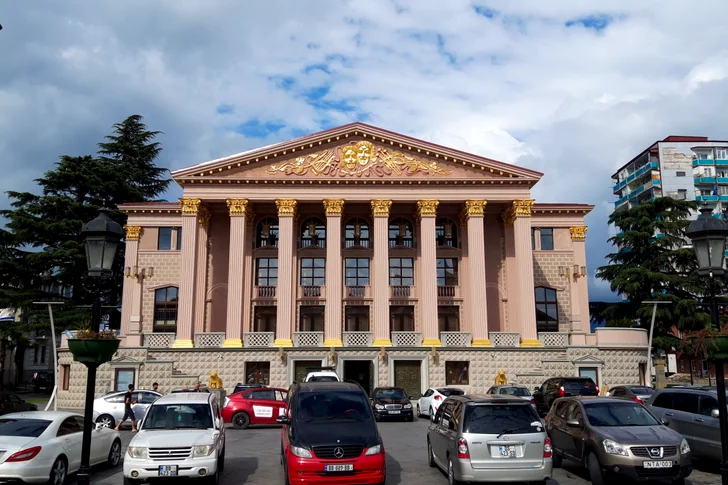
8. Ilia Chavchavadze State Drama Theatre
The theatre at 1 Rustaveli Street, near the port, opened its current building, designed by the architect Teplitsky, on 19 March 1952; it has carried the name of the writer Ilia Chavchavadze since 1959. The two stone lions at the entrance date from the 2nd century BC and come from excavations at Khorgi. On the square in front stands a gilded copy of the Fountain of Neptune in Bologna.
The port and Miracle Park
5 places
Miracle Park, at the northern end of the seafront by the port, is a free public space. The lighthouse, Ali and Nino, the Alphabetic Tower and the Ferris wheel are a few minutes' walk apart.
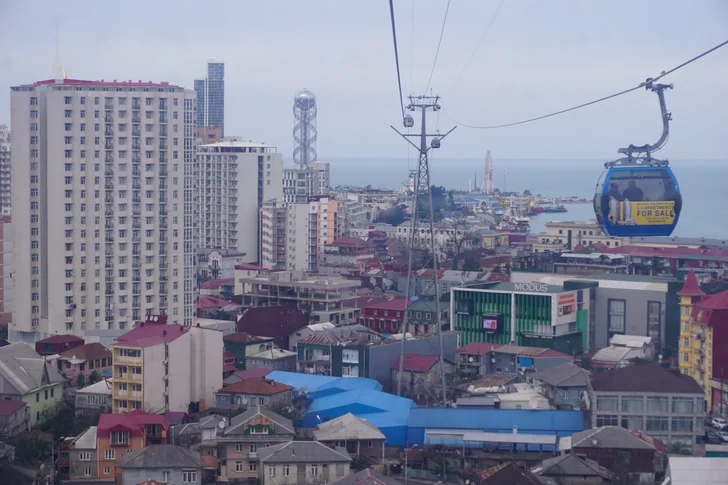
9. Argo Cable Car
The cable car, opened in 2013, runs for 2,586 m from 1 Bako Street near the port to Anuria Mountain, 256 m above sea level, in about 15 minutes. From the viewing platform and restaurant at the top you see the bay, the port and the high-rises of the New Boulevard. Go up before sunset and stay for the city lights.
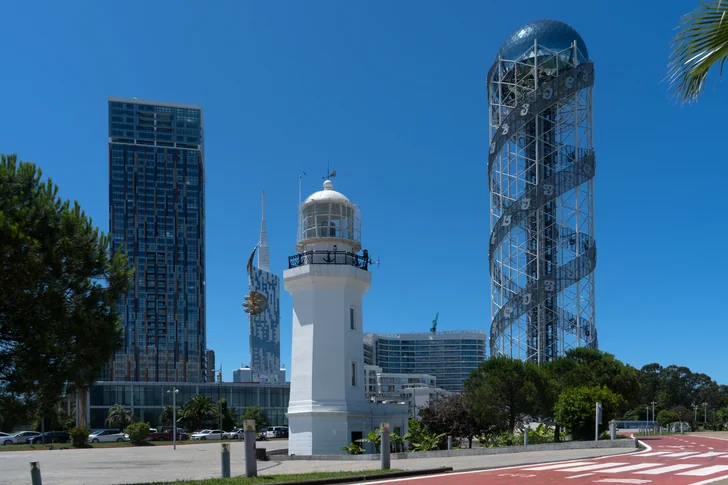
10. Batumi Lighthouse
The first lighthouse here appeared in 1863, before the boulevard. The present octagonal stone tower, 21 m tall, was built by French engineers in 1882, and its light is visible 14 miles out at sea. According to the tourism portal, it stands where the 41st parallel crosses the 41st meridian. Meteorologists work inside, so it can only be seen from outside.
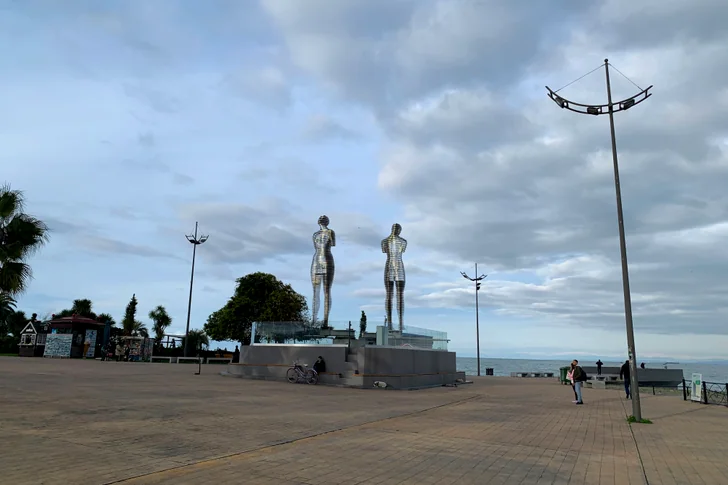
11. Ali and Nino
Tamar Kvesitadze's kinetic sculpture, first called "Man and Woman", was designed in 2007 and installed on the seafront around 2010. Two steel figures slowly move towards each other and merge, in a cycle of 8–10 minutes. The name comes from Kurban Said's 1937 novel about the Azerbaijani nobleman Ali and Nino, the daughter of a Georgian prince. Come in the evening, when the figures move.
12. Alphabetic Tower
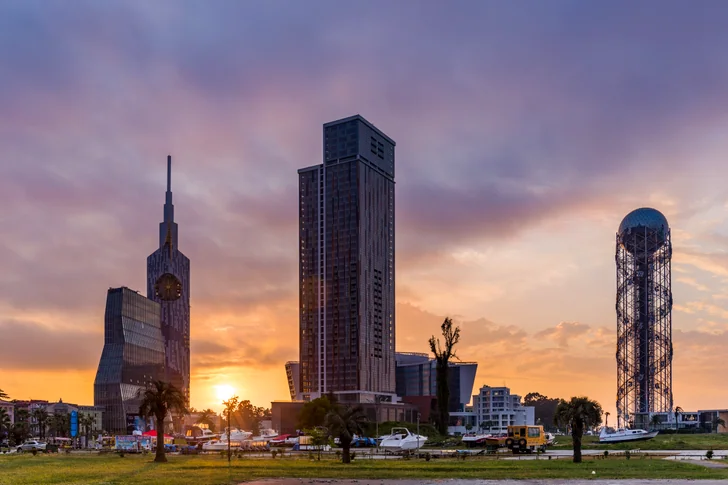
The 130-metre tower, Batumi's best-known landmark, was built in 2010–2011 to a design by Alberto Domingo Cabo. The 33 letters of the Georgian alphabet wind around its frame in a double helix, like DNA. A lift goes up to the sphere at the top, with an observation deck and a restaurant that turns full circle in an hour. Hours and prices are not published consistently, so check them at the entrance.
13. Batumi Ferris Wheel
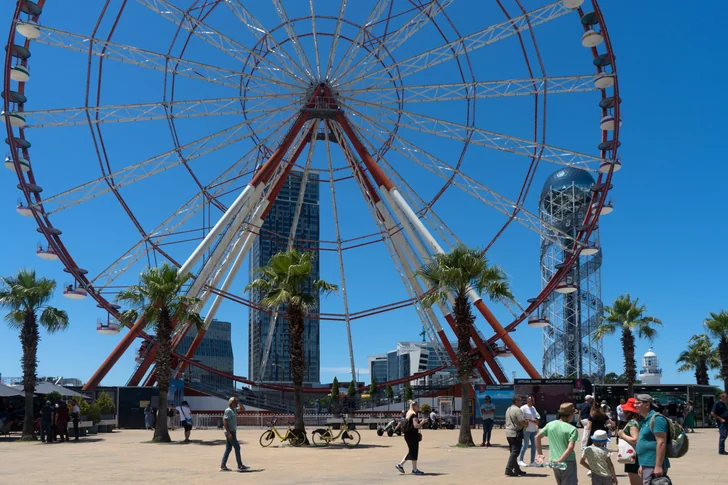
The 55-metre wheel in Miracle Park has 40 cabins for six people each and was built in Italy. From the top you see the port, the curve of the beach and, in clear weather, the mountains of Adjara. The national tourism board recommends riding at dusk. Sources give different hours and prices, so check at the ticket office.
The boulevards and 6 May Park
4 places
From Miracle Park the promenade runs south-west for about 7 km: first the Old Boulevard, with 6 May Park a few blocks inland, then the New Boulevard with Lake Ardagani.
14. Batumi Boulevard
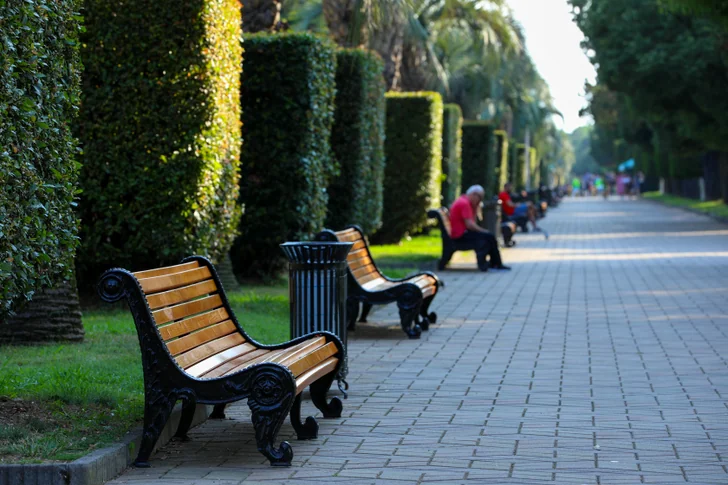
The seaside park dates from 1881, with landscaping from 1884. Extended by 2009, it now covers 135 hectares along about 7 km of coast and has been a national monument of garden and park art since 1987. In the old part look for the colonnades (the first dates from 1934) and the fountains at the main entrance, installed in 1977. A 7-km cycle path follows the shore; bicycles can be hired along the way and through the BatumVelo bike-share. The beach is mostly pebbles.
15. 6 May Park and Nuri Lake
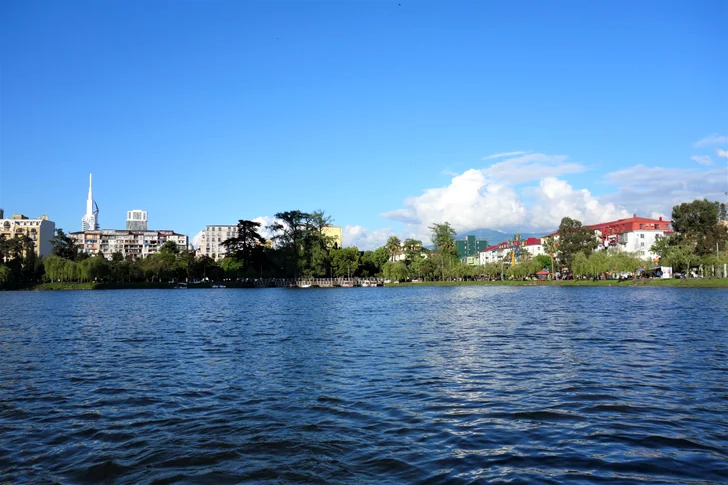
Laid out in 1881, this is Batumi's first public garden; after an emperor's visit in 1888 it was named Alexandrov Garden. At its centre is the natural Nuri Lake, where you can hire a boat. The dolphinarium and the city zoo are also in the park, which makes it an easy half-day with children.
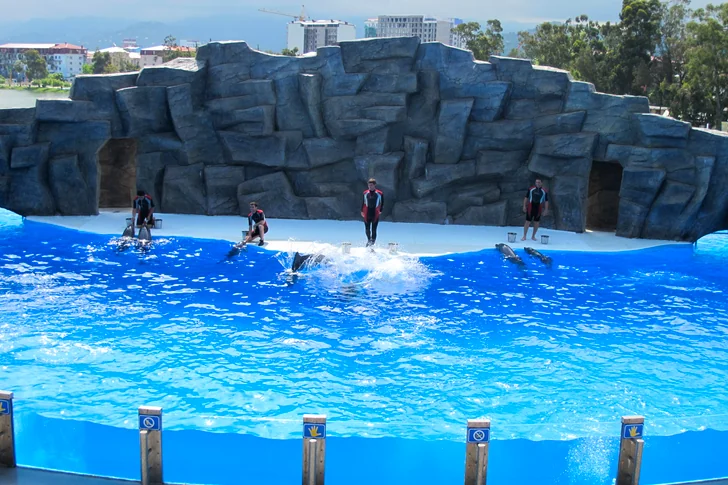
16. Batumi Dolphinarium and Aquarium
The dolphinarium at 51 Rustaveli Avenue opened in the mid-1970s and reopened in 2011; its amphitheatre seats 795. The show lasts about 35 minutes and goes ahead in any weather. The aquarium in the same complex, opened in 1966, holds up to 100 species: Black Sea fish such as stingrays and seahorses, Georgian freshwater fish and ornamental species such as piranhas.
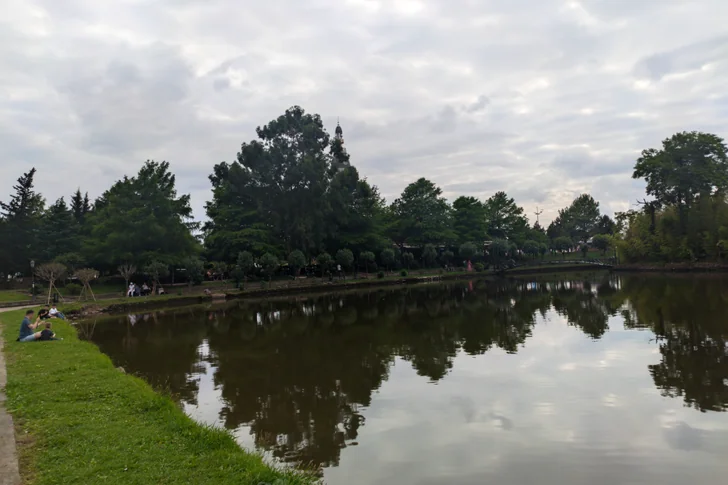
17. Lake Ardagani and the New Boulevard
Lake Ardagani, about 500 m across, is the centre of the New Boulevard, surrounded by modern high-rises, with an island for waterbirds in the middle. It is known for its French dancing fountain with music, holograms and a laser show. Official sources give different show times, so come after dark and check at a tourist information centre.
North of Batumi: the Botanical Garden, Mtirala and Petra
3 places
All three are off the coast road towards Kobuleti.
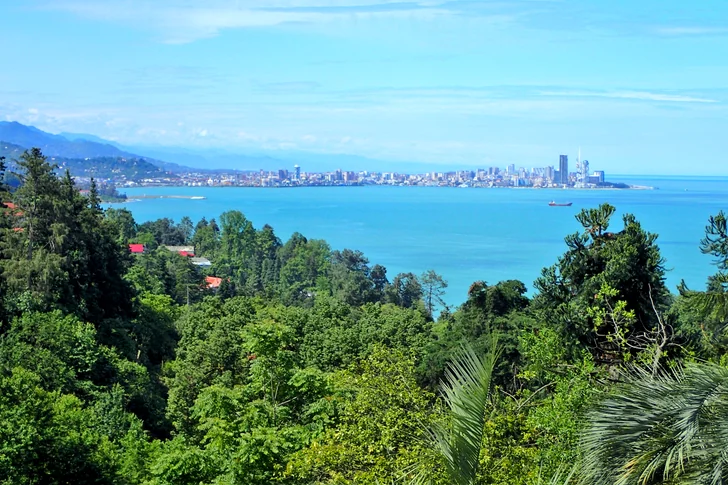
18. Batumi Botanical Garden
The garden at Mtsvane Kontskhi (Green Cape), 9 km from Batumi, was founded in 1912 on the initiative of Professor Andrey Krasnov. Along the shore it has nine floristic sections, three parks and a Colchic forest reserve, with about 1,800 woody and 5,000 herbaceous plants. Allow 2–3 hours on foot, or hire an electric car. There are three entrances; buses No. 10 and 10a and minibuses No. 31 and 40 go there.
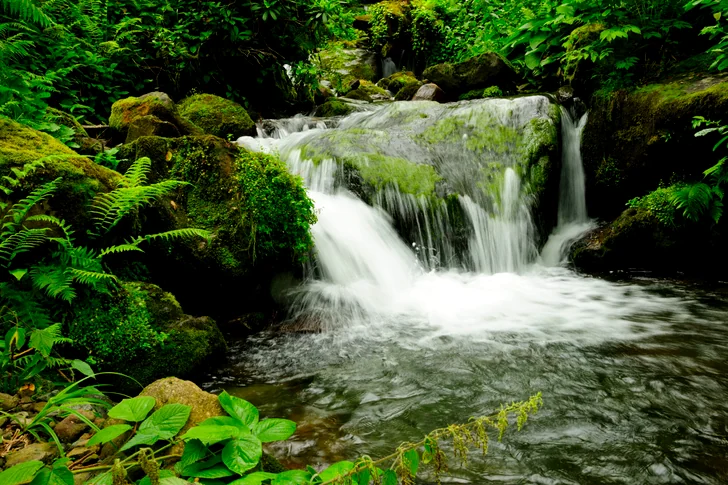
19. Mtirala National Park
Mtirala, about 25 km from Batumi, was founded in 2006 and covers 15,580 hectares of Colchic rainforest; since 2021 it has been part of the UNESCO World Heritage site "Colchic Rainforests and Wetlands". Its name means "weeping": this is the rainiest place in Georgia, with up to 4,000 mm a year on Mount Mtirala. The easiest walk is the 7-km Tsablnara trail to an 18-metre waterfall and a lake.
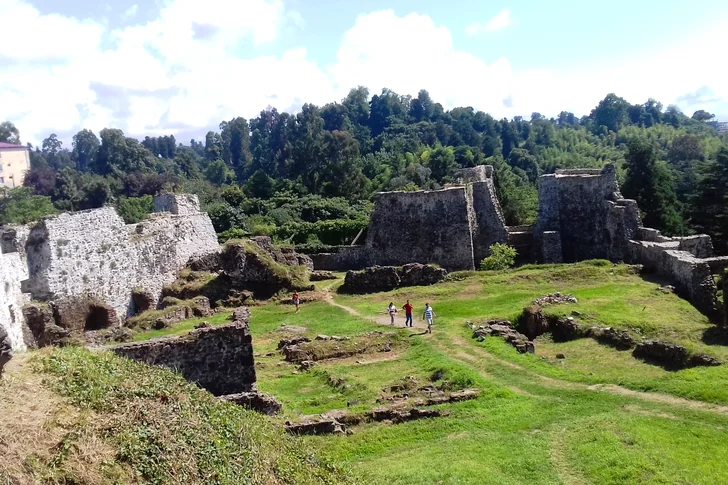
20. Petra Fortress
Petra stands on a rocky headland over the sea at Tsikhisdziri. According to Adjara's heritage agency, the city was built in the 6th century by order of the Byzantine Emperor Justinian; its name is Greek for "rock". The museum-reserve has walls up to 10–12 m high, the foundations of a 6th–7th-century basilica and the remains of a palace and a bath.
South and into the mountains: Gonio, Machakhela and the Keda road
5 places
Gonio and Machakhela are south of the city, near the Turkish border; the waterfall and the two bridges are east, along the Adjaristsqali river and the road to Khulo. Each direction is a separate day trip.
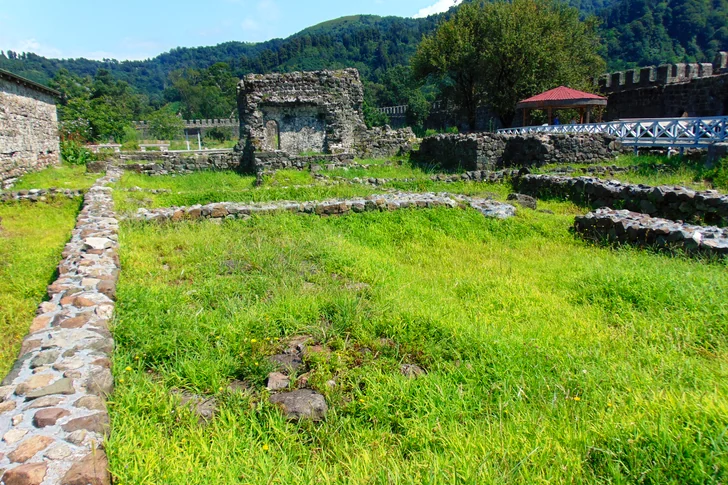
21. Gonio Fortress
Gonio-Apsaros, 12 km south of Batumi, was a Roman fortress in the 1st century AD, later held by the Byzantines and the Ottomans. Its walls, over 900 m long, enclose a rectangle of 222 by 195 m, and 18 towers survive. A small museum shows finds such as coins of Justinian I. According to church tradition, the Apostle Matthias is buried here; this is a tradition, not an established fact. Minibuses Nos. 16, 20, 33 and 88 run there.
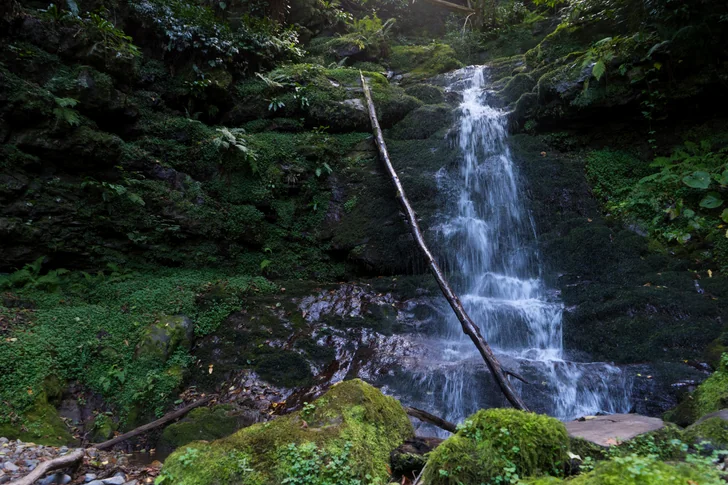
22. Machakhela National Park
Founded in 2012, the park protects 8,733 hectares of the Machakhlistsqali gorge, about 30 km (45 minutes by car) from Batumi; forest covers 95% of it. The Mtavarangelozi trail (9 km, about four hours) ends with a view over Batumi and the gorge. The Kokoleti trail (15 km, about six hours) runs through old Colchic forest along the state border, so you need a permit from the park administration several working days ahead. The visitor centre in Acharisaghmarti is open on working days 09:00–18:00; the season is May to October.
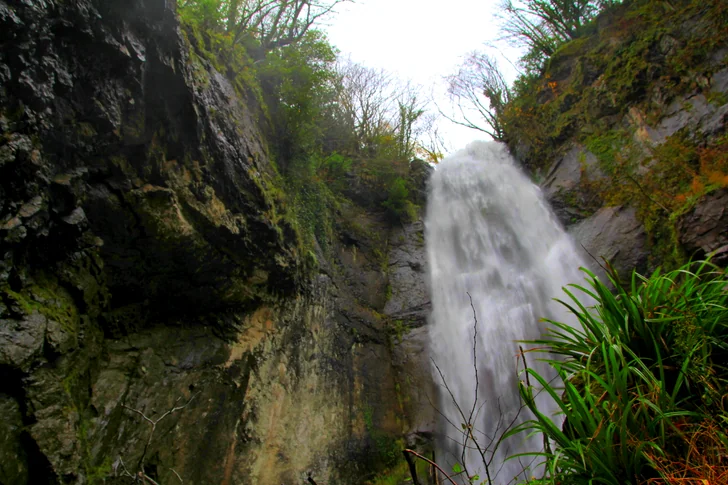
23. Makhuntseti Waterfall
The waterfall in Makhuntseti village, Keda municipality, falls into a large natural pool surrounded by greenery. It is a five-minute walk from the Batumi–Khulo road, open all year, with picnic spots and stalls nearby. Combine it with the bridge in the same village and Dandalo further up the valley.
24. Makhuntseti Bridge
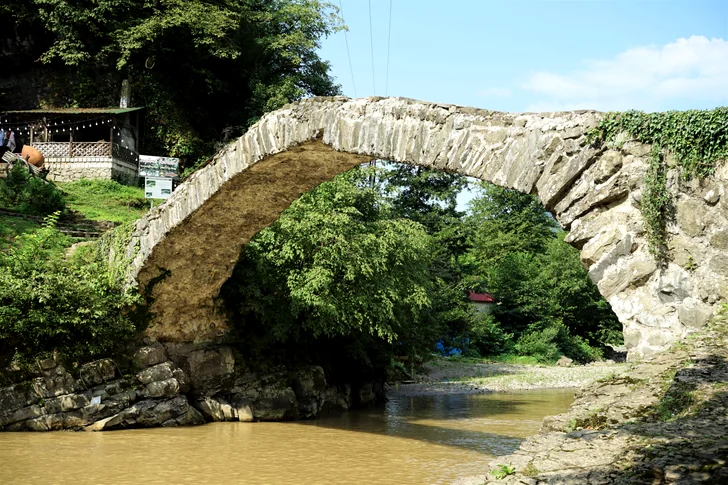
This medieval stone bridge crosses the Adjaristsqali in Kveda Makhuntseti, 30 km from Batumi and 54 m from the road. Its single arch of volcanic stone spans 19.5 m and rises 5.6 m above the water, resting on natural rock. Locally it is called Queen Tamar's Bridge, but that is a legend: official sources call it the Makhuntseti Arch Bridge and disagree on its century. It was restored in 2008.
25. Dandalo Bridge
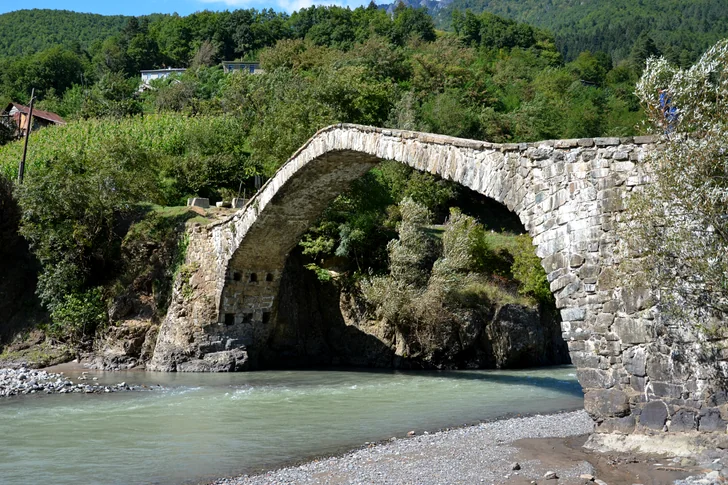
Dandalo is a quieter medieval arch bridge 60 km from Batumi, just off the Batumi–Khulo road on the border of Lower and Upper Adjara. Its thin arch rises 7.6 m above the water and curves in an S-shape in plan; look for the holes left by the builders' scaffolding. A monument of national importance since 2006, it is still in use. No official bus schedule is published for this road, so go by car or taxi.
If it rains
Start with the Adjara Art Museum. The Khariton Akhvlediani Museum (4 Akhvlediani St; 10:00–18:00, 6 lari) is Adjara's main local history museum, founded in 1908, with about 180,000 objects, including a 5th-century BC red-figure krater found near Kobuleti. The Nobel Brothers Technological Museum (3 Leselidze St, Tamari district; 10:00–18:00) occupies the Nobels' former Batumi office and tells the story of oil, tea and tobacco in the city. The dolphin show goes ahead in any weather, and the aquarium is next to it. Leave the cable car and the Ferris wheel for a clear day.
Where to go in the evening
Walk the Old Boulevard to Miracle Park, watch Ali and Nino move and ride the Ferris wheel at dusk. The Argo cable car runs until 21:00, late enough for the lit-up bay. After dark, the fountain on Lake Ardagani plays on the New Boulevard. For dinner, the cafés around Piazza and Europe Square are close by, and in summer Miracle Park hosts open-air concerts.
Festivals and events
The biggest regular event is the Black Sea Jazz Festival, held in Batumi in summer since 2007 at the Batumi Tennis Courts. The 19th edition took place on 10–12 July 2026. Batumoba, the annual city festival, brings a folk parade, a craft market and the Gandagana festival of Adjarian folklore and food to Europe Square and the Old Boulevard. Its dates vary, so check the official calendar at batumievents.com. In October the Machakheloba folk festival is held in Machakhela National Park.
What to see in one, two and three days
One day: the Old Town and the seafront. Walk from Europe Square to Piazza, St. Nicholas Church, Orta Jame, the synagogue and the cathedral. In the afternoon, visit the Art Museum or ride the Argo cable car, then walk to Miracle Park for the lighthouse, the Alphabetic Tower and Ali and Nino, and watch the sunset from the Ferris wheel. With time for only three places, choose Europe Square, the cable car and Miracle Park.
Two days: add the coast and the parks. Spend the morning at the Botanical Garden. Return for 6 May Park and the dolphin show at 16:00 (Tuesday, Thursday, Saturday or Sunday) or the aquarium, then walk to the New Boulevard for the fountains on Lake Ardagani. With a car, add Petra Fortress after the garden.
Three days: add the mountains or the south. Drive up the Adjaristsqali valley to Makhuntseti Waterfall and Bridge and on to Dandalo, or go south to Gonio Fortress and spend the afternoon in Machakhela National Park. Mtirala needs a separate day for a trail.
 Russia

 France
 Montenegro
 Hungary
 Venezuela