 English
 Español
 Deutsch
 日本語
 Italiano
 Português
 Русский
 简体中文
 한국어
 Polski
 ภาษาไทย
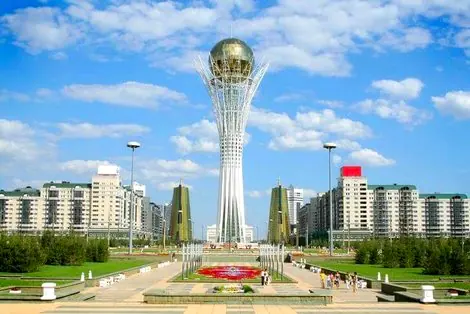
What to do in Kazakhstan depends first on where you land: Almaty opens towards mountain valleys and lakes, Astana towards the northern steppe, and Aktau towards the limestone landscapes of Mangystau. Between them lie Silk Road cities, forested granite hills and the Kazakh Altai. This guide selects 25 places by region so you can build a trip around a landscape or a historical theme.
Astana is the capital; Nur-Sultan is its former name. Almaty remains a separate starting point for the southeast. The short itineraries below stay within one regional trip, with time for overland travel. Information checked on 05.11.2026; local closures and access arrangements can change.
Before you go
Arriving and getting around.
Almaty and Astana have international airports. Almaty's official transport listing includes airport bus 92; Astana Airport lists buses 10 and 12. Check the stops against your accommodation. A single Almaty metro journey costs 120 tenge on the operator's published tariff. For journeys between regions, compare domestic flights with dated services on the official Kazakhstan Railways booking site.
Season and preparation.
The climate is continental, with cold winters and hot summers, but mountain, steppe and desert conditions differ sharply. Choose dates for the particular region and activity. Carry drinking water on rural excursions and keep some tenge for smaller providers; do not rely on every business accepting your foreign bank card. Visa requirements depend on citizenship and passport, so consult the Foreign Ministry before booking, including any new electronic travel-authorisation requirements.
Parks, permits and tickets.
National parks and strict nature reserves have different visiting rules. Arrange educational visits to reserves through their administrations; for parks, check your particular route, registration, guiding and the complete charge, including vehicle fees. Forest-fire restrictions and mountain-road closures can override normal arrangements. Carry identification in border areas, and check any additional requirements for your exact route. Where current opening hours or a complete ticket price could not be verified, this guide leaves out the figure.
Almaty and Almaty Region
7 places
1. Panfilov Park and Ascension Cathedral
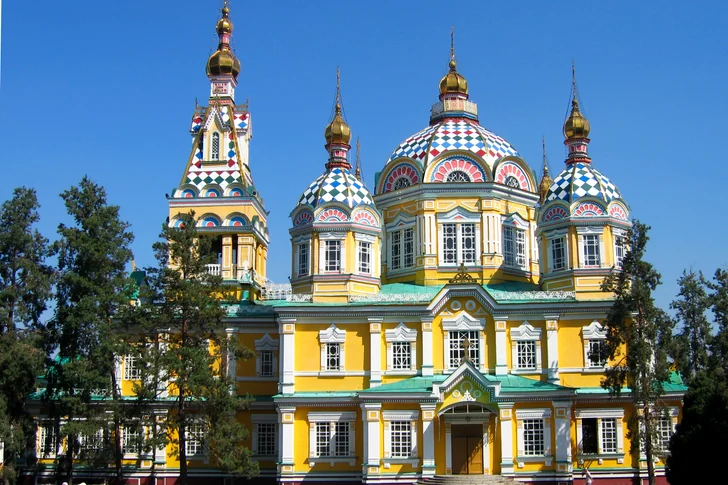
The wooden Ascension Cathedral gives this central Almaty park its most recognisable silhouette, with coloured walls, towers and domes rising above the trees. Built between 1904 and 1907, it is still a working Orthodox church. Combine a park walk with a respectful look inside when services allow; the diocese's worship schedule is more useful than assuming fixed tourist visiting hours.
2. Medeu Valley
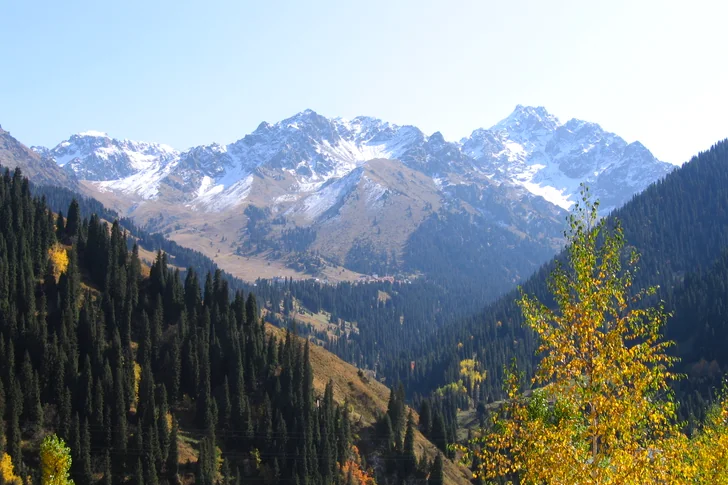
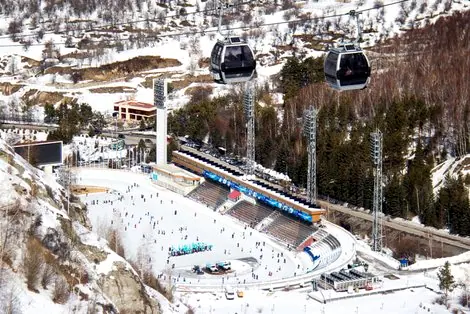
Medeu follows the Malaya Almatinka valley into wooded mountain slopes above Almaty. The regional nature park describes walking routes towards Shymbulak and a Student Trail towards the dam, giving you alternatives to a city sightseeing day. The sports complex is undergoing reconstruction, so plan for the valley scenery rather than skating, and check the latest road and parking arrangements before setting out.
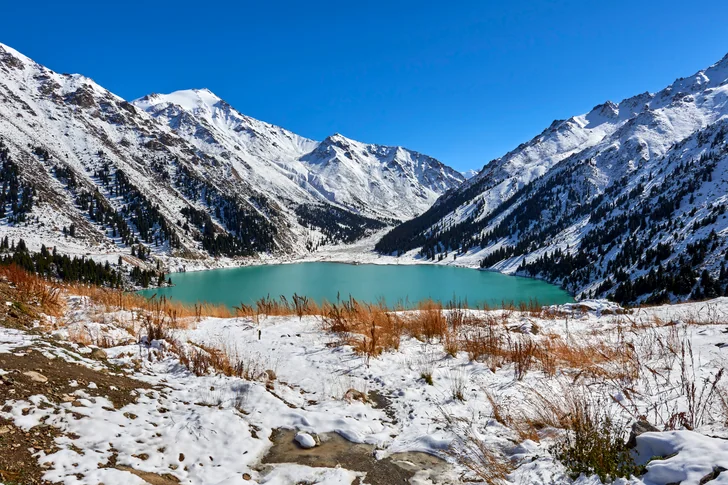
3. Big Almaty Lake
This high mountain lake sits beneath the ridges of the Ile-Alatau, with a broad sweep of water enclosed by steep slopes. It offers a different landscape from the wooded Medeu valley, but access needs particular attention. At the time of checking, the national park reported the road closed to motor vehicles because of rockfall and road conditions; ask the park which approach, if any, is permitted before committing a day to it.
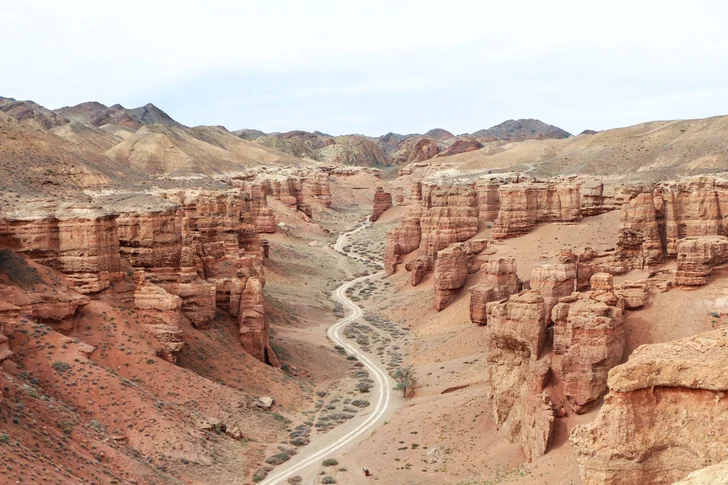
4. Charyn Canyon
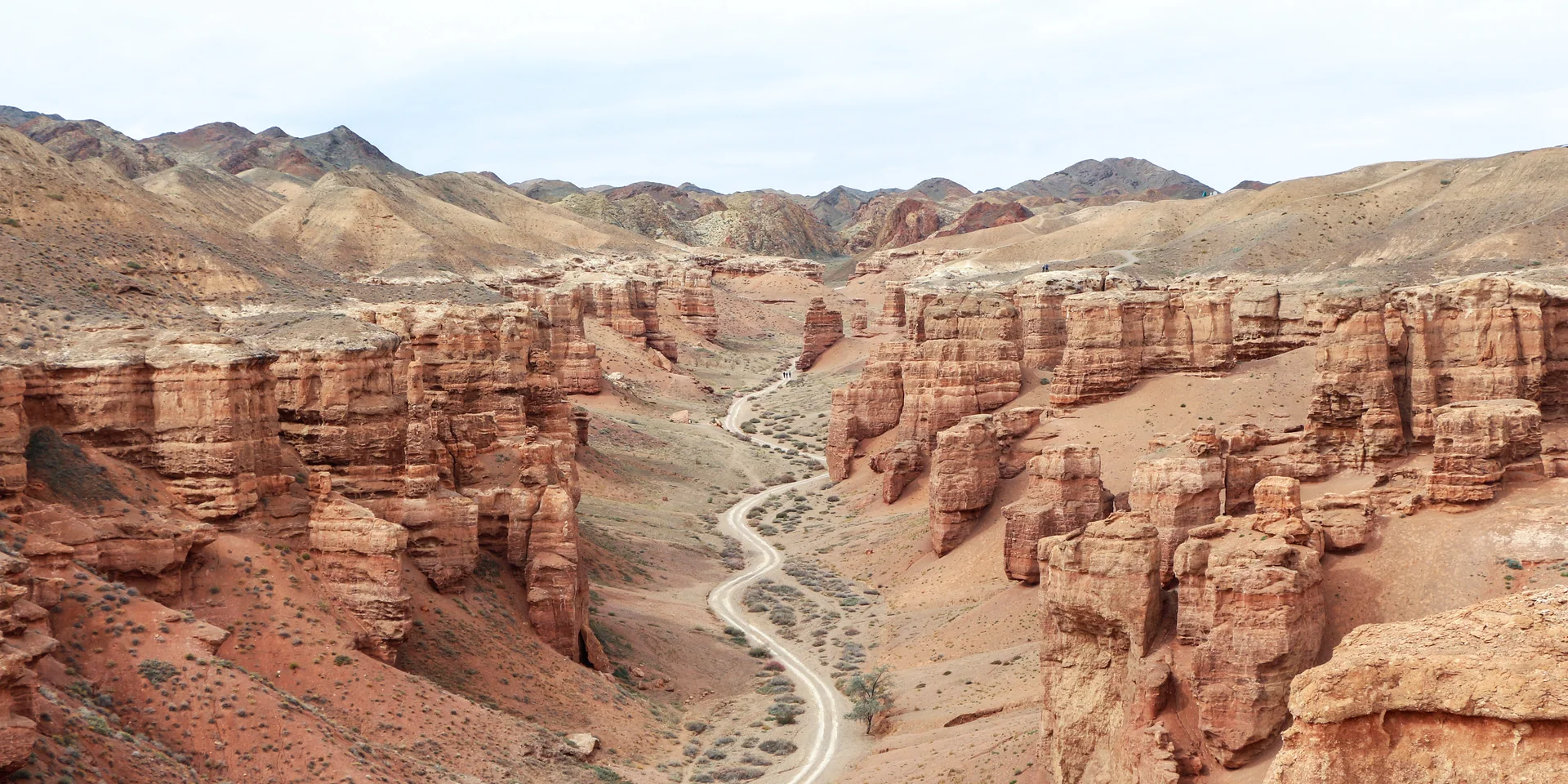
Charyn's Valley of Castles is a landscape of eroded rock walls, pinnacles and passages rather than one viewpoint. Look for the changing shapes along the designated route as well as the broad panorama from above. The national park has a visitor centre and controlled entry; choose your walking or guided transport option there, and carry water for an exposed canyon outing.
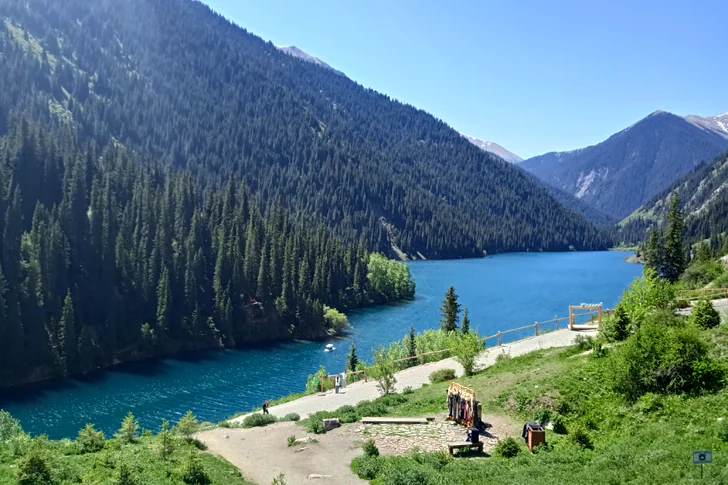
5. Kolsai Lakes
For a first visit, focus on Lower Kolsai, the forest-edged lake shown here, rather than trying to collect all the lakes in one outing. The national park treats routes towards the middle and upper lakes as separate mountain journeys. Follow the marked lower-lake trail and leave swimming out of the plan: the published route rules prohibit it. Saty is a useful base for this lake district.
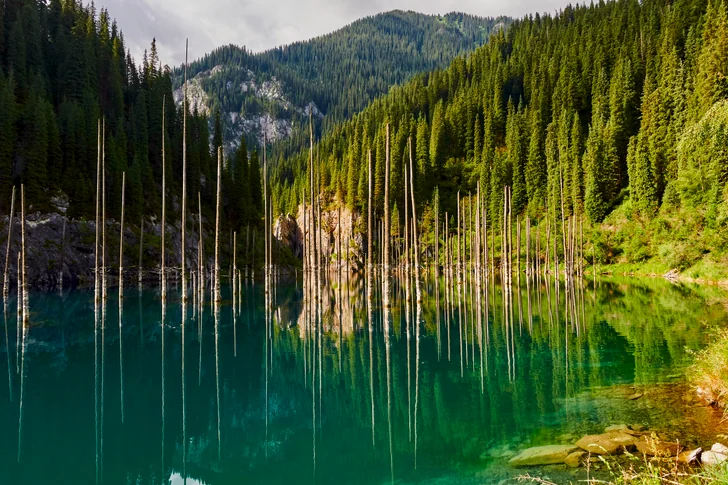
6. Kaindy Lake
Kaindy's standing spruce trunks mark a forest flooded after the earthquake of 1911. The pale timber rising through the water makes this a quite different stop from Kolsai, despite their shared national park. The route from Saty includes a checkpoint, parking and a walking section. New road works were reaching technical opening immediately before this guide was checked, so establish the actual access arrangements locally rather than relying on an older description of the drive.
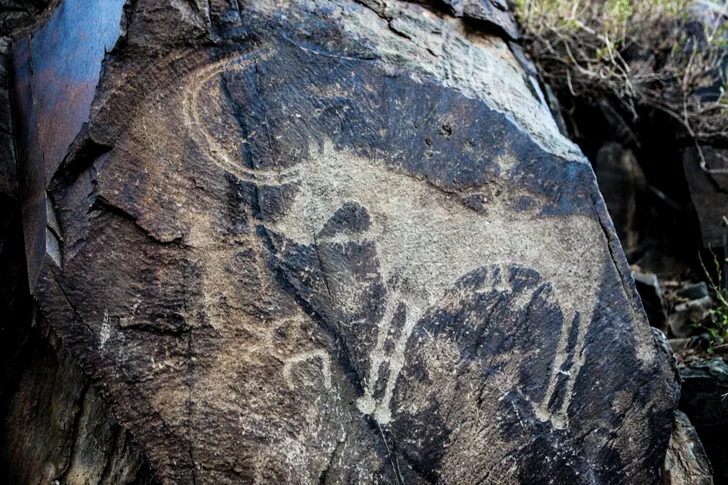
7. Tamgaly Petroglyphs
UNESCO's Petroglyphs within the Archaeological Landscape of Tamgaly preserve images from successive periods, including the Bronze Age, across a rocky gorge in the Chu-Ili Mountains. The museum-reserve near Karabastau has marked walking paths and interpretation signs: take time to look at individual rock panels rather than treating the site as a roadside photo stop. When arranging transport, specify this Tamgaly; Tamgaly Tas on the Ili River is a different place.
Zhetisu: Altyn-Emel National Park
2 places
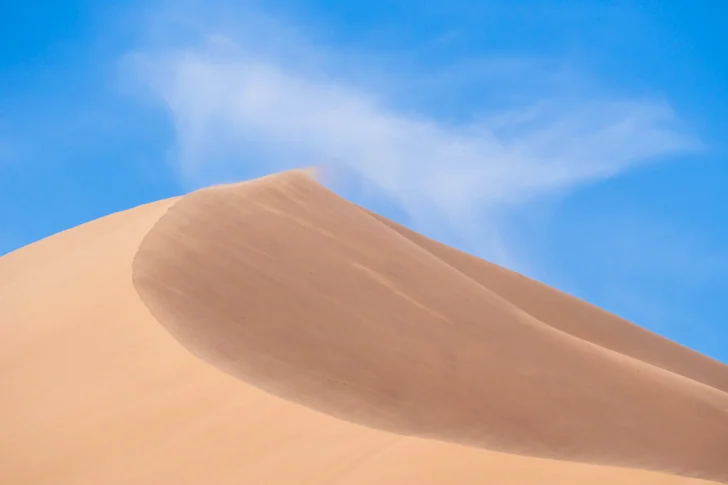
8. Singing Dune
A long sand ridge rises between the Kalkan hills on the right bank of the Ili, contrasting with the surrounding stony landscape. Moving sand can produce the sound behind the dune's name in suitable dry conditions; hearing it is a possibility, not a scheduled attraction. Start your park arrangements in Basshi and agree the route and required guide or ranger escort with the administration before entering.
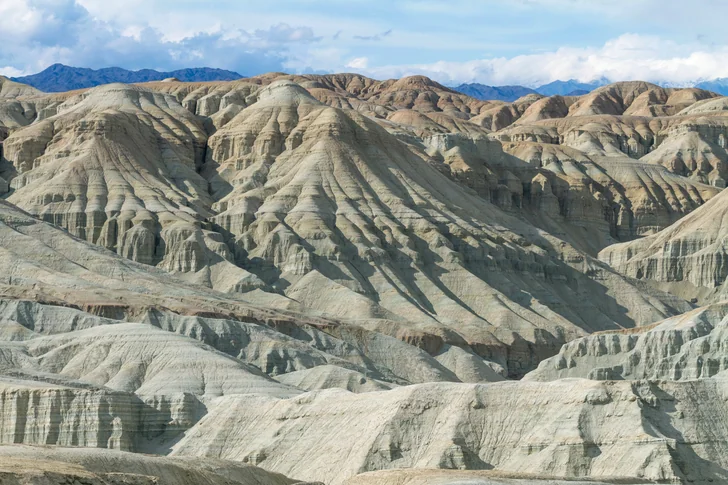
9. Aktau Mountains
Altyn-Emel's Aktau Mountains expose layers of pale and coloured sedimentary rock, cut into ridges and gullies. They reward looking at the folds and colour changes as much as the overall view. This is a separate, remote park excursion from the Singing Dune, with substantial driving involved; book the transport and permit around both destinations if you want to see them. The name refers to inland mountains in Zhetisu Region.
Turkistan and the western Tien Shan
4 places
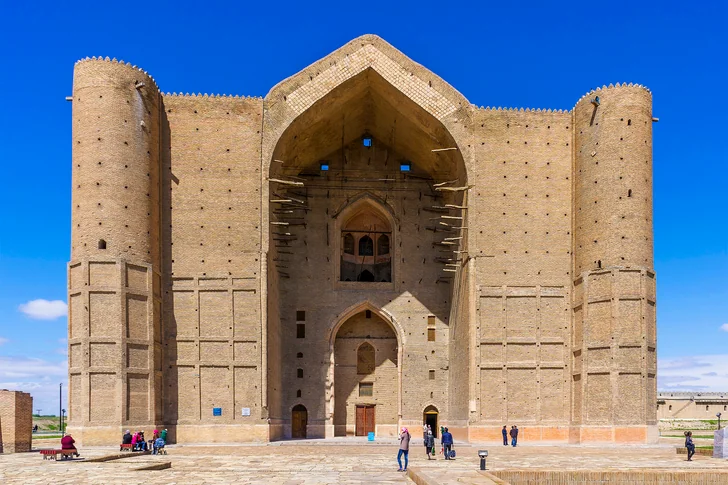
10. Mausoleum of Khoja Ahmed Yasawi
The great entrance portal and domed mass of Yasawi's mausoleum dominate this historical part of Turkistan. Commissioned under Timur and built between 1389 and 1405, the unfinished complex is now a UNESCO World Heritage Site. Bring identification for the controlled entrance and allow time for the museum displays as well as the building.
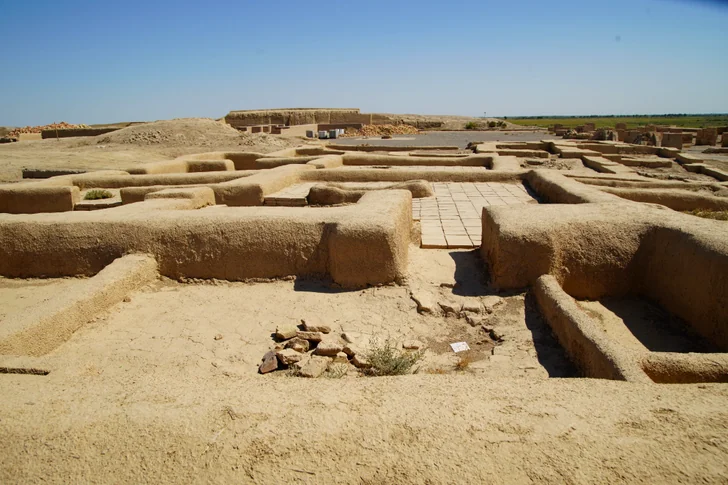
11. Otrar Archaeological Site
Otrar, also known as Farab, was a medieval Silk Road centre near the meeting of the Arys and Syr Darya rivers. Its excavated quarters let you consider the layout of a city rather than a single surviving monument. Conservation and reconstruction continue, so distinguish restored masonry from excavated remains as you explore. Arrange this as its own excursion through the Otrar museum-reserve rather than confusing it with nearby religious sites.
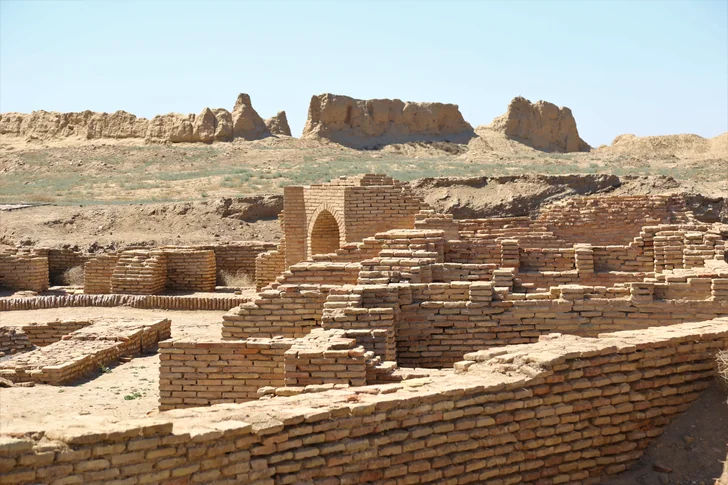
12. Sauran Archaeological Site
Sauran's walls and archaeological remains stand in the open country northwest of Turkistan. The protected site spans several centuries of medieval and later history, with restoration adding another layer to what visitors see today. Its setting and surviving fortifications make a useful counterpart to Otrar, but the two require separate transport planning. Take water and sun protection for an open-air visit.
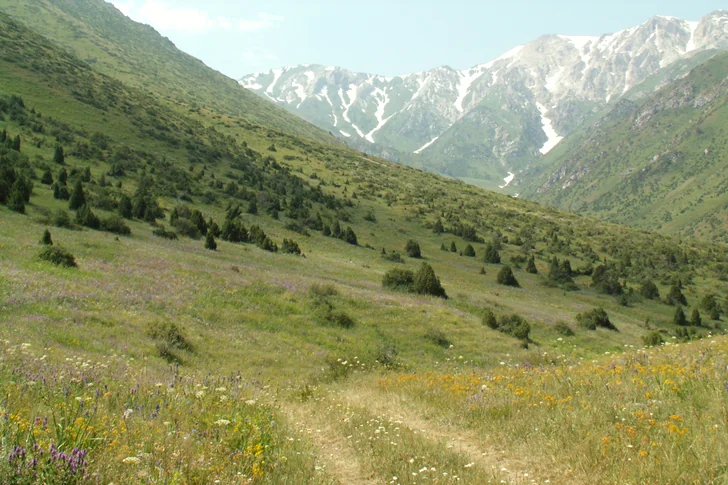
13. Aksu-Zhabagly Nature Reserve
Aksu-Zhabagly protects mountain valleys and slopes of the western Tien Shan, with scenery extending well beyond its better-known canyon. The mountain landscape pictured here reflects that wider appeal. This is a strict nature reserve with organised routes, so choose an educational excursion through the administration in advance; staying in nearby Zhabagly does not by itself authorise entry to reserve trails.
Astana and Akmola Region
3 places
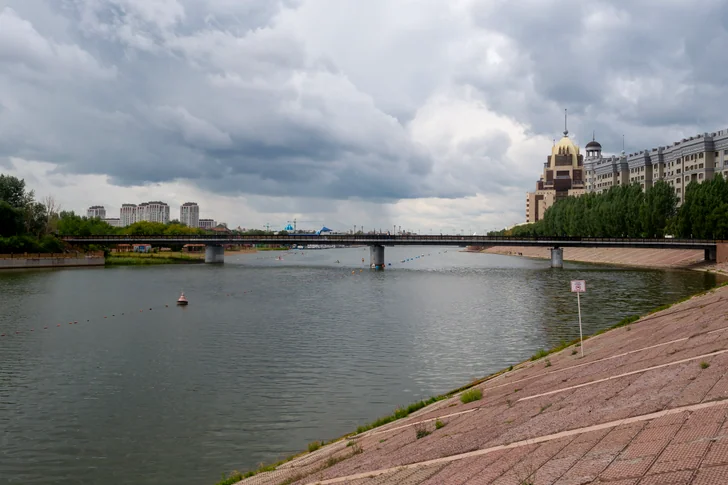
14. Yesil River Embankment in Astana
The Yesil, also called the Ishim, gives Astana a riverside walking route away from its broad avenues. Visit Astana describes a central walk from the Kenesary monument along the embankment towards the city park and Atyrau pedestrian bridge; follow the open sections around any local works. Elsewhere in the left-bank city, Bayterek offers an observation deck, while Khan Shatyr is a shopping and entertainment centre. Keep those as separate city stops alongside your river walk.
15. Burabay National Park
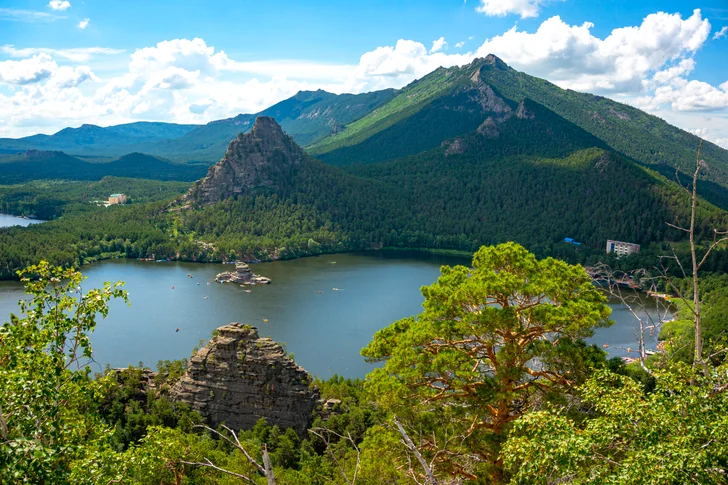
Lake Burabay brings water, forest and granite outcrops together in a compact-looking landscape that still deserves an overnight stay. The park's marked routes include approaches towards Bolektau, where wooden steps and boardwalks have been installed. Base yourself in the Shchuchinsk–Borovoye resort area and choose a walk suited to your footing and the weather, leaving time to enjoy the lakeshore rather than spending the whole visit in transit.
16. Korgalzhyn Nature Reserve
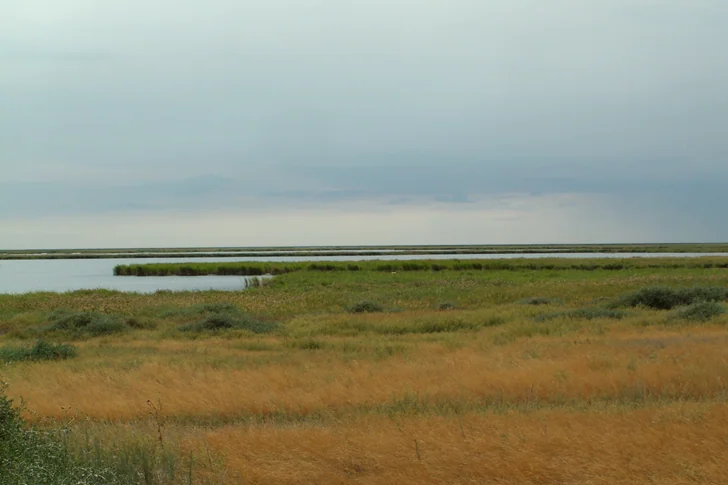
Korgalzhyn's fresh and salt lakes form part of UNESCO's Saryarka World Heritage Site, together with Naurzum Reserve. The wetlands are important staging places for migrating waterbirds, making the seasonal life of the lakes a reason to visit alongside the open steppe scenery. Arrange the permitted excursion beforehand and ask what birds are present at your travel dates; flamingos are not a year-round guarantee.
Central steppe and hill country
4 places
17. Bayanaul National Park
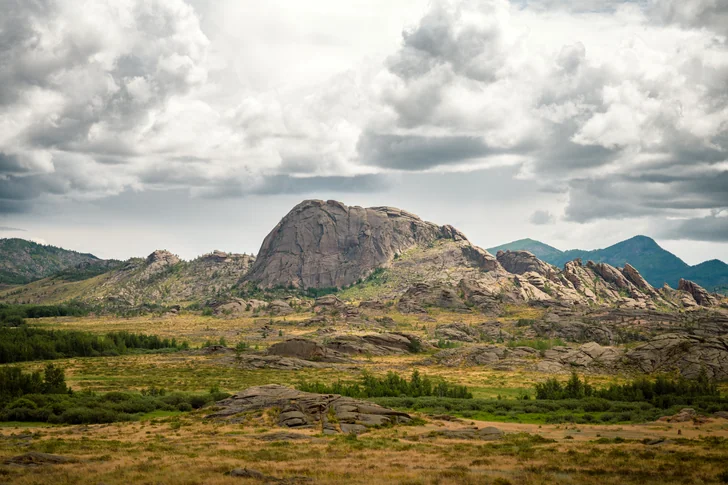
Bayanaul in Pavlodar Region brings together rocky hills, pine woods and forest-fringed lakes. The regional route network includes rock formations, a cave and a botanical trail, while Lake Zhasybay has an established holiday base. Choose accommodation and a local walk together, giving this park its own stay rather than attaching it to an already full Astana day.
18. Karkaraly National Park
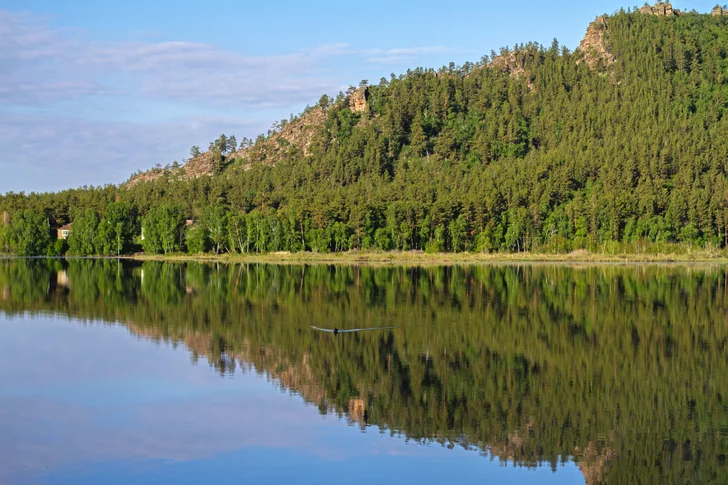
Pine woods and granite rocks rise from the surrounding steppe in Karkaraly, with lakes tucked into the hill country. One officially described outing heads towards Lake Shaitankol from the Berloga recreation base; the lake-and-forest scenery is part of the wider appeal of these hills. Choose a marked route with the park and allow a separate stay in Karaganda Region for the walking.
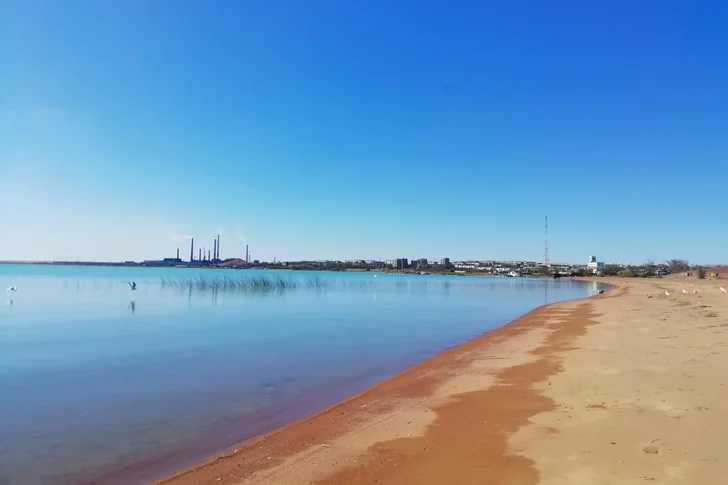
19. Lake Balkhash
For this itinerary, approach Balkhash from its northern shore around the city of the same name in Karaganda Region. The broad water and low shoreline offer a change from enclosed mountain lakes. Nearby Chubar-Tubek and Torangalyk have established recreation areas accessible from the city; choose the beach or accommodation first, then arrange the local transfer. Judge swimming by current local conditions rather than the calendar alone.
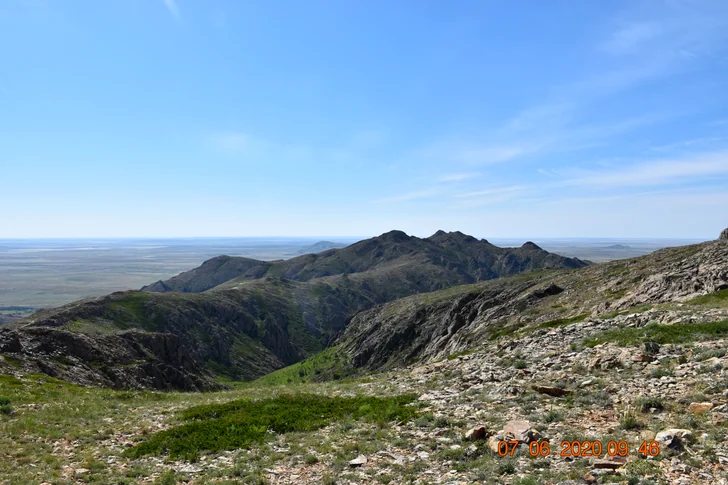
20. Ulytau Mountains
Ulytau offers open mountain horizons in a region with its own national park and museum-reserve. Aulietau is one of the named walking routes, giving a specific starting point for planning beyond a general drive through the hills. Build the visit around Ulytau village or Zhezkazgan and agree a route appropriate to your fitness; a summit walk needs more preparation than a roadside viewpoint.
The Kazakh Altai
2 places
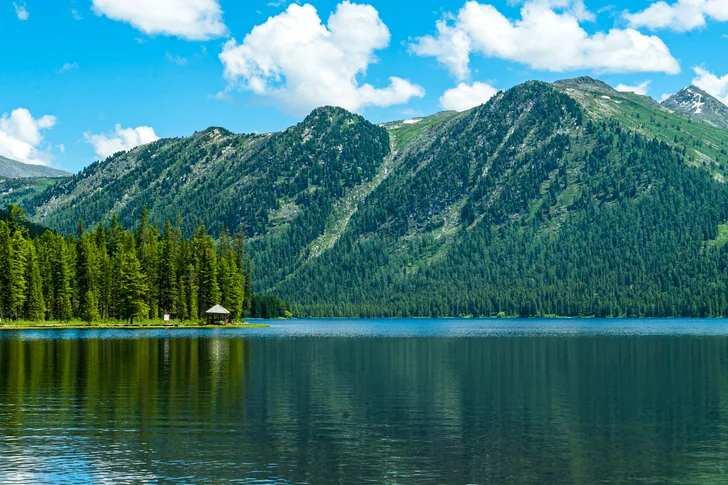
21. Katon-Karagay National Park
Rakhmanovskoye Lake, shown here, lies among high ridges and dense forest in the Katon-Karagay landscape of East Kazakhstan. It gives a specific focus to a journey into the Kazakh Altai, alongside the park's wider choice of valleys and walking routes. Discuss your route and entry arrangements with the park office, allowing time for the approach, and establish any additional border requirements before travelling.
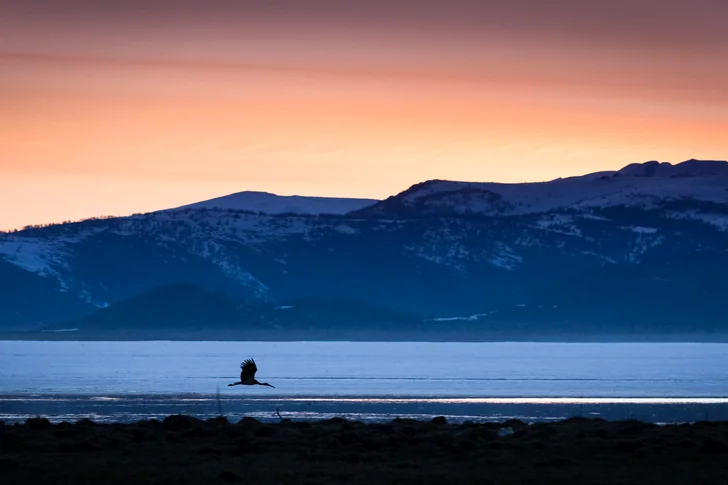
22. Markakol Lake
Markakol's water, wooded shores and surrounding mountains make the lake itself the focus of a visit to this part of the Altai. It lies within a strict nature reserve, whose administration is based in Urunkhayka. Arrange one of the authorised routes through that office, combining the lake view with interpretation of the protected landscape. Plan the road journey and accommodation in advance rather than treating the reserve as an unrestricted camping stop.
Mangystau: routes from Aktau
3 places
23. Bozzhyra
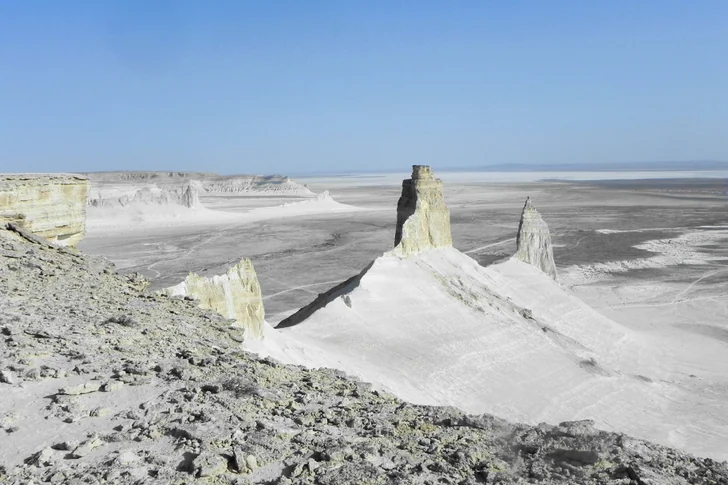
Bozzhyra's pale limestone towers rise from the Ustyurt landscape, with a scale best appreciated in the broad views across the basin. The final approaches lack a conventional road, making this a journey for suitable off-road transport and local knowledge. Organise the outing from Aktau with a provider who can assess current ground conditions, and enjoy the viewpoints while staying back from cliff edges.
24. Torysh Valley of Balls
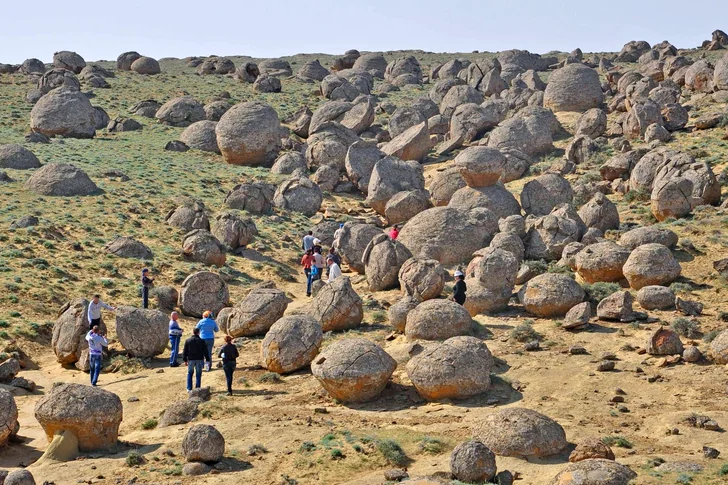
Torysh is known for rounded stone concretions scattered through the Mangystau landscape. Their shapes have a geological origin in sedimentary rock, rather than being carved monuments. Include the valley in a planned regional driving route, with time to walk among the formations. Download your arrangements before leaving and carry water: the national tourism portal warns that local connectivity is absent.
25. Beket-Ata Underground Mosque
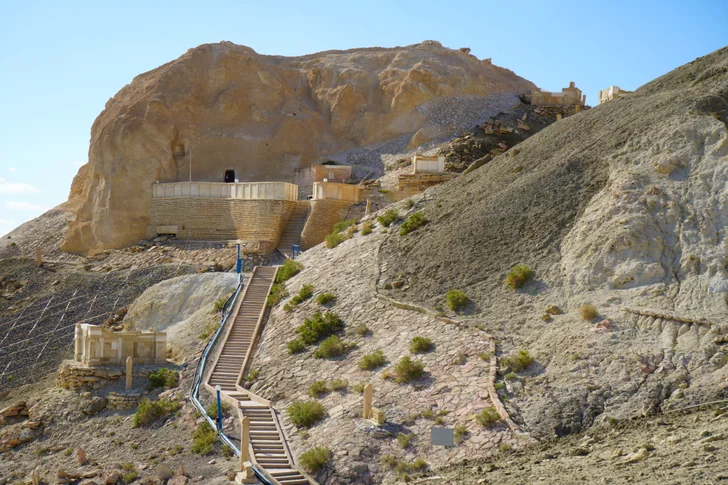
At Oglandy, Beket-Ata's mosque is cut into the pale rock, with a prayer room and the burial place of the religious teacher. The historical underground rooms are distinct from the modern visitor and pilgrimage buildings above. Reaching them involves a descending stair trail of roughly 1.5 kilometres, followed by the climb back. Allow for that effort, bring water and respect the requirements of this active pilgrimage destination.
Where to go in the evening
In Almaty, keep a quiet evening for Panfilov Park, fitting any cathedral visit around worship. In Astana, the central Yesil embankment towards the city park is a starting point for an evening walk, following whichever sections are open. Outside the cities, plan to reach your accommodation before dark, especially where your outing involves mountain paths, reserve arrangements or remote desert tracks.
Regional itineraries for 1, 2 and 3 days
One day: in Almaty, combine Panfilov Park with a mountain-valley outing to Medeu if current access permits. From Turkistan, centre the day on Yasawi's mausoleum and museum displays. In Astana, explore the city and leave time for the river. These are alternative starting points for separate trips.
Two days: for mountain lakes, travel towards Saty and visit Lower Kolsai, stay locally, then make Kaindy your second day's outing before returning. For history, spend the first day in Turkistan and arrange either Otrar or Sauran for the second. From Astana, another option is a separate Burabay overnight trip with a marked walk and lakeshore time.
Three days: a southeast road trip can give Charyn its own day, followed by a Saty overnight and separate Kolsai and Kaindy outings, with the return journey included in the transport plan. For Altyn-Emel, use the extra time for Basshi and separately arranged dune and Aktau Mountains routes. In Mangystau, ask an experienced organiser to group Torysh, Bozzhyra and Beket-Ata around road conditions, driving time and overnight stops; the latter two should not be promised as an effortless combined day.
Korgalzhyn needs its own prearranged reserve excursion. Bayanaul, Karkaraly, Balkhash, Ulytau and the Altai deserve separate itineraries with travel days. None of these short plans is a three-day circuit of Kazakhstan.
 Russia
 Kazakhstan