
 English
 Español
 Deutsch
 日本語
 Italiano
 Português
 Русский
 简体中文
 한국어
 Polski
 ภาษาไทย
Indonesia is a country of islands: according to the national mapping agency BIG, it had 17,380 named islands in 2024. The tourist attractions in Indonesia are spread across the whole archipelago: ancient temples on Java, clifftop shrines on Bali, volcanoes, crater lakes, coral reefs and rainforests with wild orangutans. Ten places in the country are on the UNESCO World Heritage List, and six of them are in this article. The capital is Jakarta, on the island of Java.
The landmarks most often named as symbols of Indonesia are Borobudur, Prambanan, the National Monument in Jakarta, Tanah Lot and the "Gate of Heaven" at Lempuyang in Bali, and the Komodo dragon. All of them are among these 30 top attractions in Indonesia, grouped by island: Java and Bali, where most trips begin, then Lombok and Flores, Sumatra, Kalimantan, Sulawesi, the Banda Islands and Raja Ampat. At the end there are routes for one and two weeks. Prices, opening hours and entry rules were checked on official websites on 2 November 2026; where there is no official figure, we give none.
Before you go: visas, fees, transport and seasons
Visa.
Citizens of 97 countries, including the US, Australia, Germany, Japan, China, India and Russia, can get a visa on arrival. It costs IDR 500,000 for 30 days and can be extended once for another 30 days; the electronic version, e-VOA, is issued in advance at evisa.imigrasi.go.id. Your passport must be valid for at least six months, and you need an onward ticket. The arrival declaration on the All Indonesia platform can be filled in up to three days before you land.
Bali tourist levy.
Foreign visitors to Bali pay IDR 150,000 per person, once per stay. Pay in advance on the official Love Bali website or at the counters at the airport and ports; payment is by card, bank transfer or QRIS, not in cash.
Airports.
The main gateways are Soekarno-Hatta in Jakarta, linked to the city by the Commuter Line airport train, and I Gusti Ngurah Rai in Bali. Yogyakarta International Airport has a train to the city's Tugu station. From Lombok International Airport, DAMRI buses run to Mataram (IDR 25,000) between 07:00 and 17:00.
Between islands.
Distances are large, so most trips combine domestic flights with a few overland legs. State ferries run by ASDP connect Java and Bali (Ketapang–Gilimanuk), Bali and Lombok (Padangbai–Lembar) and Sumbawa and Flores (Sape–Labuan Bajo); tickets are sold through the Ferizy app.
Money.
Payments in Indonesia are made in rupiah (IDR). National parks charge foreigners a daily fee set by a 2024 government regulation; prices are given for each park below.
Seasons and holidays.
Most of the country has a drier season in the middle of the year and a wet season around the turn of the year. For 2026–27 the weather agency BMKG expects a very strong El Niño, with the wet season in most regions starting in November 2026 and peaking from December to February. Nyepi, Bali's day of silence, falls on Monday 8 March 2027: for 24 hours from 06:00 the island shuts down, the airport closes and visitors must stay in their hotels. Eid al-Fitr follows on 10–11 March, with extra days off on 9, 12 and 15 March, so book transport for that week early.
Temples.
In Bali temples you need a sarong and sash, usually included in the ticket. Under the 2025 rules of the Governor of Bali, tourists may not enter the inner sacred courtyards unless they come to pray in Balinese dress, and menstruating women may not enter them at all.
Java: Jakarta and Bogor
4 places
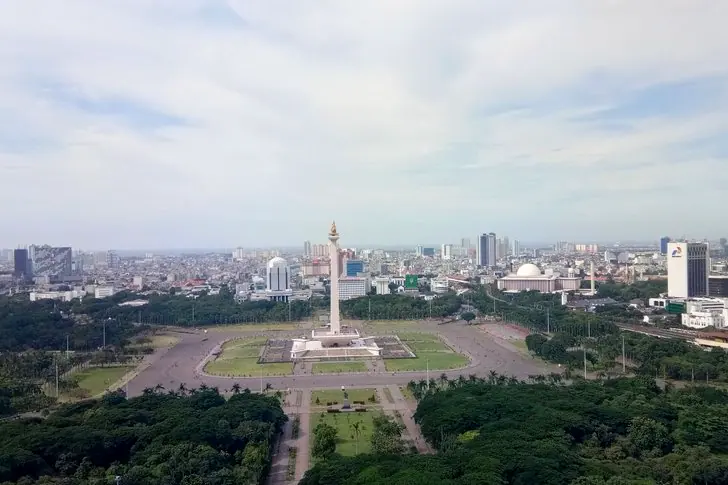
National Monument (Monas)
The 132-metre obelisk in the middle of Merdeka Square is the symbol of Jakarta and of Indonesian independence. Construction began on 17 August 1961, and the monument opened to the public on 12 July 1975. The observation deck at the top, 115 metres above the ground, has telescopes and views over the whole city. Below ground, the National History Museum tells the country's story in dioramas from the early kingdoms to the reform era.
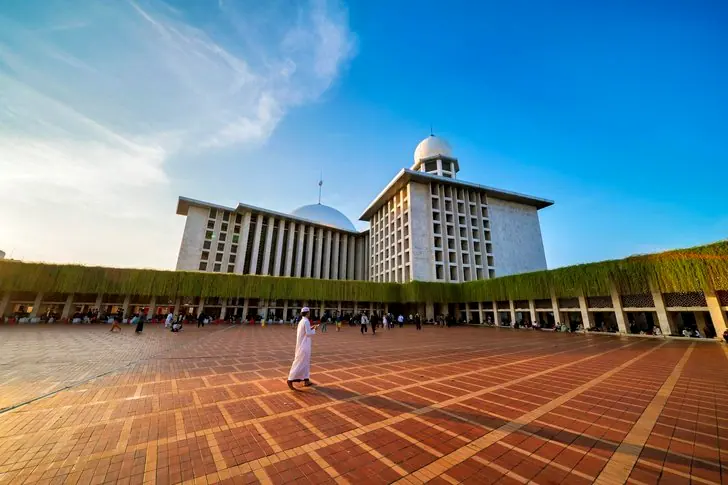
Istiqlal Mosque
The largest mosque in Southeast Asia stands across the road from Jakarta Cathedral. Construction began in 1961, and President Suharto opened the mosque on 22 February 1978. Its architect, Friedrich Silaban, was a Batak Christian. According to the mosque, it holds up to 200,000 worshippers. In December 2024 an underground "Tunnel of Friendship" was opened between the mosque and the cathedral. Groups, including foreign visitors, can register for a visit through a form on the mosque's website.
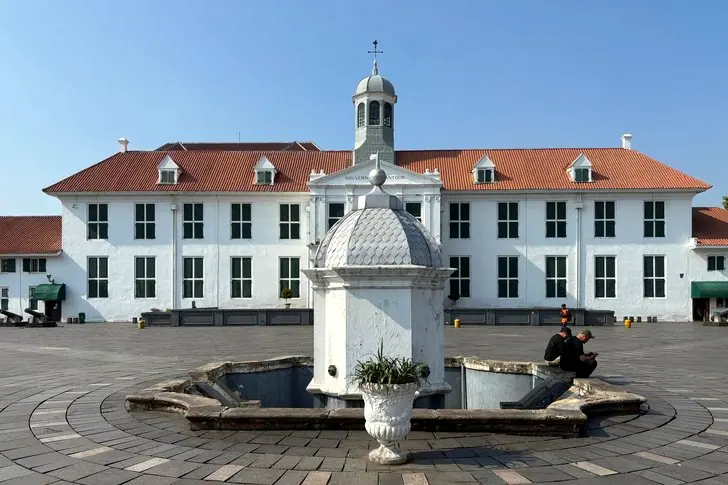
Kota Tua and Fatahillah Square
Kota Tua, the old town, is what remains of Batavia, the Dutch colonial capital. Its centre is Fatahillah Square with the former city hall, built in the early 18th century. Since 1974 the building has housed the Jakarta History Museum, with a collection of about 23,500 objects; the old prison cells in the basement can also be seen.
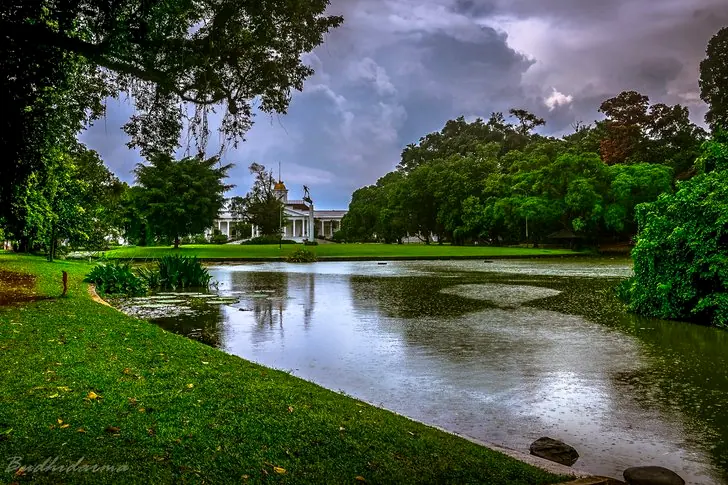
Bogor Botanical Gardens
Founded in 1817 under the Dutch botanist C. G. C. Reinwardt, Kebun Raya Bogor is the oldest botanical garden in Southeast Asia. The garden lies next to the Bogor Presidential Palace, which you can see across the main pond. Bogor can be reached from Jakarta by road or by Commuter Line train, an easy day trip.
Java: Yogyakarta and Central Java
4 places
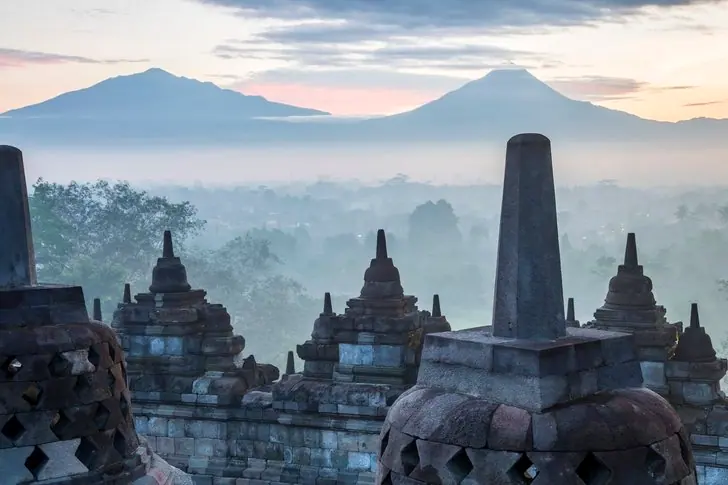
Borobudur
This Buddhist monument northwest of Yogyakarta was built in the 8th and 9th centuries under the Sailendra dynasty. UNESCO describes it as a stepped pyramid of five square terraces topped by three circular platforms and a large central stupa. Around the circular platforms stand 72 openwork stupas, each with a statue of the Buddha inside. The walls of the square terraces are covered with carved reliefs. On clear mornings the volcanoes Merapi and Merbabu rise above the plain. Borobudur has been on the World Heritage List since 1991.
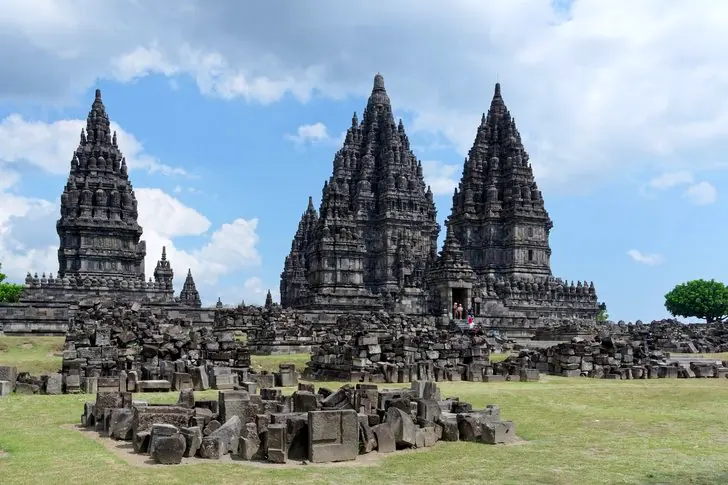
Prambanan
This Hindu temple complex east of Yogyakarta was built in the 9th century, under King Rakai Pikatan of the Mataram kingdom. It is dedicated to the Trimurti: the central temple of Shiva rises to 47 metres, with the temples of Brahma and Vishnu on either side. Prambanan itself consists of 240 temples. The UNESCO listing (1991) also covers Sewu, Indonesia's largest Buddhist complex, guarded by four pairs of giant statues, and the smaller Lumbung and Bubrah temples nearby. On Mondays the three main temples are closed for maintenance, but Sewu, Lumbung and Bubrah remain open.
The Ramayana Ballet has been staged at Prambanan since 1961, with more than 200 dancers and musicians. In 2026 it was performed on Tuesday, Thursday and Saturday evenings at 19:30: from May to October on the open-air stage with the temples behind it, in the rest of the year in the indoor Trimurti theatre. Seats cost from IDR 150,000 to IDR 500,000 (VIP at weekends).
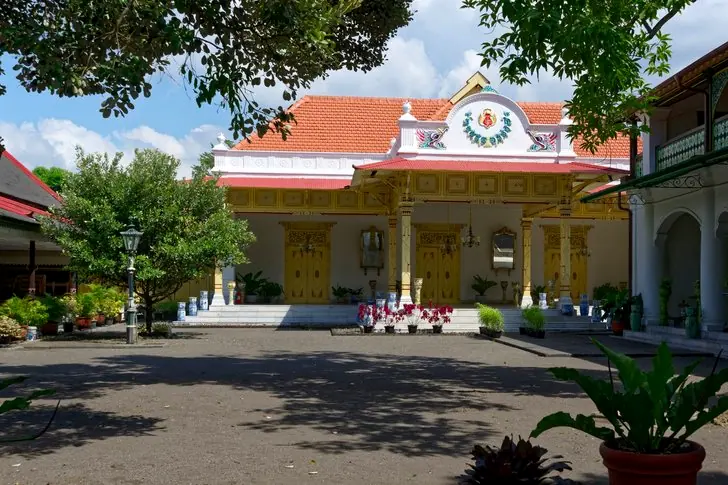
Kraton of Yogyakarta
The palace of the sultans of Yogyakarta was begun on 9 October 1755 by Sultan Hamengkubuwono I, and the royal family moved in a year later. Part of the palace, the Kedhaton, is open as a museum, and the Srimanganti pavilion hosts short performances of music, dance or puppetry, with a different programme each day. The palace stands at the centre of the six-kilometre axis running north to south between Mount Merapi and the Indian Ocean, which UNESCO listed in 2023 as the Cosmological Axis of Yogyakarta.
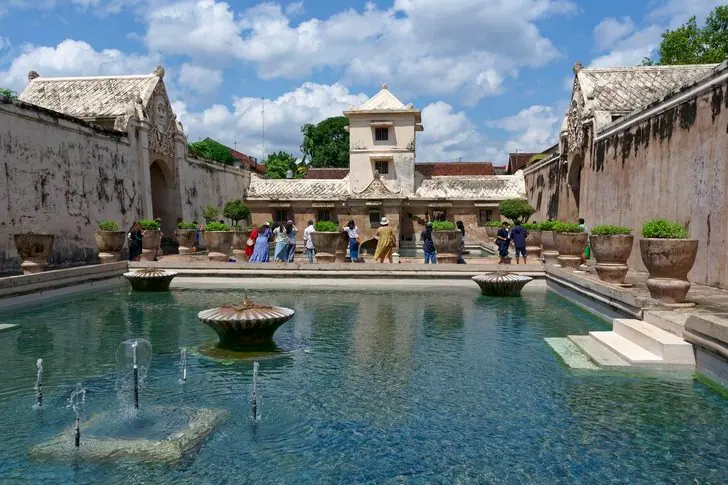
Taman Sari Water Castle
A few minutes' walk from the palace, Taman Sari was built between 1758 and 1765 by the same sultan as a pleasure garden and a refuge for the royal family. The best-preserved part is Umbul Binangun, three bathing pools for the sultan, his wives and the princesses. Beyond it lie the Gapura Agung gate, carved with reliefs, and Pulo Kenanga, a two-storey building by the Segaran lake. Taman Sari is open on Mondays, so it is a good choice for the day the palace is closed.
Java: East Java volcanoes
2 places
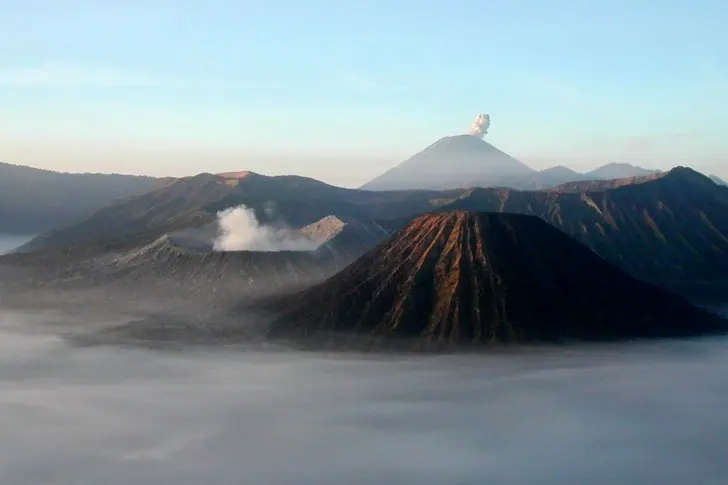
Mount Bromo
Bromo is an active volcano standing inside a huge caldera floored with grey volcanic sand, in Bromo Tengger Semeru National Park. The classic view is at sunrise from the viewpoint on Mount Penanjakan, with the smoking crater of Bromo, the cone of Batok and Semeru, the highest mountain on Java, behind them. After sunrise, jeeps take you across the sand to the foot of Bromo, and you walk up to the crater rim. Bring warm clothes.
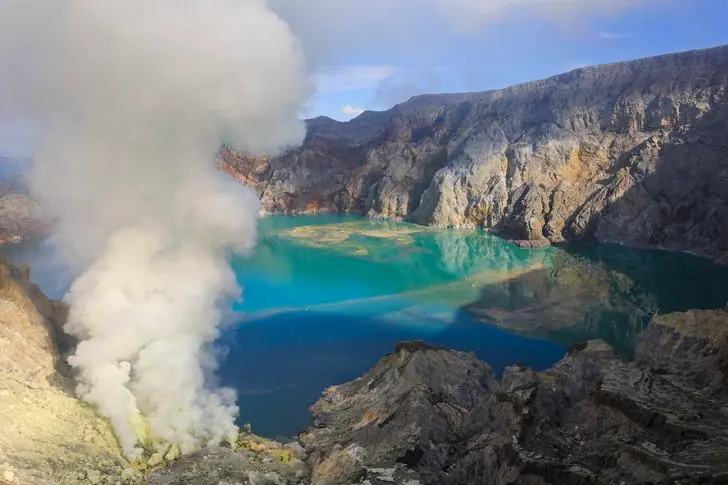
Ijen Crater
At the bottom of the Ijen crater, at about 2,443 metres in the far east of Java, lies a turquoise lake that UNESCO calls the most acidic in the world. At night, sulphurous gases escaping from cracks in the crater burn with a blue flame at more than 360 °C; it can only be seen in the dark, which is why visitors start climbing in the middle of the night. The area became a UNESCO Global Geopark in 2023.
Bali
7 places
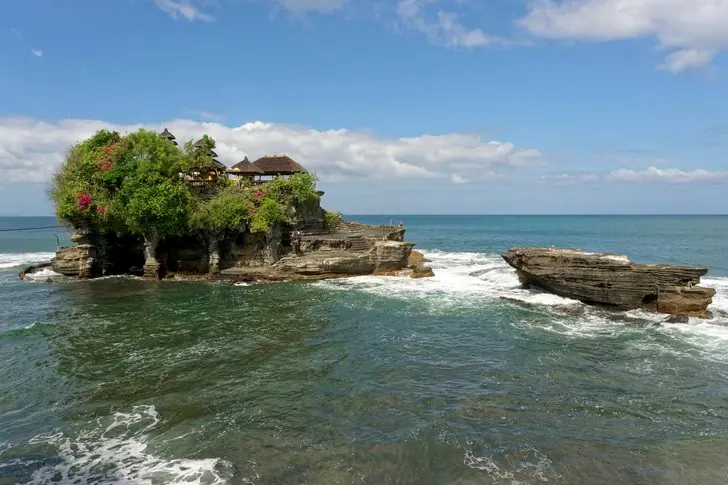
Tanah Lot
A sea temple on a rock just off Bali's southwest coast, in Tabanan. Legend says it was founded by the priest Dang Hyang Nirartha, who moved a piece of the shore into the sea; the name means "land in the sea". The temple is dedicated to the sea god Bhatara Segara, and sacred snakes are said to guard the base of the rock. Most visitors come for the view from the shore at sunset; at high tide the temple seems to float on the water. A kecak dance is performed at sunset at the De Jukung restaurant nearby.
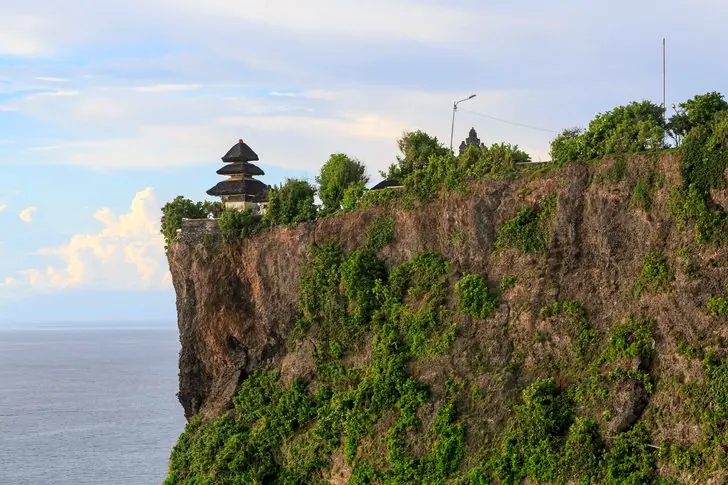
Uluwatu Temple
Pura Luhur Uluwatu stands at the edge of a 70-metre limestone cliff on the Bukit peninsula at the southern tip of Bali. It is one of the six holiest temples of the island and dates back to at least the 9th century; according to tradition, Nirartha attained enlightenment here. The monkeys that live around the temple snatch glasses, hats and phones, so keep them in your bag. Every evening at sunset, a kecak dance is performed at the temple. The dance was developed in the 1930s by the Balinese artist Wayan Limbak with Walter Spies.
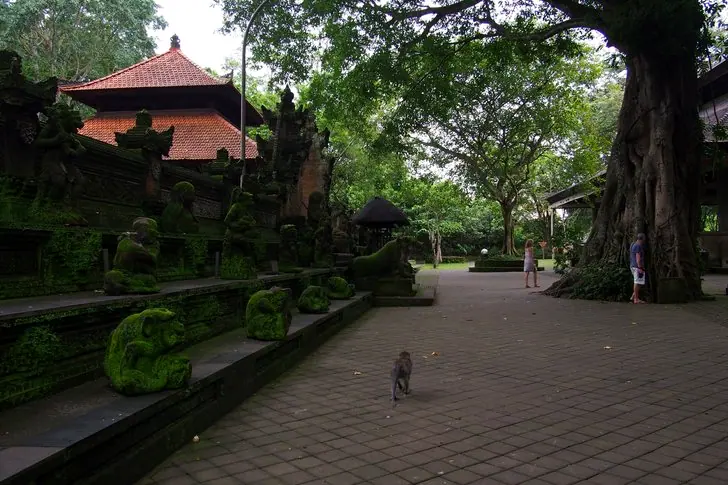
Ubud Monkey Forest
The Sacred Monkey Forest Sanctuary on the edge of Ubud is 12.5 hectares of forest with 186 species of trees and about a thousand long-tailed macaques. Three temples stand in the forest: the main one, dedicated to Shiva, a holy spring temple and a temple of the dead next to the village cemetery. They are thought to date from the 14th century, and only worshippers may enter. Do not bring food or drinks, do not touch or feed the monkeys and avoid looking them in the eye.
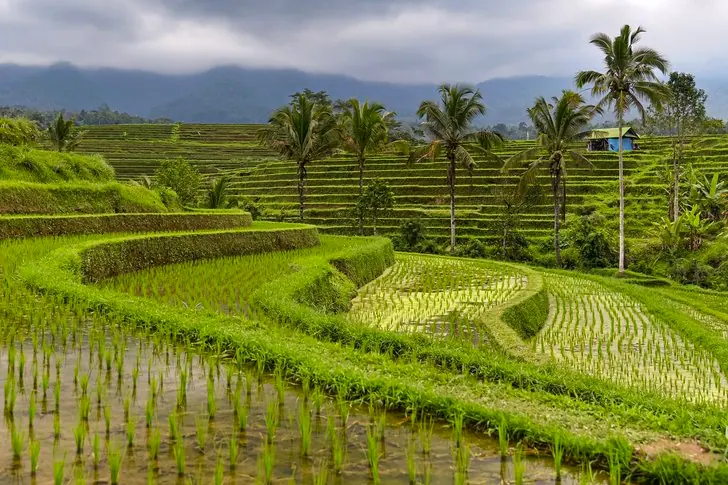
Jatiluwih Rice Terraces
The village of Jatiluwih lies at about 700 metres on the slopes of Mount Batukaru, about 40 km from Denpasar. Its terraces cover 227 hectares of rice fields. They are watered by subak, a cooperative system that dates back to the 9th century and shares water between farmers through canals and water temples. Since 2012 the Batukaru terraces have been part of the UNESCO World Heritage site "Cultural Landscape of Bali Province: the Subak System".
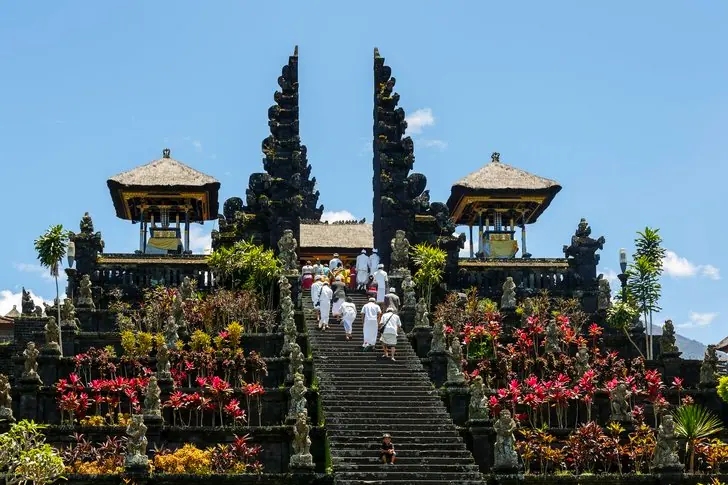
Besakih Temple
The "mother temple" of Bali stands at about 1,000 metres on the southwestern slope of Mount Agung, the island's highest and holiest volcano. It is the largest Hindu temple in Bali and in Indonesia: 26 temples, with Pura Penataran Agung in the centre and 25 others around it. Besakih is about two hours' drive from Ubud.
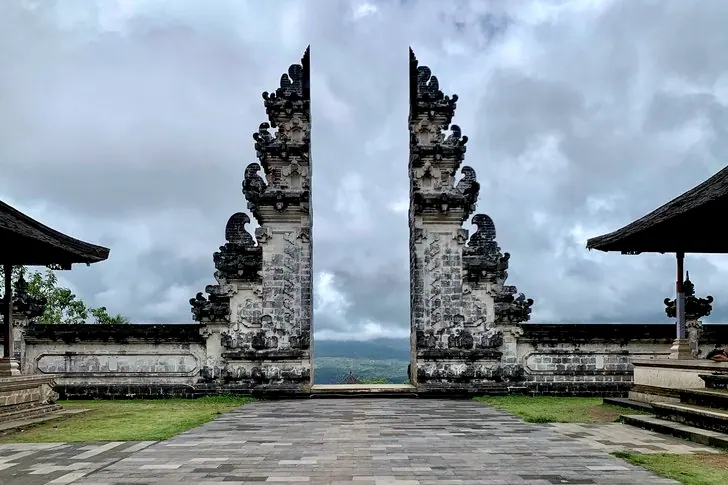
Lempuyang Temple (Gate of Heaven)
Pura Lempuyang, in the far east of Bali, is one of the island's six holiest temples. The famous "Gate of Heaven", a split gateway framing Mount Agung, stands at the lower temple, Pura Penataran Agung. The queue to be photographed in it is often long, so arrive early; taking the photo is free. The reflection in many pictures is sometimes made with a mirror. The full pilgrimage climbs about 1,700 steps past seven temples to Lempuyang Luhur at about 1,175 metres, two to four hours there and back.
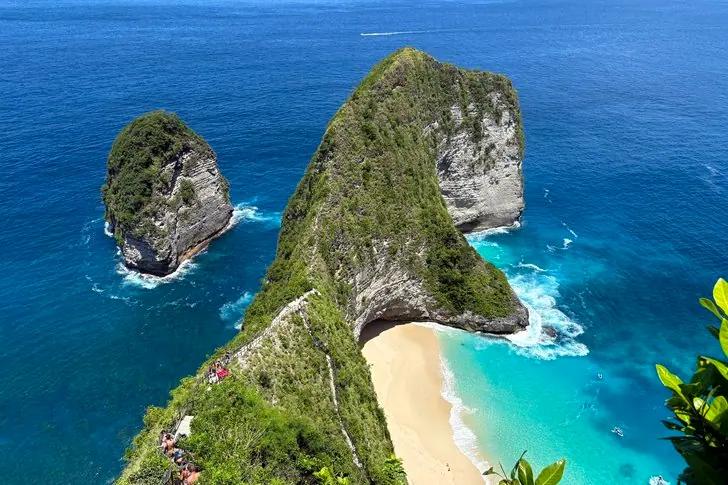
Kelingking Beach, Nusa Penida
On the southwestern coast of Nusa Penida, an island off Bali, a narrow headland shaped like a Tyrannosaurus plunges into the sea. The beach below is reached by a steep and dangerous descent; many visitors stay at the viewpoint. Broken Beach is about 3 km away. Fast boats to Nusa Penida leave from Sanur, Kusamba and Padang Bai and take 30–45 minutes, depending on the weather; on the island you need a car or scooter.
Lombok and Nusa Tenggara
4 places
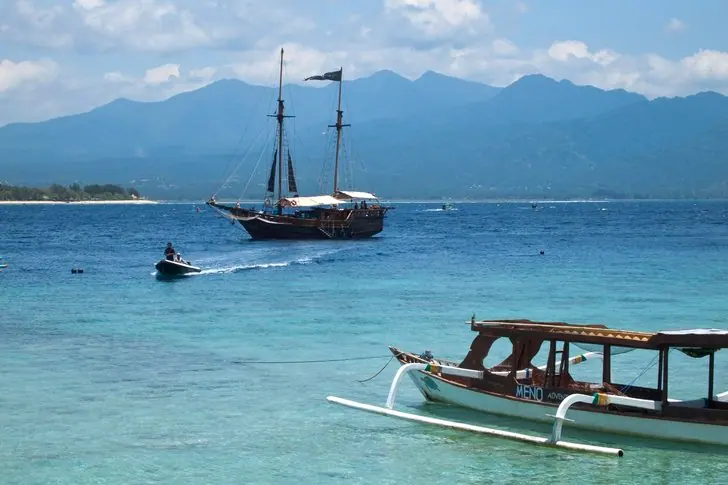
Gili Islands
Three small coral islands off the northwest coast of Lombok: Gili Trawangan, the largest and liveliest, Gili Meno, the smallest and quietest, and Gili Air, the closest to Lombok. Cars and motorbikes are banned, so people get around on foot, by bicycle or in a horse-drawn cart called a cidomo; a ride around Trawangan by bicycle takes about an hour. The coral reefs around the islands are good for snorkelling, and Mount Rinjani rises on the horizon. Fast boats come from Padang Bai and Serangan in Bali; from Bangsal harbour on Lombok, public boats leave when they are full.
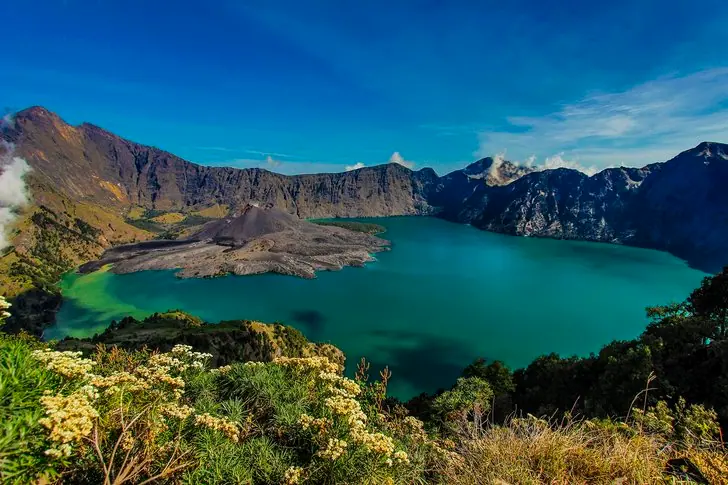
Mount Rinjani
At 3,726 metres, Rinjani on Lombok is the second-highest volcano in Indonesia. Its caldera was formed by the eruption of the Samalas volcano in 1257 and holds the crescent-shaped lake Segara Anak, from which the young active cone of Barujari rises. Rinjani and the Gili Islands are part of the Rinjani-Lombok UNESCO Global Geopark (2018).
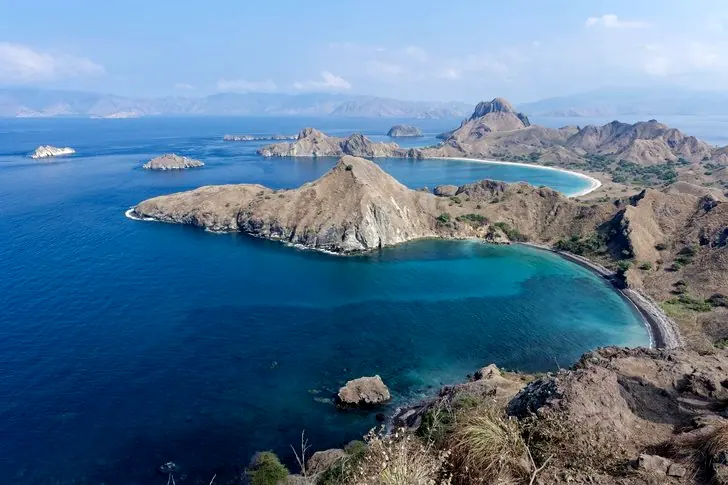
Komodo National Park
The national park between Sumbawa and Flores is the main home of the Komodo dragon, the largest lizard in the world, which grows to 2–3 metres. In 2022 the park counted about 3,156 dragons. It has three main islands, Komodo, Rinca and Padar, and visitors may see dragons only at the ranger posts at Loh Liang on Komodo, Loh Buaya on Rinca and Padar Selatan on Padar. The view from Padar over three bays is the park's best-known picture. Boat trips also stop at Pink Beach, the reef of Taka Makassar and Kalong Island with its flying foxes. The park was created in 1980 and has been on the World Heritage List since 1991. Trips start from Labuan Bajo on Flores, which has its own airport.
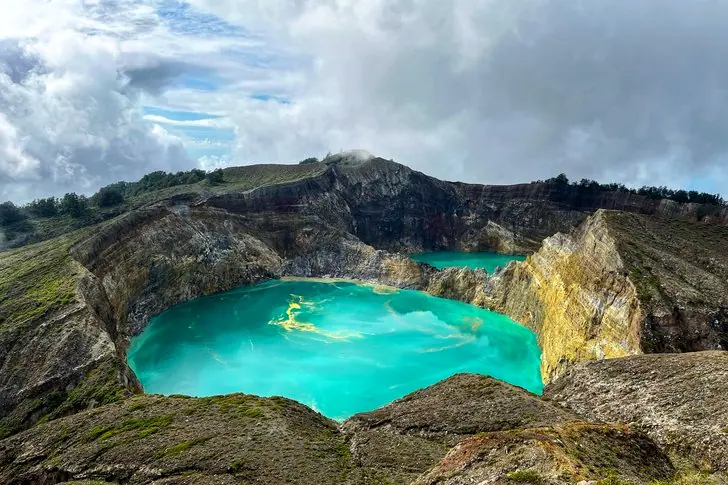
Kelimutu
Three crater lakes at the summit of the Kelimutu volcano in central Flores change colour unpredictably: they have been blue, green, black, white and red. Local people believe that the souls of the dead rest in them, and the lakes have names: Tiwu Ata Polo, Tiwu Ko'o Fai Nuwa Muri and Tiwu Ata Bupu. At 5,356 hectares, Kelimutu is the smallest of the six national parks in the Bali and Nusa Tenggara region. The gateway is the village of Moni, 66 km from Ende and 83 km from Maumere: from Moni a road climbs to the car park, followed by a 30-minute walk to the lakes.
Sumatra
4 places
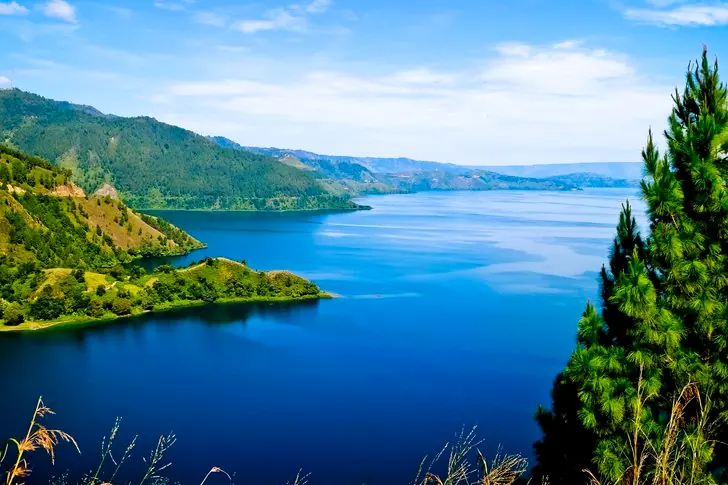
Lake Toba and Samosir Island
Lake Toba fills the caldera of a super-volcano that erupted about 74,000–75,000 years ago. UNESCO calls it the largest volcanic crater lake in the world: about 1,100 km², up to 505 metres deep, with its surface at 904 metres. In the middle lies Samosir Island, the heartland of the Toba Batak people. Ferries cross from Ajibata, next to the town of Parapat, to Tomok or Tuk Tuk on Samosir in 30–45 minutes. The nearest airport is Sisingamangaraja XII (formerly Silangit); by road, Parapat is 176 km from Medan. Toba has been a UNESCO Global Geopark since 2020.
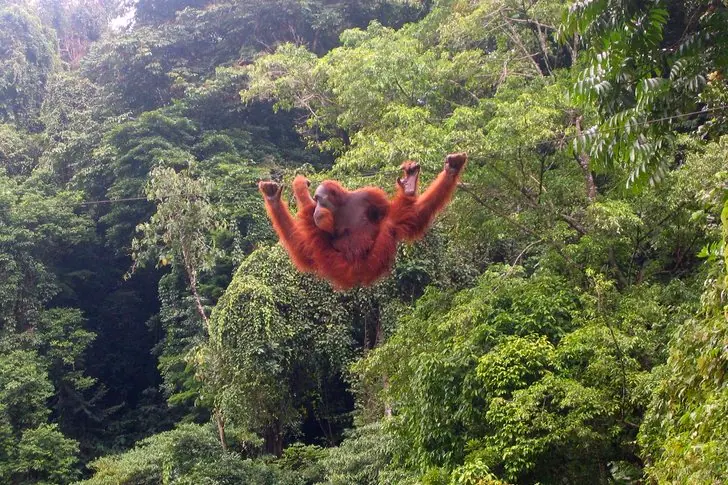
Bukit Lawang and Gunung Leuser National Park
Gunung Leuser National Park in northern Sumatra covers 830,880 hectares and is the only place in the world where Sumatran tigers, orangutans, rhinos and elephants live together. It is part of the Tropical Rainforest Heritage of Sumatra, a World Heritage Site since 2004 and on the List of World Heritage in Danger since 2011. The village of Bukit Lawang grew up around an orangutan rehabilitation centre founded in 1973 and is a base for treks into the park's forest. Buses from the Pinang Baris terminal in Medan take about three hours. Check the current trekking rules with the park before you go.
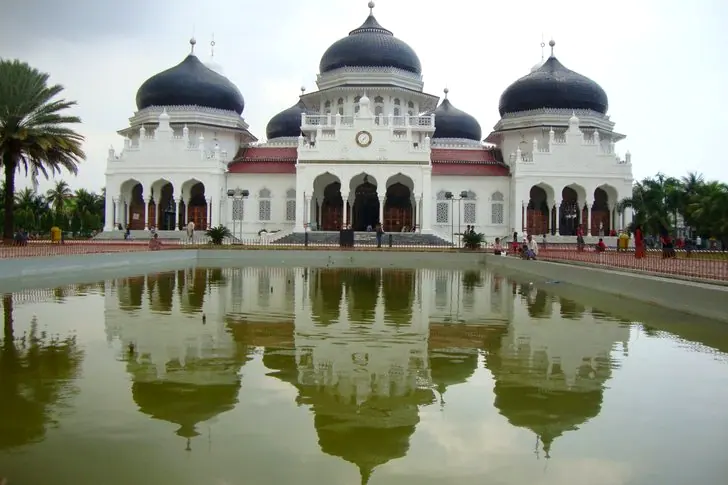
Baiturrahman Grand Mosque, Banda Aceh
The black-domed mosque is the symbol of Aceh, at the northern tip of Sumatra. The first mosque on the site dates from the 17th century; the Dutch army burned it on 10 April 1873, and the present building was erected in 1879–1881. In December 2004 it was one of the few large buildings in Banda Aceh left standing by the tsunami. Visitors must dress modestly, and women should cover their hair; robes and scarves are usually lent at the entrance. In the city centre, the Aceh Tsunami Museum, a raised building shaped like a ship, tells the story of the disaster; it is closed on Fridays.
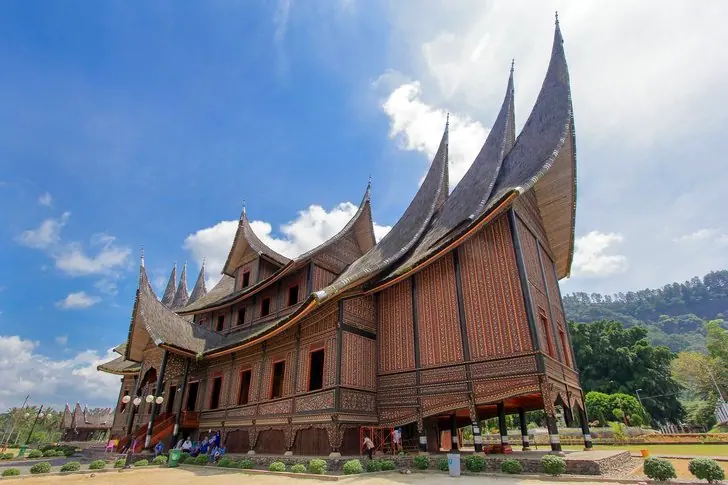
Pagaruyung Palace
Istano Basa Pagaruyung, in the Tanah Datar highlands of West Sumatra, is a replica of the palace of the Minangkabau kings. Its sweeping roofs rise into points like buffalo horns, the hallmark of Minangkabau architecture. The original palace burned down in 1804, its successor in 1966, and the present replica, hit by lightning in 2007, has since been rebuilt. Inside are displays of royal objects, clothing and weapons, and you can have your photo taken in Minangkabau dress.
Kalimantan
1 place
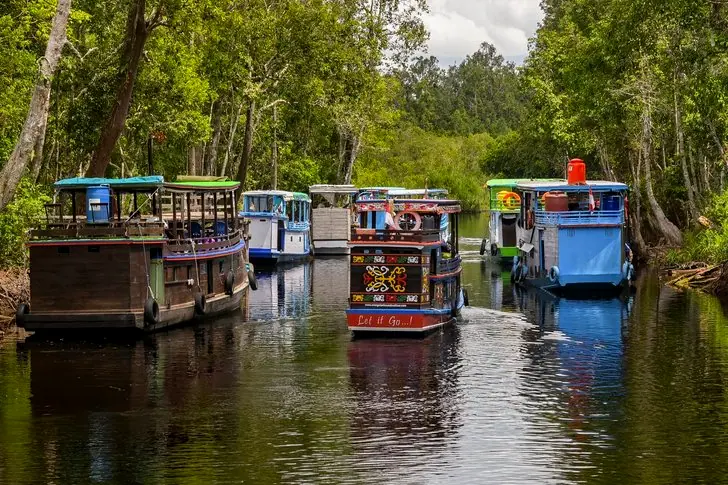
Tanjung Puting National Park
The forests and wetlands of Tanjung Puting in Central Kalimantan, on Borneo, were protected as a reserve in 1936 and became a national park in 1984; today it covers about 415,000 hectares. It was the first protected area in Indonesia created to protect orangutans, and proboscis monkeys live here too. Visitors travel up the Sekonyer River on klotok, traditional wooden riverboats. The highlight is Camp Leakey, founded in 1971 and named after Louis Leakey, the mentor of the primatologist Biruté Galdikas; rangers put out food for the orangutans every day. Visitors may come only for the day, with local guides. There are daily flights to Pangkalan Bun, and boats leave from the nearby port of Kumai; permits are issued through the park's SITANPAN online system.
Sulawesi
2 places
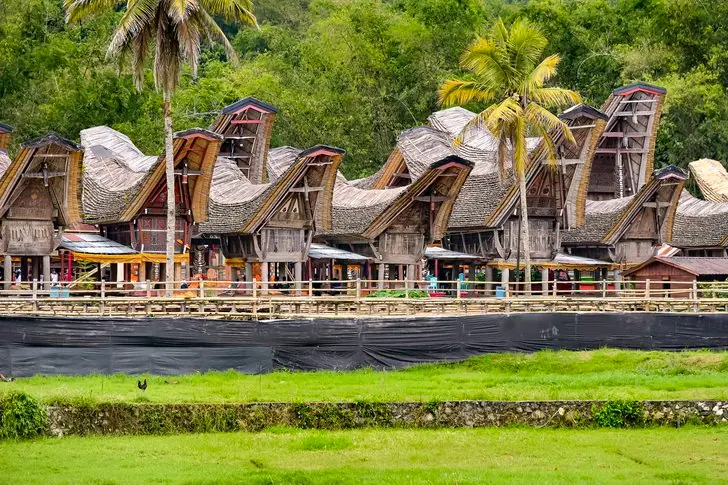
Tana Toraja
In the mountains of South Sulawesi, about 300 km from Makassar, the Toraja people live in tongkonan, ancestral family houses with tall curved roofs. Buffalo horns stacked on the front show the family's status. The Toraja are known for their funerals, rambu solo: a family may need months or years to prepare one, and until then the body is kept at home and treated as a living person. The dead are laid in caves and niches cut into cliffs, guarded by rows of wooden effigies called tau-tau, as at Londa and Lemo. Tana Toraja has been on UNESCO's Tentative List since 2009. Night buses from Makassar take 8–10 hours, and the small Toraja Airport is at Mengkendek.
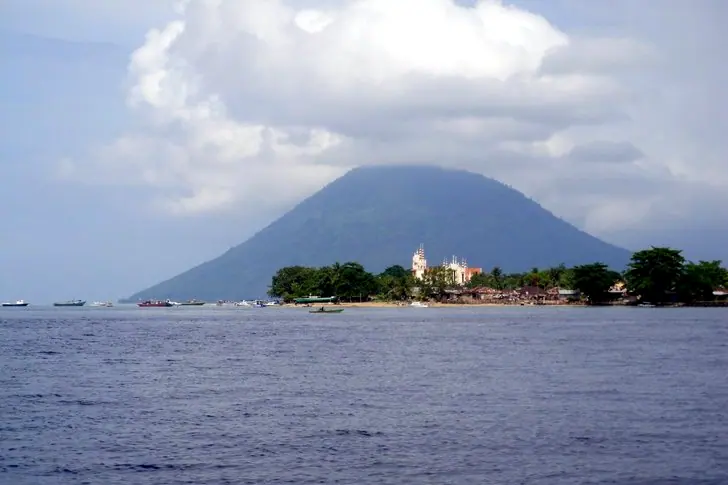
Bunaken National Park
The marine park off Manado in North Sulawesi, created in 1991, is famous for its coral walls that drop steeply into deep water; there are more than 53 dive sites. Boats from Manado take about an hour to Bunaken Island and an hour and a half to the volcanic cone of Manado Tua. In 1998 a new species of coelacanth, a fish known as a "living fossil", was found near Manado Tua. Tickets are sold at the counters in Manado and on Bunaken and through the Ayo Ke Taman Nasional app. The park has been on UNESCO's Tentative List since 2005.
Maluku and Papua
2 places
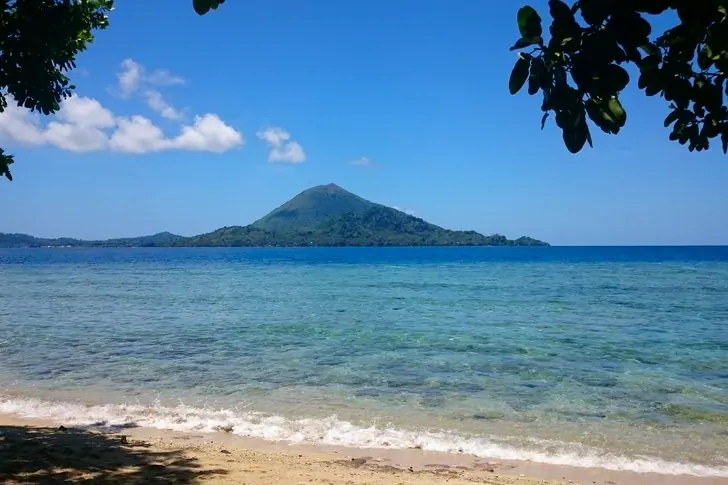
Banda Islands
Ten small volcanic islands in the Banda Sea were once the only source of nutmeg and mace in the world. To control the trade, the Dutch conquered the islands in the 1620s. Under the Treaty of Breda in 1667, the Dutch kept the tiny island of Run, and England kept New Netherland, later New York. On Banda Neira stands Fort Belgica, begun by the Dutch East India Company in 1611 and rebuilt as a pentagon in stages up to 1673. Across the bay rises the volcano Gunung Api. Banda is reached from Ambon by Pelni ships or by plane; flights are often cancelled because of the weather. The islands have been on UNESCO's Tentative List since 2015.
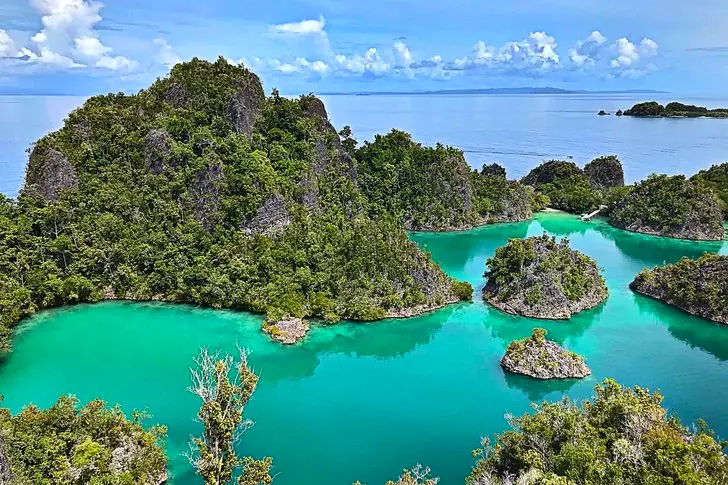
Raja Ampat
Off the western tip of New Guinea, Raja Ampat consists of four large islands, Waigeo, Batanta, Salawati and Misool, and more than 1,500 small islands, cays and shoals. Its reefs have more than 500 species of coral, and the karst islands contain the oldest rocks in Indonesia. The best-known view is from the Piaynemo viewpoint, over a lagoon dotted with karst islets, reached by speedboat from Waisai. Raja Ampat has been a UNESCO Global Geopark since 2023. To get there, fly to Sorong and take the ferry to Waisai on Waigeo, which runs twice a day and takes about two hours. October to April is considered the best season. Visitors pay a marine park fee, which can be bought online at kkprajaampat.id.
What to see in Indonesia in one and two weeks
One week: Java to Bali overland. Days 1–2: Yogyakarta — Borobudur in the morning and Prambanan in the afternoon, with the Ramayana Ballet in the evening; the next day the Kraton and Taman Sari. Avoid Monday for these: the palace and the main Prambanan temples are closed. Day 3: travel east to the Bromo area. Day 4: sunrise at Bromo, then on to Banyuwangi. Day 5: the night climb to Ijen (not on the first Friday of the month), then the ferry from Ketapang to Gilimanuk on Bali. Days 6–7: Tanah Lot, Ubud and the Monkey Forest, and the kecak at Uluwatu at sunset. Starting in Jakarta, add a day for Monas, Istiqlal and Kota Tua.
Two weeks: Bali, Lombok and Komodo. Days 1–4: Bali — Ubud, Jatiluwih, Besakih and Lempuyang in the east, Tanah Lot and Uluwatu in the south. Day 5: a day trip to Nusa Penida. Days 6–8: fast boat to the Gili Islands; outside the January–March closure, you can replace these days with a Rinjani trek. Days 9–11: fly to Labuan Bajo for a boat trip around Komodo National Park, with Padar and the dragons. Days 12–14: cross Flores overland to Moni for sunrise at Kelimutu and fly back to Bali from Maumere.
The outer islands each need a separate trip: Medan, Bukit Lawang and Lake Toba take about a week; Tana Toraja and Bunaken can be combined with flights via Makassar and Manado; Tanjung Puting needs three days on a klotok; and Raja Ampat or the Banda Islands are worth at least five days because of the long journey.
 Russia

 France
 Montenegro
 Hungary
 Venezuela