
 English
 Español
 Deutsch
 日本語
 Italiano
 Português
 Русский
 简体中文
 한국어
 Polski
 ภาษาไทย
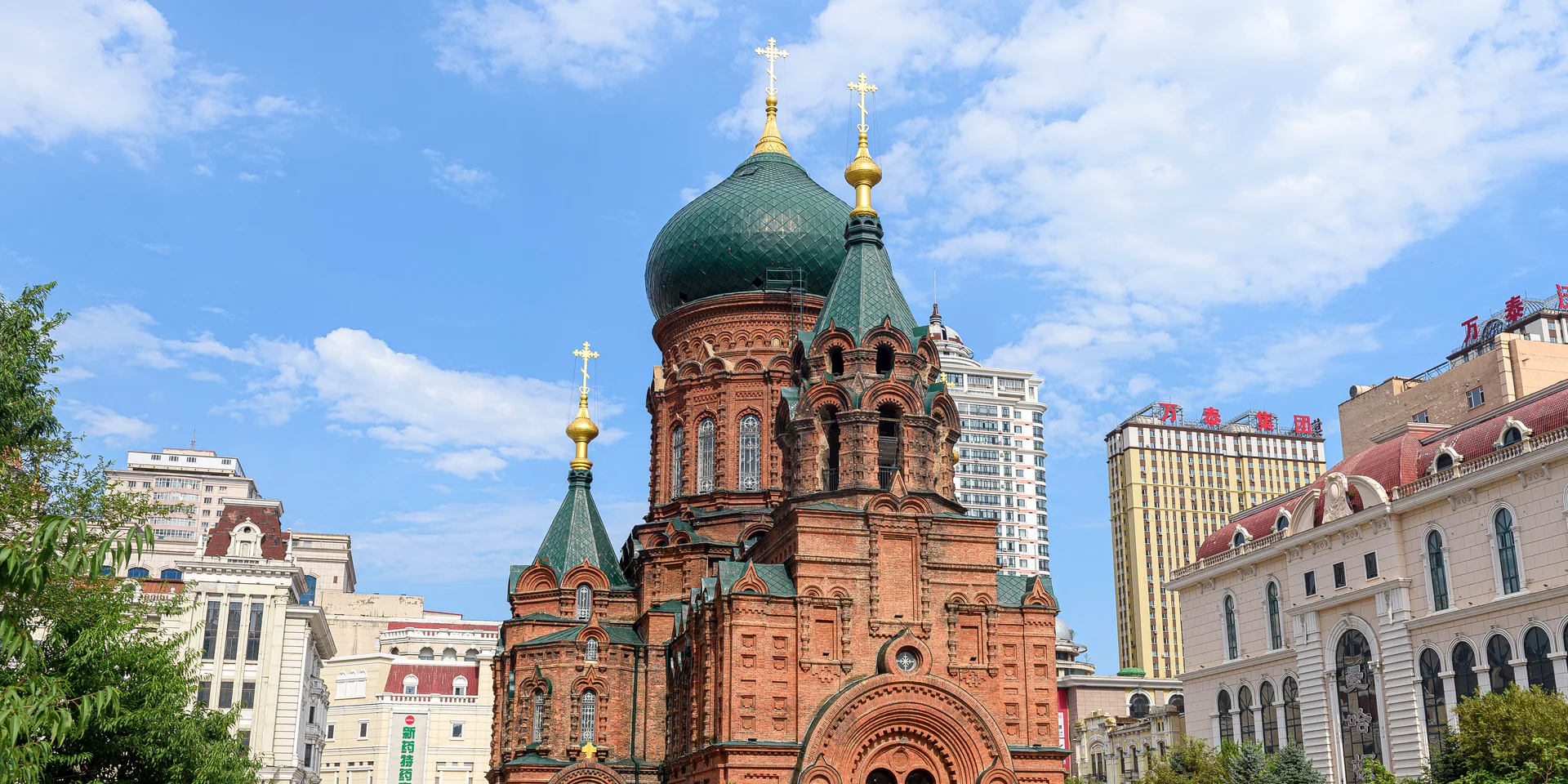
Harbin is the capital of Heilongjiang, China's northernmost province. The city grew up after 1898, when Russia built the Chinese Eastern Railway across Manchuria, and for half a century Russian engineers, Jewish merchants, Chinese traders and many others built side by side. That is why the old centre looks like nowhere else in China: Art Nouveau facades on Central Street, the green dome of St Sophia, a former synagogue and blocks of "Chinese Baroque". The city government's own descriptions call Harbin "the Ice City", "Oriental Moscow" and "Oriental Paris". Harbin has also turned its harsh winters into its main attraction.
Below are 20 things to do in Harbin, grouped by district so that each group can be walked or covered in a single metro ride: the old town of Daoli on the south bank of the Songhua River, neighbouring Daowai, the museums and temples of Nangang, the parks of Songbei on the north bank and the Unit 731 site in Pingfang. At the end you will find ideas for the evening and ready-made itineraries for 1, 2 and 3 days. Opening hours and prices were checked against official sources on 17 November 2026. Schedules change with the seasons, so confirm them before you go.
Before you go: transport, money and seasons
From the airport.
Harbin Taiping International Airport lies about 33 km southwest of the centre. Airport bus line 3 goes past Central Street to Harbin East railway station, line 2 to Harbin West station, and line 4 to Harbin North station via Ice and Snow World. By taxi the drive to the centre takes about 45 minutes. We found no official fares for buses or taxis.
By train.
High-speed trains from Beijing Chaoyang reach Harbin West in about four and a half hours.
Getting around.
Harbin has three metro lines with 78 stations; line 3 has run as a full loop since November 2024. A ride costs 2 yuan (CNY) for the first 6 km and no more than 7 yuan. Tickets are paid in cash or with Alipay, WeChat or UnionPay, and the same apps work as a QR ticket at the gates. Trains run roughly from 6:00 until 21:30–22:30, longer on some holidays.
Money.
Foreign Visa and Mastercard cards can be linked to Alipay and WeChat Pay, and since 2024 foreign visitors can pay up to 5,000 US dollars per transaction through them. Cash can be withdrawn from ATMs that show the UnionPay, Visa or Mastercard logo. Many attractions sell tickets only online, through WeChat accounts, Meituan, Douyin or Ctrip, so set up the apps before the trip.
When to go.
Harbin has two high seasons. Winter is the season of ice: the average winter temperature in the city is about −14.7 °C, and the ice and snow parks usually open in the second half of December. Summer is mild, with average temperatures between 14 and 25 °C. It is the season of the riverside, Sun Island and the Harbin Summer Music Concert, a festival first held in 1961.
Museums.
The Provincial Museum, the Confucius Temple, the An Jung-geun Memorial and the Unit 731 Exhibition Hall are closed on Mondays, except on public holidays. Bring your passport: several of them register visitors by ID.
Daoli: the old town on the Songhua
7 places
Central Street
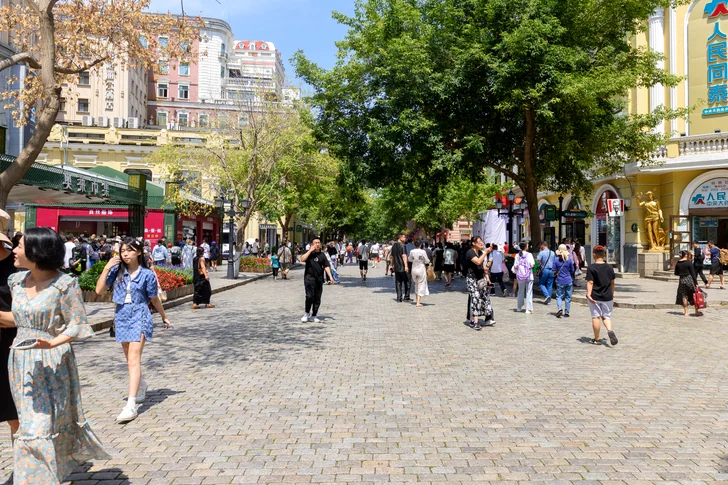
Harbin's main pedestrian street was laid out in 1898. It runs for 1,450 m from Jingwei Street in the south to the Flood Control Memorial Tower on the river in the north, and it has been called Central Street since 1928, when it lost its earlier name, Chinese Street. The granite cobbles, known locally as "bread stones", were laid in the 1920s, and cars were taken off the street in 1997. Look out for the Modern Hotel at No. 89: built from 1906 and opened in 1913, it is on the national list of protected monuments, as is a group of former Jewish banks, shops and a cinema along the street. Walk it from south to north, from Central Street metro station on line 2 to the river.
Flood Control Memorial Tower and Stalin Park
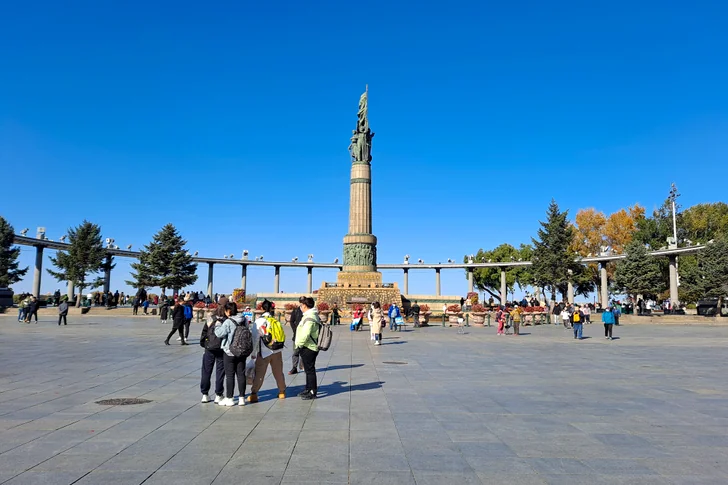
The column at the end of Central Street was completed in 1958 to commemorate the city's fight against the great flood of 1957. Behind it stands a semicircular colonnade of 20 Corinthian columns. Marks on the steps show the water levels of the floods of 1932 and 1957, and a gold line on the column itself marks the higher flood of 1998. West of the tower, the riverside promenade continues as a long, narrow park that still bears Stalin's name. In summer it is where Harbin comes for an evening stroll.
Old Songhua River Railway Bridge
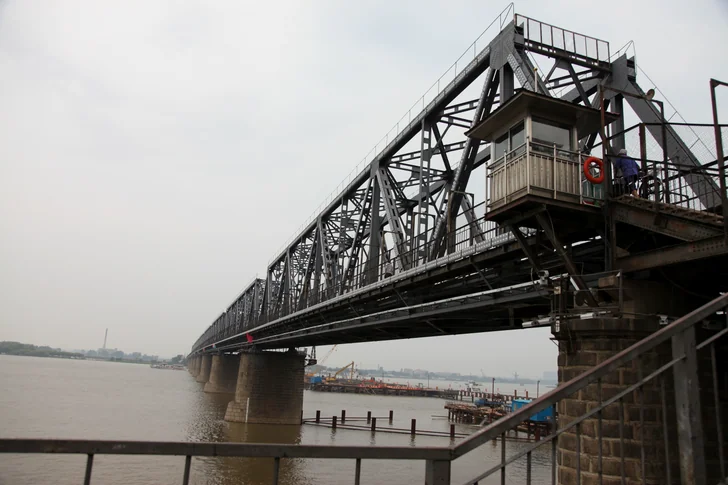
East of the tower, the steel trusses of the first railway bridge across the Songhua cross the river. Construction began in 1900, the bridge was completed in 1901, and regular traffic on the Chinese Eastern Railway started in 1903. Trains used it for 113 years: the last one, from Mohe to Shenyang, crossed on 9 April 2014. In 2016 the bridge reopened as the Mid-East Railway Park, a walkway along the old tracks, and in 2018 a 610 m pedestrian extension towards the north bank was added.
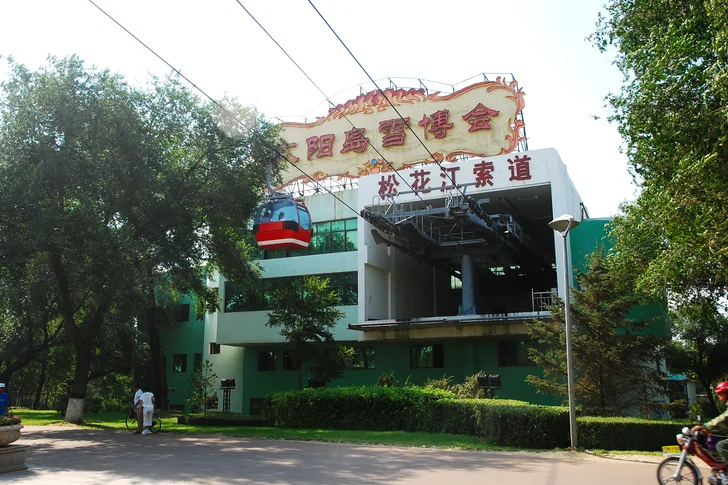
Songhua River Cable Car
The cable car crosses the river from Tongjiang Street in Daoli to Sun Island; from the upper station it is about 250 m on foot to gate 3 of the Sun Island park. It is the most pleasant way to combine the two banks in one day, with views of the old town and the bridges. There is no official website: fares and seasonal hours are posted at the ticket office and on Meituan, and in deep winter it is worth checking that it is running.
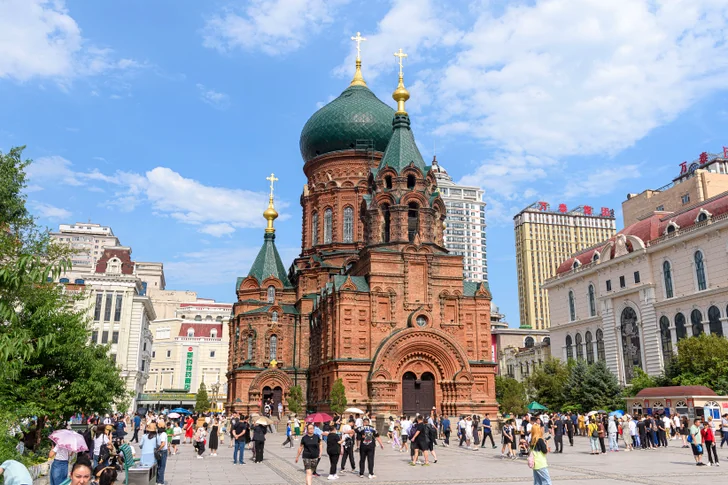
Saint Sophia Cathedral
The symbol of Harbin. The first, wooden church on this site was built in 1907; the present brick cathedral was begun in 1923 and completed in 1932. Since 1997 it has housed the Harbin Architecture and Art Museum. The interior was closed for restoration of the wall paintings in April 2025 and reopened in December 2025 with a new exhibition on the history of the cathedral and the city, and with concerts held under the dome. The square in front is open to everyone.
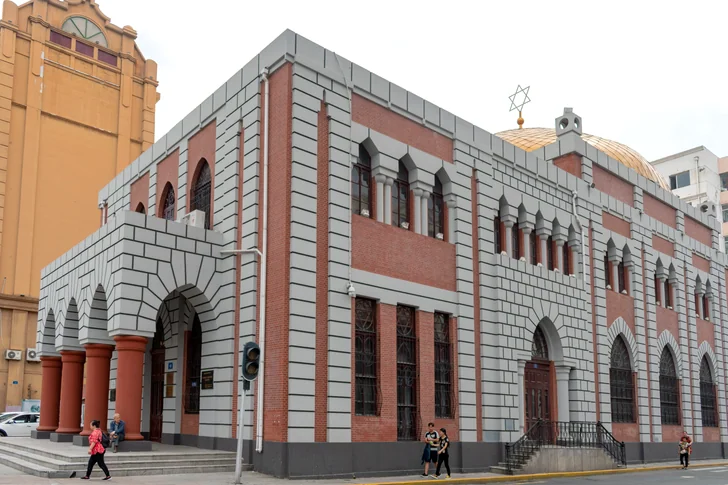
Harbin New Synagogue
In the first half of the 20th century Harbin had a large Jewish community, and this domed building at 162 Jingwei Street is its most visible trace. The New Synagogue was built between 1918 and 1921 to a design by the architect Joseph Levikin and closed in 1956. In 2004 the city restored it and opened a museum of Jewish history and culture inside. The Old Synagogue, opened in 1909 at 82 Tongjiang Street, is now a concert hall; both are on China's national list of protected monuments. We could not confirm whether the museum in the New Synagogue is open at the moment, so check before you go, or admire the building from the street.
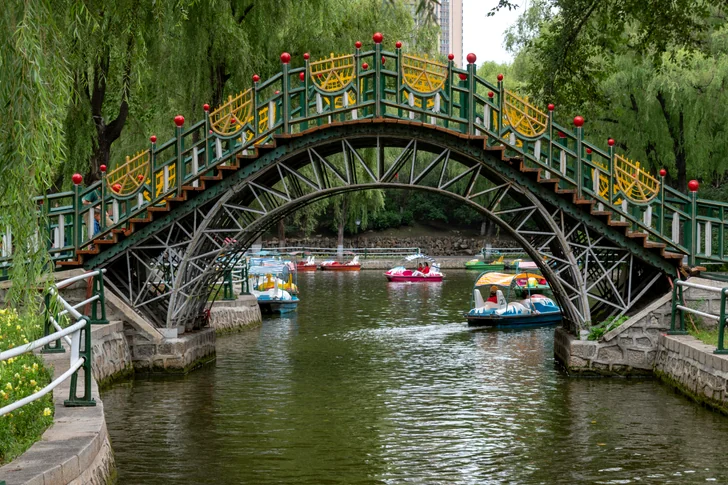
Zhaolin Park
The birthplace of Harbin's winter festivals. The park was founded in 1906 and in 1946 took the name of Li Zhaolin, a commander of the Northeast Anti-Japanese United Army who was assassinated in Harbin that year; his tomb is in the park. On 7 February 1963 the first ice lantern fair was held here, and in 1985 China's first ice and snow festival opened at the park's south gate. The ice lantern fair still takes place every winter, and since December 2018 admission has been free. The 53rd fair is due to open on 30 December 2026, also free of charge, according to the city government.
Daowai: Chinese Baroque
1 place
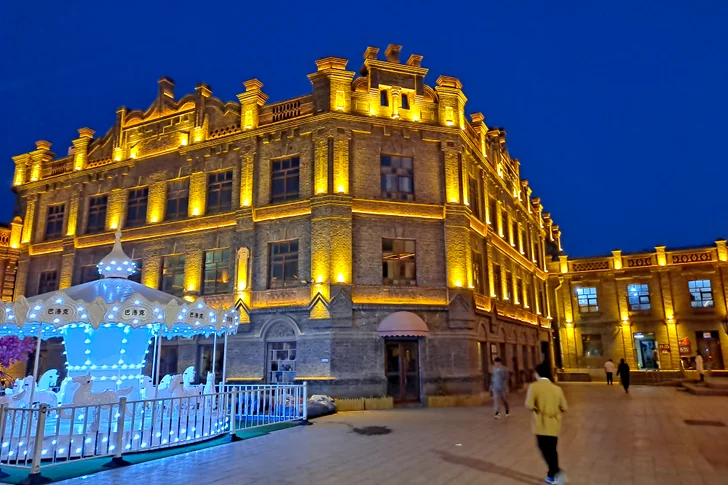
Laodaowai Chinese Baroque Historic Block
East of the railway, in the district once known as Fujiadian, Chinese merchants built their own Harbin in the 1910s and 1920s. The houses have Western Baroque facades, while their courtyards and ornaments are Chinese. The block covers about 288,000 m², and the city calls it the largest and best-preserved group of Chinese Baroque buildings in the country. Its axis is Jingyu Street; the crossroads with Toudao Street, framed by four corner buildings from the early 20th century, was once called the city's "golden eye" of trade. Old shops such as the Hengdeli watch shop, opened here in 1923, still trade alongside restaurants and teahouses. The streets are busiest in the evening, when the facades are lit.
Nangang: museums, temples and the railway station
6 places
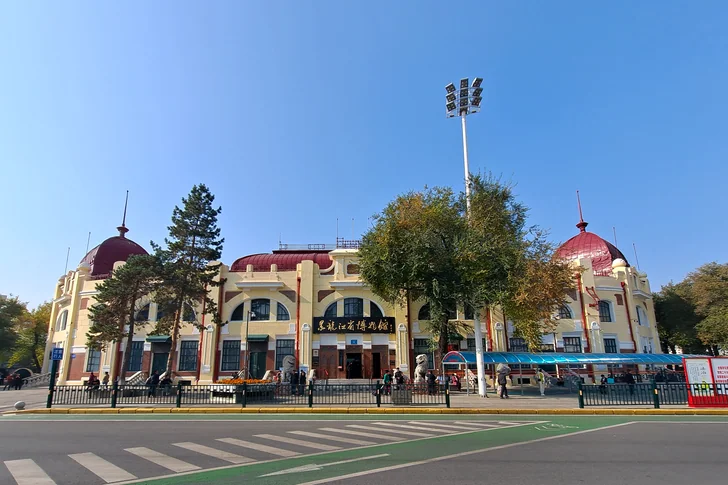
Heilongjiang Provincial Museum
The province's main museum occupies the Baroque building of the former Moscow Trading House, built in 1906–1908 as one of Harbin's first department stores. The museum opened here on 12 June 1923 and has had its present name since 1954. Of its more than 600,000 items, the highlights are the first complete mammoth skeleton found in China and the skeleton of a woolly rhinoceros. Also look for the bronze seated dragon of the Jin dynasty, one of the province's national treasures. The museum stands on Hongjun Street, near Bowuguan (Museum) metro station, where lines 1 and 2 meet.
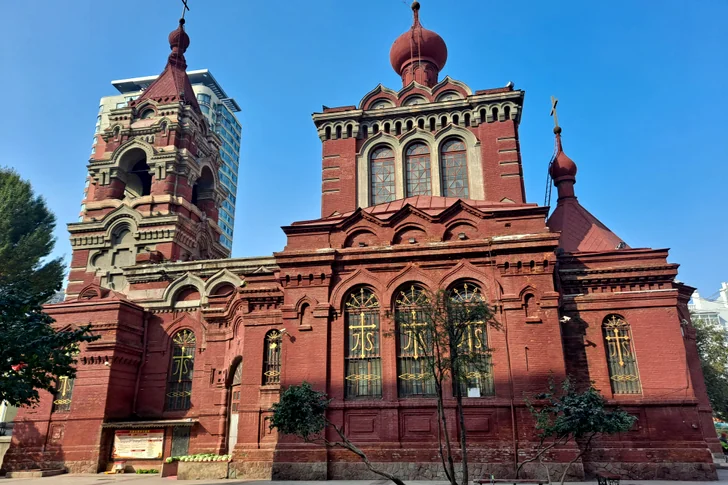
St. Alexievsky Church
A red-and-white church in the Russian Baroque style on Jiaotang Jie, "Church Street", a few blocks from the station. Its history began as a Russian military church, which moved to Harbin after the Russo-Japanese War; in 1912 a wooden church was built on this spot and gave the street its name. The present brick building was designed by the architect Yu. V. Smirnov and built between 1931 and 1935. The church is still used for weddings, but there are no official visiting hours, so you may only be able to see it from outside.
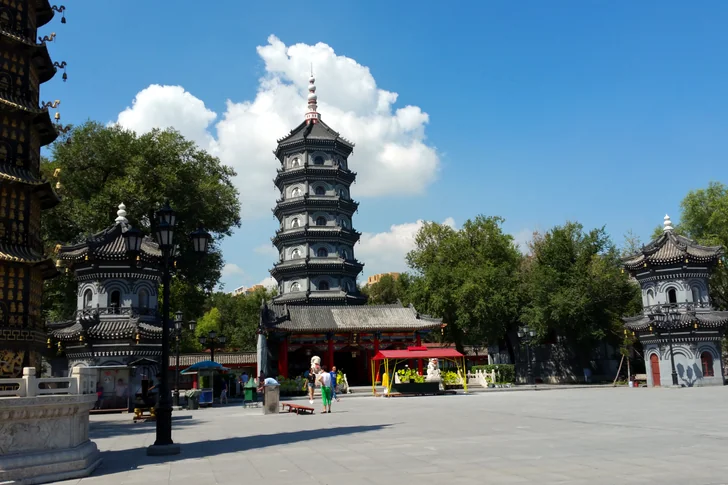
Jile Temple and the Seven-Tier Pagoda
Harbin's best-known Buddhist temple was built in 1924 in the classical Chinese style. Next to it rises an octagonal seven-tier brick pagoda. In 2020 the province included the area around the temple in its first list of historic districts. Dress modestly and do not photograph monks during prayers. We found no official opening hours or ticket prices.
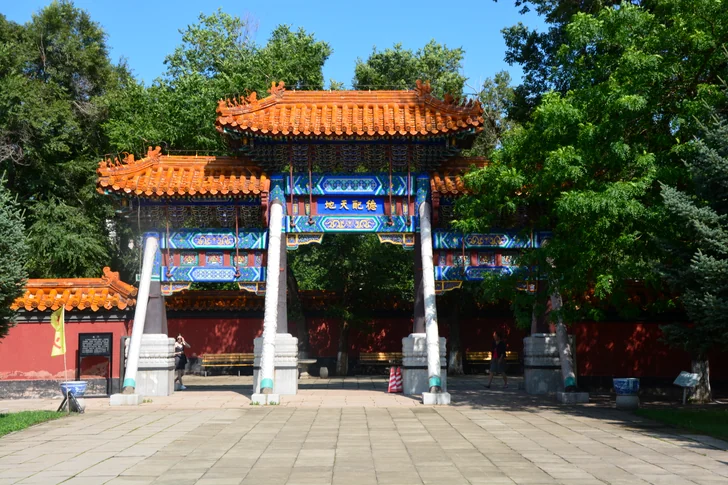
Harbin Confucius Temple
A temple complex in the style of Qing dynasty official buildings, begun in 1926 and completed in 1929. It covers 2.5 hectares and is the largest Confucian temple in northeast China, with red gates, a stone archway and courtyards that are quieter than anywhere else in the centre. The halls house the Heilongjiang Ethnic Museum, which presents the cultures of the ten ethnic minorities native to the province. The temple is at 25 Wenmiao Street, next to Harbin Engineering University; take metro line 1 to Gongcheng Daxue (Engineering University) station, exit 3.
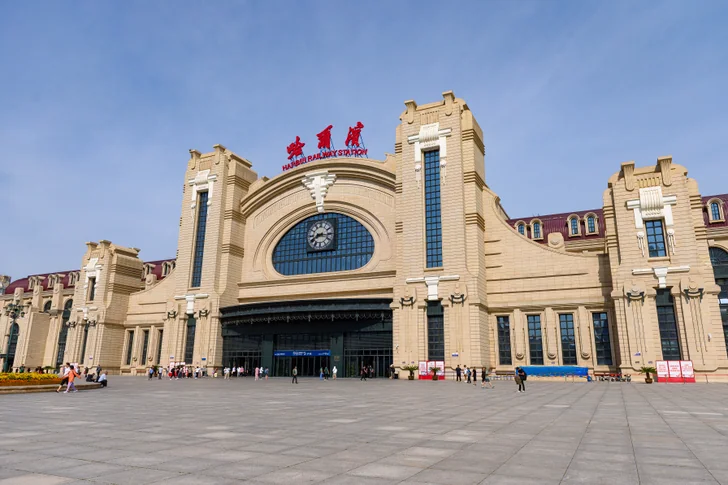
Harbin Railway Station and An Jung-geun Memorial
The city began with the railway, and its main station tells that story. The original station, built in the early 1900s, was demolished in 1959; the new building, opened on 25 December 2018, is designed in the European Art Nouveau style with modern elements, is 28 times larger than the old one and links Nangang with Daoli on both sides of the tracks. On 26 October 1909 the Korean independence activist An Jung-geun shot the Japanese statesman Ito Hirobumi on this station's platform; a sign near platform 1 marks the spot. The An Jung-geun Memorial, opened in 2014, is inside the station complex, next to entrance 3 at 1 Tielu Street. Its exhibition hall is designed to look like a platform. Harbin Railway Station on metro line 2 is the nearest stop.
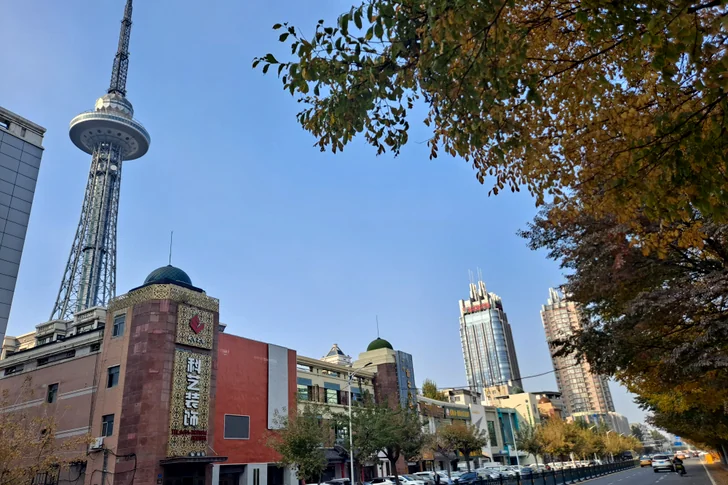
Dragon Tower
The Heilongjiang Radio and TV Tower, known as the Dragon Tower, is 336 m tall. Construction began in 1998, and it opened to visitors in 2000. The outdoor observation deck at 190 m has a swing on its outer ring that the tower bills as Asia's highest. On a clear day the whole city is spread out below, from the river to the new districts. The tower stands at 178 Changjiang Road, Nangang. We found no current official prices or opening hours, so check before your visit.
Songbei: Sun Island and the north bank
5 places
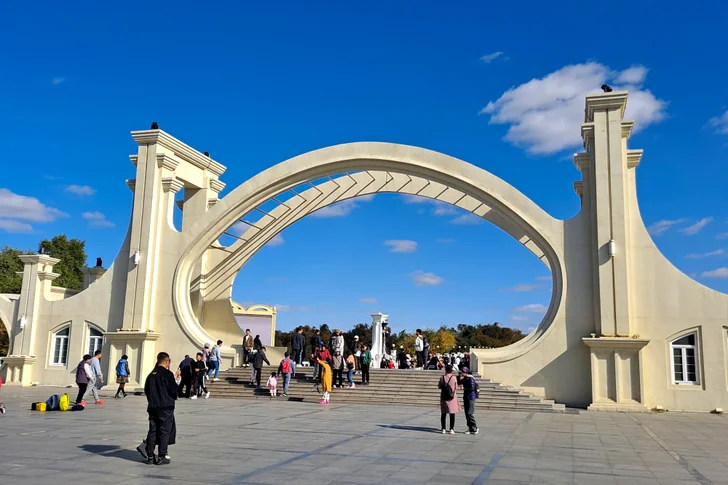
Sun Island Scenic Area
A floodplain area of wetlands and lakes on the north bank of the Songhua, opposite the old town. The core scenic area covers 15 km². In summer it is Harbin's favourite park for walking, and according to Xinhua, entry to the grounds is free. A few attractions inside are paid, such as Squirrel Island (28 yuan, 18 yuan concession), and so is the round-the-island tourist bus (25 yuan). In winter part of the island becomes the Sun Island Snow Sculpture Expo. Last season, its 38th, ran from 31 December 2025 to 3 March 2026 with more than 260 snow sculptures, and an adult ticket cost 198 yuan (concession 128). For the 39th Expo, snowmaking began on 16 November 2026; dates and prices have not yet been announced. Get there by the cable car from Daoli or on metro line 2 to Taiyangdao (Sun Island) station.
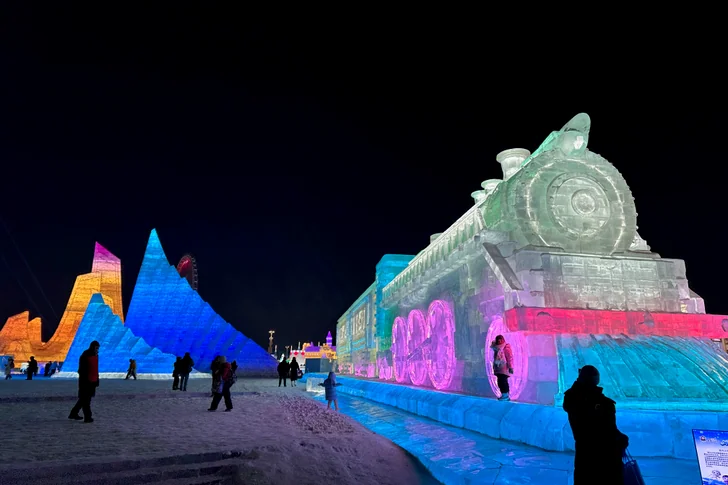
Harbin Ice and Snow World
The main winter attraction of Harbin: a city of castles, towers and slides built every winter from ice and snow and lit up after dark. It was founded in 1999. The 27th season opened on 17 December 2025 on 1.2 million m² and ran until the second half of February 2026, when a thaw ended it. For the 28th season, in winter 2026–27, the park has announced 1.25 million m² (125 hectares), 400,000 m³ of ice and snow, a longer ice slide and a zone themed on the Disney film "Frozen", created with Disney China. The opening date and prices had not been announced by 17 November 2026; in the past three seasons the park opened between 17 and 21 December. It has its own station, Harbin Ice and Snow World, on metro line 2.
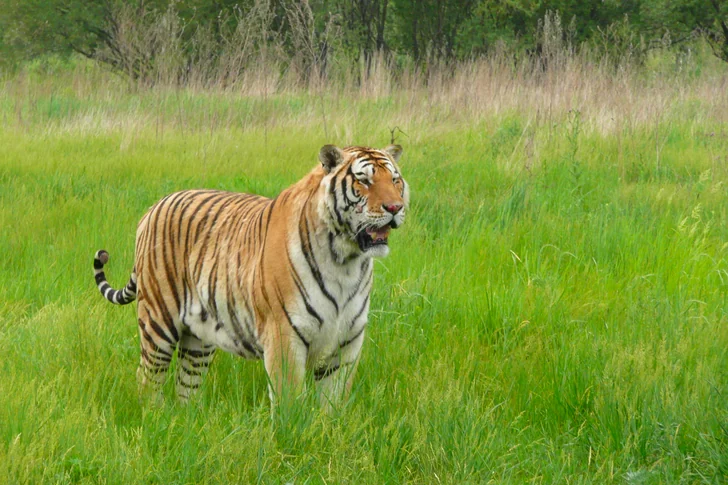
Siberian Tiger Park
A breeding centre for Amur (Siberian) tigers that has been open to visitors since 1996. It covers about 80 hectares and receives more than 1.5 million visitors a year. In the free-range area the tigers can only be seen from the park's buses, an ordinary one and a "thrilling" one; the rest of the park, with white tigers, lions, ligers and leopards, is walked on foot. The park is at 88 Songbei Street; buses 35, 122 and 145 stop about 100 m from the entrance.
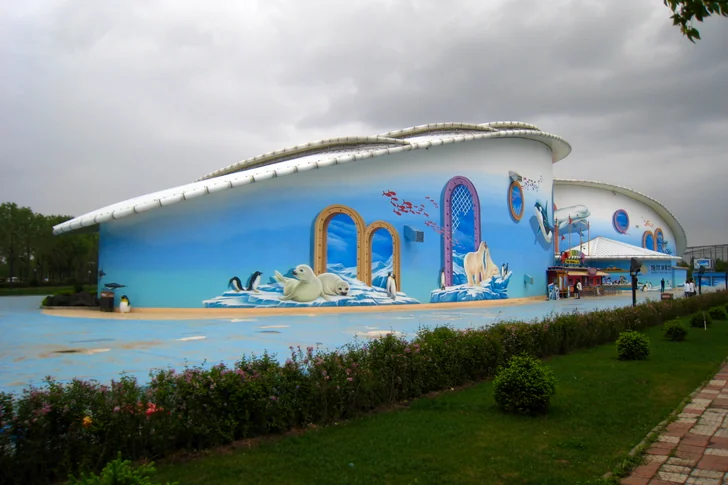
Harbin Polarland
A polar aquarium and show park on Sun Island, with beluga whales, penguins, walruses and sea lions. Its first part, the Polar Pavilion, opened at the end of 2005; the larger Harbin Polar Park was added in 2021. All halls are indoors and kept at around 21 °C all year, a good choice on a freezing or rainy day. The best-known show is "Heart of the Ocean", an underwater beluga performance first staged in 2009. Tickets are sold separately for each hall: in June 2026 the list price was 198 yuan for the Polar Pavilion and 130 yuan for the Ocean Pavilion. We found no official opening hours.
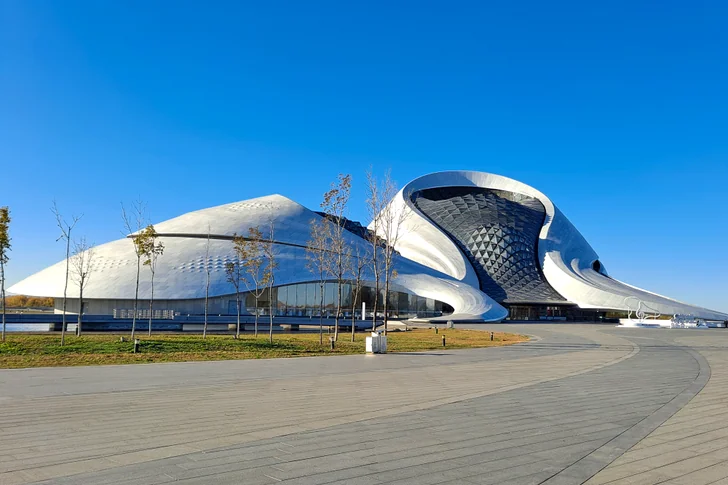
Harbin Grand Theatre
The white, wave-shaped building in the wetlands of the north bank was designed by MAD Architects, led by Ma Yansong, and built between 2010 and 2015. The walls of the main hall are clad in Manchurian ash, and the city notes that natural daylight is let into the auditorium. Outside, a walkway runs around the building to a viewing platform. Daytime tours of the interior run 10:00–16:00, except on closing days, with advance booking on the theatre's official platform; the fastest way to see the hall properly is to buy a ticket for a performance.
Pingfang: the Unit 731 site
1 place
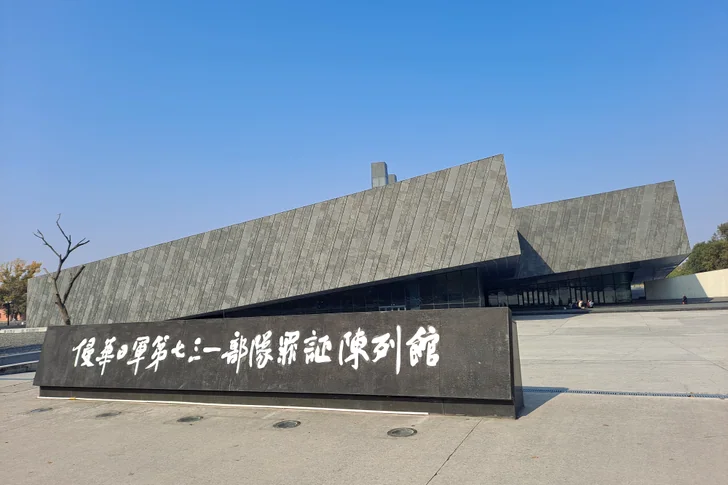
Unit 731 Crimes Evidence Exhibition Hall
In Pingfang, on the southern outskirts, Japan's Unit 731 ran a bacteriological warfare and human experimentation programme during the occupation of Manchuria. Its ruins are the largest and best-preserved bacteriological warfare site in the world. The museum was founded in 1985, and in 2015 it moved its main exhibition into a new black building shaped like a flight recorder. The visit covers the new hall and the old headquarters building; plan at least half a day. Take metro line 1 to Xinjiang Dajie station and use exit 2; the museum is a short walk away.
Where to go in Harbin in the evening
Harbin is at its best after dark. Start at Central Street, when the facades are lit and the street fills with people, and continue to the river at the Flood Control Tower and the railway bridge for the sunset. St Sophia stays open until 21:00 in the winter season, and the square in front of it is lit in the evenings. For dinner, take a taxi or the metro to Laodaowai, where the Chinese Baroque facades glow in the blue hour and the old restaurants serve northeastern food. In summer, look up the programme of the Harbin Summer Music Concert and the Old Synagogue concert hall; in winter, the evening belongs to Ice and Snow World and the ice lantern fair in Zhaolin Park.
What to see in Harbin in 1, 2 and 3 days
1 day. Morning: St Sophia Cathedral and Central Street from south to north. Midday: the Flood Control Tower, Stalin Park and a walk across the old railway bridge. Afternoon: the cable car to Sun Island and back. Evening: dinner in Laodaowai; in winter, replace the cable car and Sun Island with Ice and Snow World, which you reach by metro line 2.
2 days. Day one as above. Day two in Nangang, Tuesday to Sunday: the Provincial Museum in the morning, then the Confucius Temple and Jile Temple, both a short taxi ride apart. Finish at the railway station and the An Jung-geun Memorial (closes at 16:30) and, if it is open, go up the Dragon Tower for the view.
3 days. Day three on the north bank: the Siberian Tiger Park in the morning, then Polarland and the Grand Theatre in the afternoon; in winter add the Snow Sculpture Expo on Sun Island. Alternatively, spend half the day at the Unit 731 Exhibition Hall in Pingfang, but remember the advance booking and the Monday closure.
 Russia

 France
 Montenegro
 Hungary
 Venezuela