
 English
 Español
 Deutsch
 日本語
 Italiano
 Português
 Русский
 简体中文
 한국어
 Polski
 ภาษาไทย
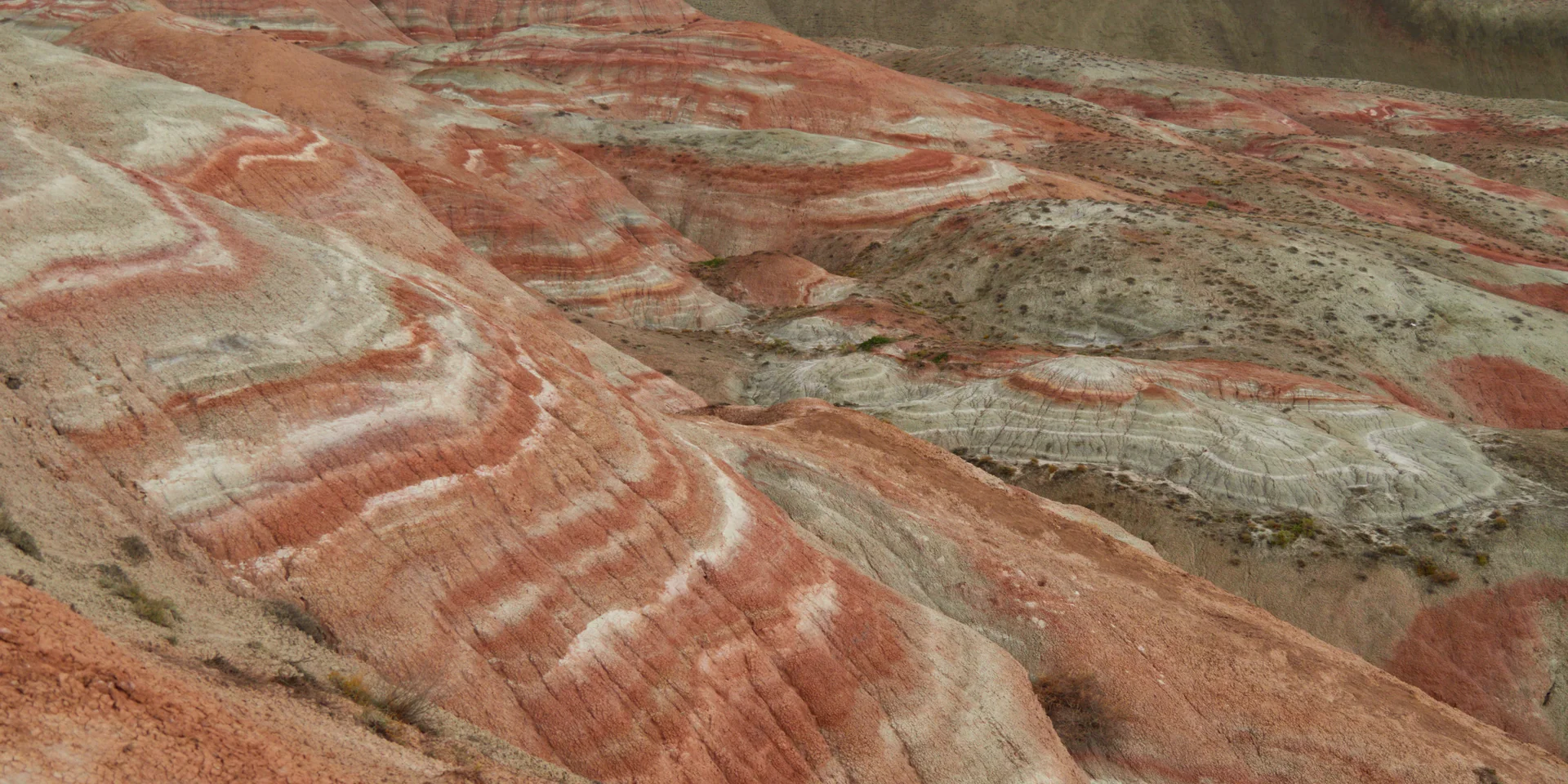
Things to do in Azerbaijan range from exploring Baku’s walled old city to walking through mountain villages and forests. Azerbaijan lies in the eastern South Caucasus, on the western shore of the Caspian Sea, and Baku is its capital. Start at the capital’s waterfront, then choose among the country’s contrasting landscapes: bare, striped hills near Khizi, stone-built settlements in the Greater Caucasus, and wooded lake shores in the west.
This guide brings together 15 places, grouped by direction so you can choose a manageable trip. One to three days suits Baku and nearby excursions; Sheki, Khinalig, Göygöl and Hirkan deserve separate extensions. Visitor information was checked on 6 November 2026. Recheck opening times, transport and admission before travelling.
Before travelling around Azerbaijan
From the airport:
the Airport Express connects Heydar Aliyev International Airport with Baku Railway Station and 28 May metro station. The published fare is 1.30 AZN; a BakıKart transport card costs 2 AZN. Baku’s metro fare is 0.60 AZN per journey. Keep airport transfer time separate from the sightseeing programme.
The currency is the Azerbaijani manat, abbreviated AZN. Carry some cash for village visits, even if you mainly pay by card in Baku. For intercity travel, check current bus and train services, then arrange the final journey to a village or park separately: a ticket to a regional city does not take you to every sight nearby.
Spring and autumn are sensible choices for combining historic towns with walks in exposed landscapes. Summer is the hottest period; plan shade and water breaks on the Absheron Peninsula. Mountain journeys require a separate weather and road check. Before planning an international overland arrival, consult the current entry rules: eligibility depends on the crossing and the traveller, so do not assume that a road border is open to ordinary tourist entry.
Baku: the old city and Caspian waterfront
3 places
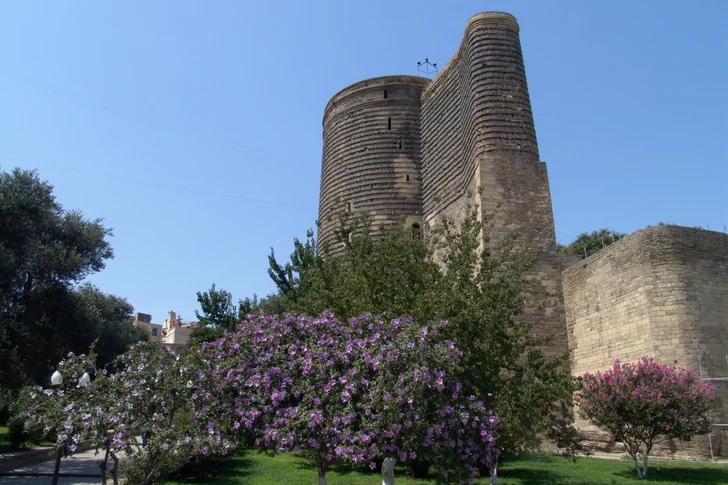
1. Maiden Tower
The Maiden Tower stands within Icherisheher, Baku’s old city. Its museum gives you a closer look at the building’s internal arrangement and well. Its origins remain debated, so treat stories explaining the tower’s name as legends rather than a settled construction history. Combine it with a walk through the surrounding streets before continuing to the palace.
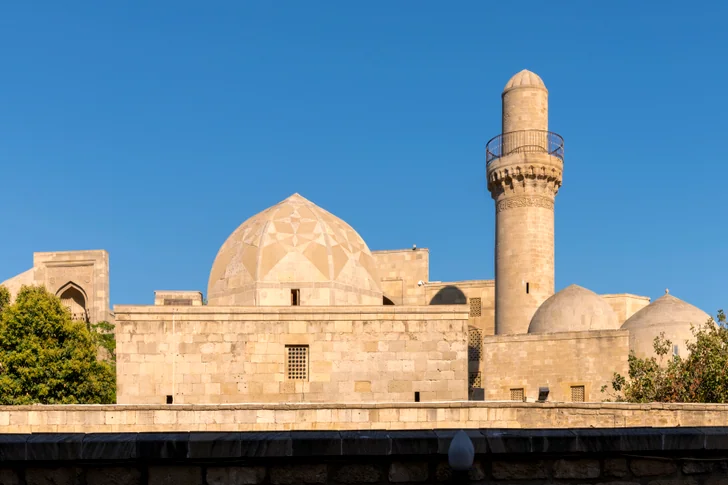
2. Palace of the Shirvanshahs
This 15th-century complex introduces the royal history behind Baku’s old city. Its courtyards bring together palace buildings, the Divankhana pavilion, tombs and a mosque; allow time to understand the ensemble rather than looking only for a single main room. Together with the Maiden Tower and the walled city, it forms a UNESCO World Heritage property.
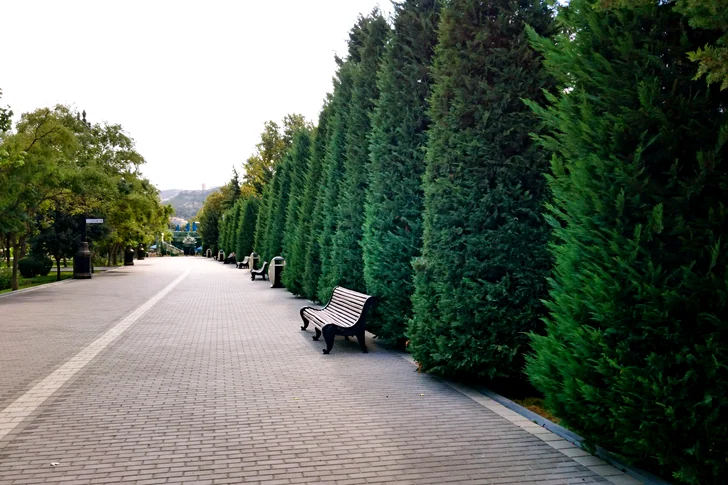
3. Baku Boulevard
Leave the enclosed streets for the waterfront promenade and its planted alleys. Founded in 1909, Baku Boulevard offers a different pace: a walk beside the Caspian, a pause in the greenery and views across the bay. Choose a section that suits your energy rather than trying to cover the entire waterfront. Museums and attractions along it have their own arrangements; the promenade itself is a sightseeing walk rather than a beach outing.
Absheron: the fire temple and burning hillside
2 places
4. Ateshgah Fire Temple
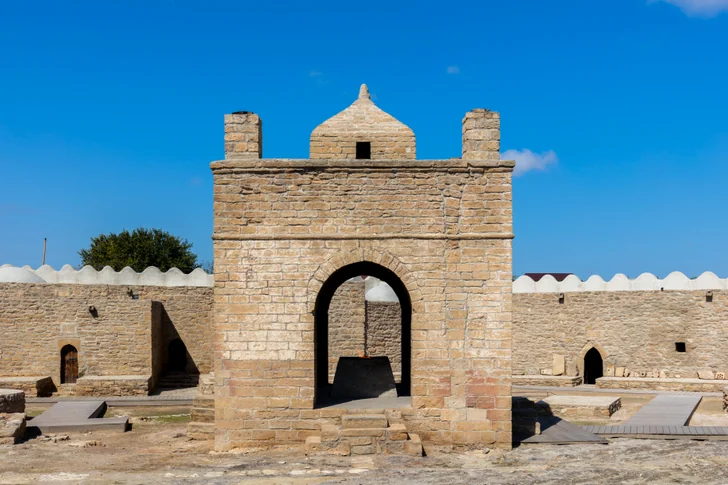
Ateshgah in Surakhani has a central altar enclosed by a pentagonal courtyard and surrounding cells. The complex took its present form in the 17th and 18th centuries and has connections with Hindu, Sikh and Zoroastrian visitors. Look at the relationship between the altar and the rooms around it, then compare this built religious site with the natural burning slope at Yanar Dag.
5. Yanar Dag
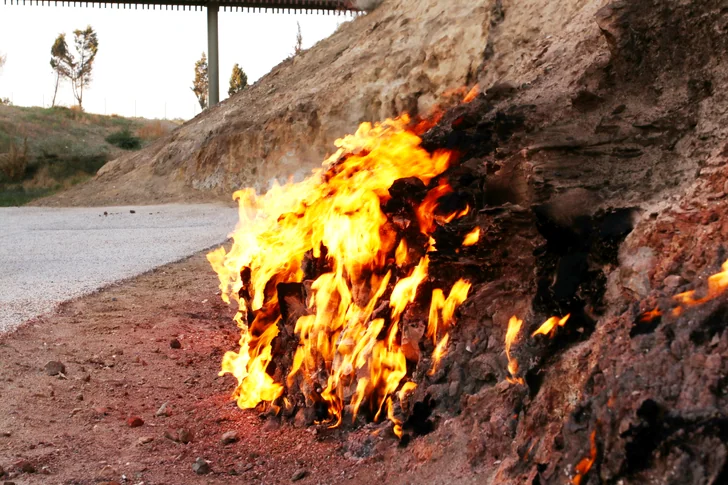
At Yanar Dag, gas escaping through the rock burns along a hillside near Mammadli. The attraction is the visible connection between the landscape and the flame, rather than a large architectural monument. Give yourself time to watch it from the visitor area. Arrange transport between here and Ateshgah in advance; buying a combined admission ticket does not organise the journey.
Southwest of Baku: Gobustan’s rock art
1 place
6. Gobustan Rock Art Cultural Landscape
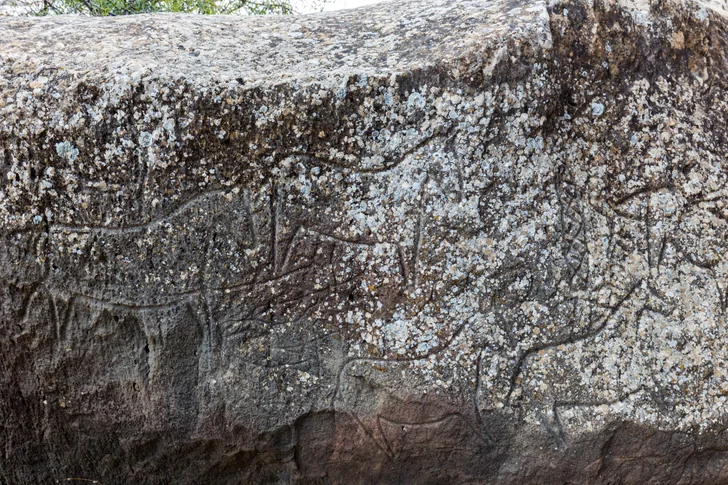
Gobustan’s engravings bring people, animals, boats and hunting scenes onto the surfaces of its rocks. The outdoor landscape is the main reason to come; the museum provides context for what you are looking at. Plan time for both experiences, and use a guide if you want help identifying faint carvings. This archaeological destination is distinct from Gobustan town, where Diri Baba Mausoleum stands.
North of Baku: a detour into coloured hills
1 place
7. Candy Cane Mountains
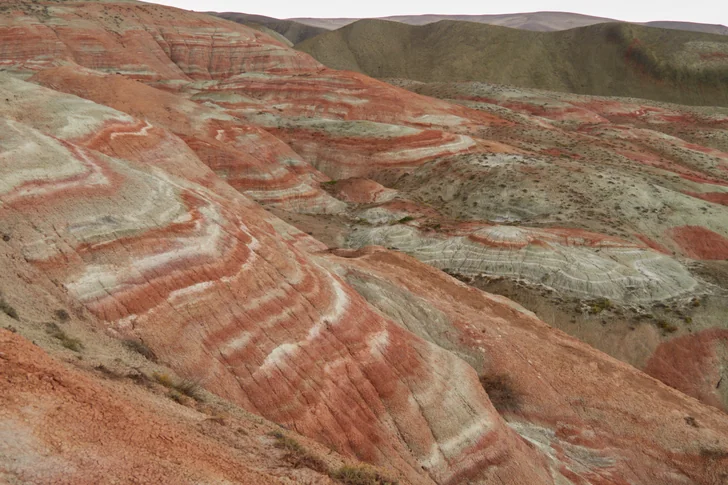
The hills near Khizi show bands of red, orange, pink and chalky white across their slopes. To reach this landscape, leave the Baku–Quba highway and head west towards Altiaghaj; it is a detour from the main road. A short stop can introduce the colours, while a longer walk needs its own planning. Azerbaijan Travel recommends organised hikes in spring or autumn. Bring water and suitable footwear, and arrange a guide for a more substantial outing.
Northwest: Diri Baba, Lahij and Sheki
5 places
8. Diri Baba Mausoleum
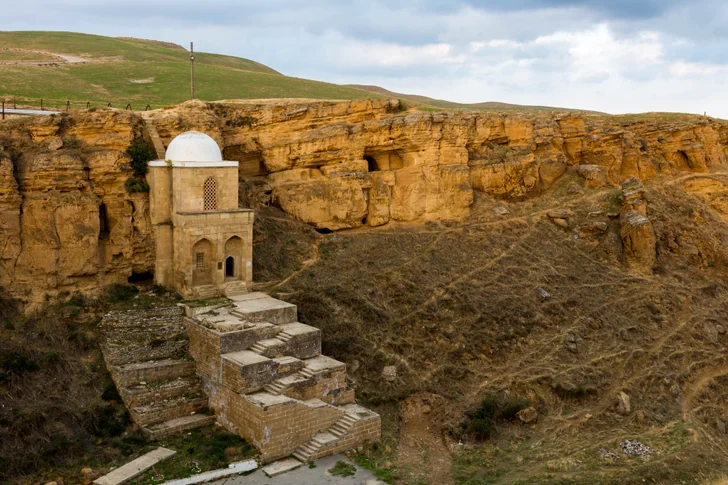
Diri Baba is set into a rocky escarpment near Gobustan town, historically known as Maraza, on the route towards Shamakhi. An inscription dates the mausoleum to 1402. Its compact architecture makes sense when seen together with the rock face surrounding it. It can be a stop on a northwestern road journey; confirm access with the heritage administration, particularly if climbing or uneven approaches could affect your visit.
9. Lahij
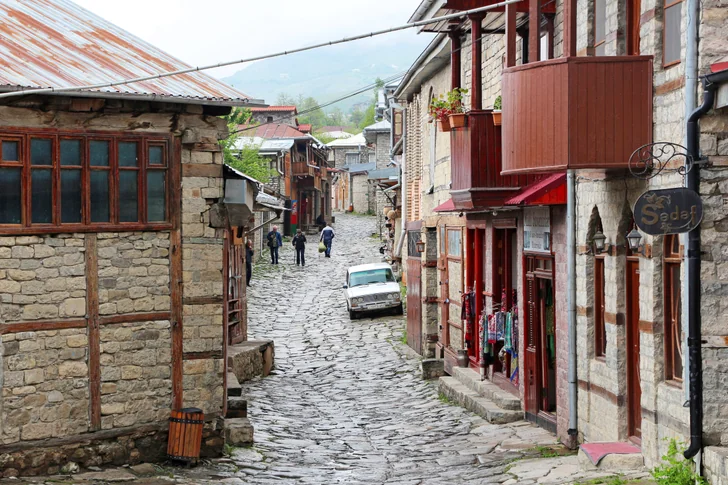
Lahij combines streets paved with river stones, traditional houses and a continuing craft economy. Copperworking is especially important here and is recognised by UNESCO as intangible cultural heritage. Walk through the village as well as browsing its shops; arrange a workshop visit beforehand if watching a craftsperson at work is your priority. Azerbaijan Travel gives an approximate drive of three hours from Baku through a canyon, so allow for the approach as part of the day.
10. Sheki Khan’s Palace
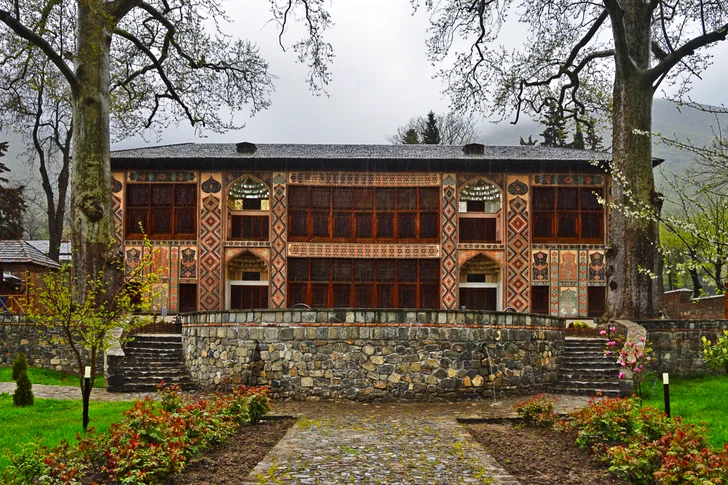
The palace is a focus of Sheki’s UNESCO-listed historic centre. Its shebeke windows assemble coloured glass and wooden pieces without nails or glue, giving you a specific detail to look for beyond the overall façade. Combine the palace with a walk through the surrounding historic area rather than treating Sheki as a brief stop between long drives.
11. Upper Caravanserai
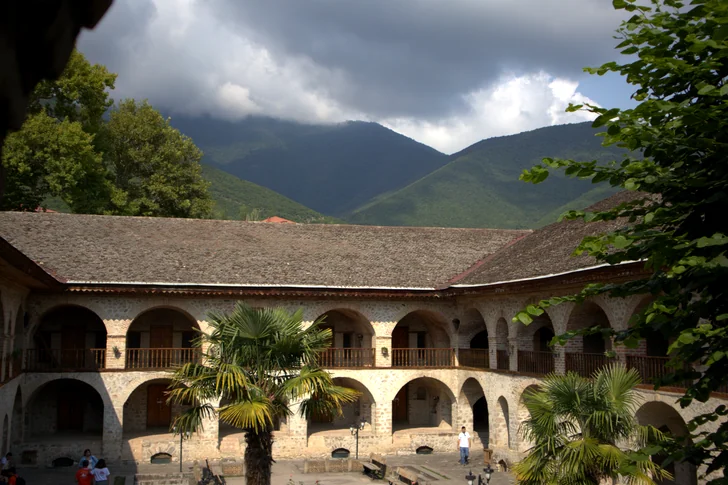
Sheki’s Upper Caravanserai connects the town’s architecture with its history of trade and travellers. The 18th-century building now operates as a hotel, continuing its accommodation role in a different form. Look at the historic façade while exploring the old centre. The courtyard shown here is part of the property: ask about visitor access before entering, since a hotel’s operation does not guarantee unrestricted sightseeing inside.
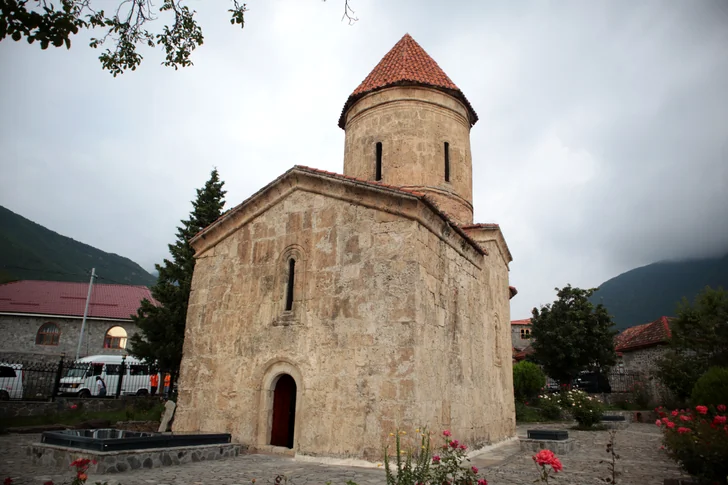
12. Church of Kish
Kish, near Sheki, adds a stone church to a visit otherwise centred on palaces and trading buildings. The heritage administration dates the existing church to the 12th century; earlier archaeological remains at the site belong to a different layer of its history. Today it functions as a museum. Arrange the local journey from Sheki separately, leaving time to see the building and its setting.
The northern mountains: Khinalig
1 place
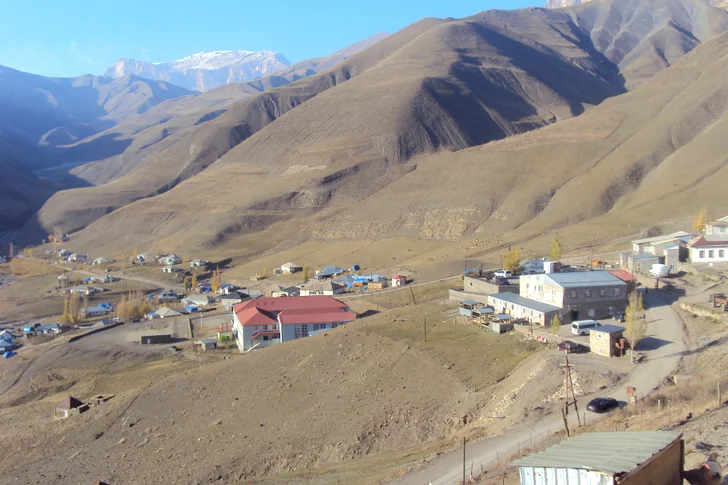
13. Khinalig
Khinalig is a lived-in high-mountain village whose stone houses form part of a much wider cultural landscape. UNESCO’s listing also includes seasonal pastures and Köç Yolu, the route used for moving livestock between them. A village walk offers an introduction to this way of life; exploring the wider landscape is a separate undertaking. Travel via Quba, check road conditions, and use the reserve’s information centre to arrange local guides or transport. In winter, build flexibility into the journey.
The west: Lake Göygöl
1 place
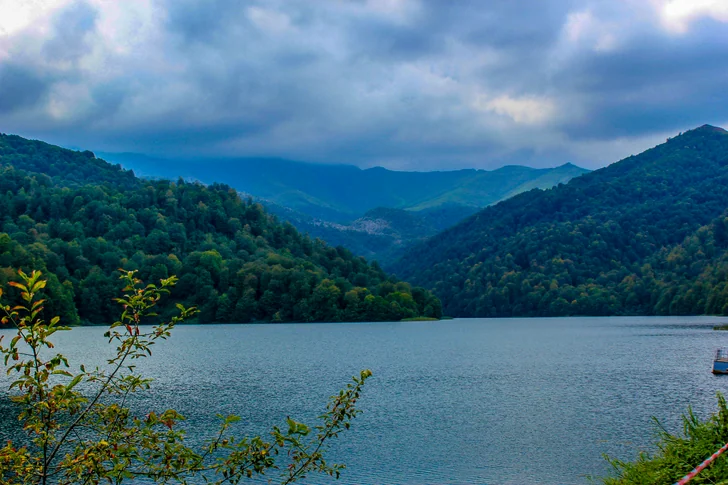
14. Göygöl National Park
Lake Göygöl lies among wooded slopes in the Lesser Caucasus, beneath Mount Kapaz. It provides a quieter landscape-focused extension, especially when autumn changes the colour of the forest. Use Ganja as a base for a separate western trip. Before setting out, consult the national park’s visitor information for access, tickets and permitted routes; plan around the visitor area rather than assuming unrestricted access to every shore.
The southeast: Hirkan’s forests
1 place
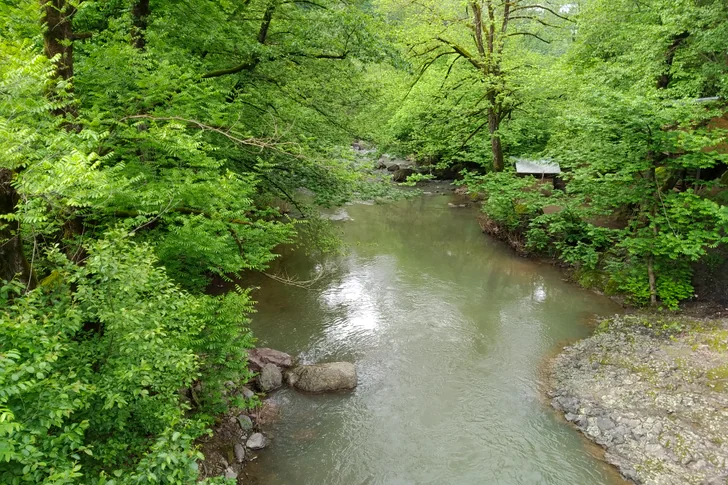
15. Hirkan National Park
Hirkan protects broadleaved forest in the Talysh Mountains, across the Lankaran and Astara regions. Ironwood and chestnut-leaved oak are among its characteristic trees. Two components within the park belong to the transboundary UNESCO Hyrcanian Forests property; that designation does not cover the entire national park. Base this extension in Lankaran and contact the visitor centre to register, obtain a ticket and choose an official forest route, such as an outing around Khanbulan.
Where to go in the evening
In Baku, keep an evening for the boulevard or another walk through Icherisheher. This gives you a change of pace after the museum visits and avoids building an evening programme around interiors that close earlier. For a beach day or a particular nightlife venue, check current seasonal services separately rather than extending the waterfront walk on that assumption.
What to see in one, two or three days
One day: concentrate on Baku. Visit the Maiden Tower and the Palace of the Shirvanshahs, leaving a lunch break and time to explore the streets between them. Finish with a section of the boulevard.
Two days: add Gobustan on the second day. Arrange return transport and leave room for the rock-art landscape and museum, checking the closing arrangements. You can spend the evening back in Baku.
Three days: use the extra day for Ateshgah and Yanar Dag. Their combined ticket fits this pairing, but transport still needs arranging. Keep this Absheron outing separate from the Gobustan day to avoid rushing between different directions.
For a longer trip: choose a region. Sheki makes a useful base for the palace, caravanserai and Kish; add Diri Baba or Lahij along a northwestern road journey if your travel time allows. A northern extension can combine a Khizi detour with a stay around Quba and a visit to Khinalig. Göygöl from Ganja and Hirkan from Lankaran are separate western and southern choices. Do not try to join all these branches into the three-day Baku programme.
 Russia

 France
 Montenegro
 Hungary
 Venezuela