
 English
 Español
 Deutsch
 日本語
 Italiano
 Português
 Русский
 简体中文
 한국어
 Polski
 ภาษาไทย
Things to do in Bangladesh range from exploring a Mughal fort in Dhaka to travelling through tidal mangrove channels, looking closely at terracotta temples and spending time on the Bay of Bengal. The capital is a useful starting point, but a countrywide trip needs a choice of regions: the old cities of the north, the forests of the southwest, the tea country of the northeast or the southeastern coast.
These 15 places are arranged in six regional sections. Use the short Dhaka and Sonargaon itineraries for a first visit, then choose a separate extension rather than trying to cover the whole country in three days. Sources and visitor information were checked on 6 November 2026.
Before you travel
Bangladesh lies between India, Myanmar and the Bay of Bengal; its capital is Dhaka, its state language is Bangla and its currency is the taka (BDT). Hazrat Shahjalal International Airport has car-rental and taxi services outside the terminal. Its free shuttle connects with nearby transport points, including Airport Railway Station; it is not a direct shuttle to central Dhaka.
In the city, options include rickshaws, CNG auto-rickshaws, buses and taxis. MRT Line 6 runs between Uttara North and Motijheel, with single-journey tickets available at stations. Plan the journey to each old-city attraction separately, and leave space between visits rather than relying on a tightly timed sequence.
The Bangladesh Meteorological Department identifies June–September as the monsoon and December–February as winter. Decide whether your priority is architecture, a forest visit or the coast before booking onward travel. Check current forest access and sailing arrangements for the Sundarbans. For museums, check the day of the week as well as opening times; religious sites may also require you to arrange a visit around worship.
Old Dhaka: a fort, a palace and the river
3 places
1. Lalbagh Fort
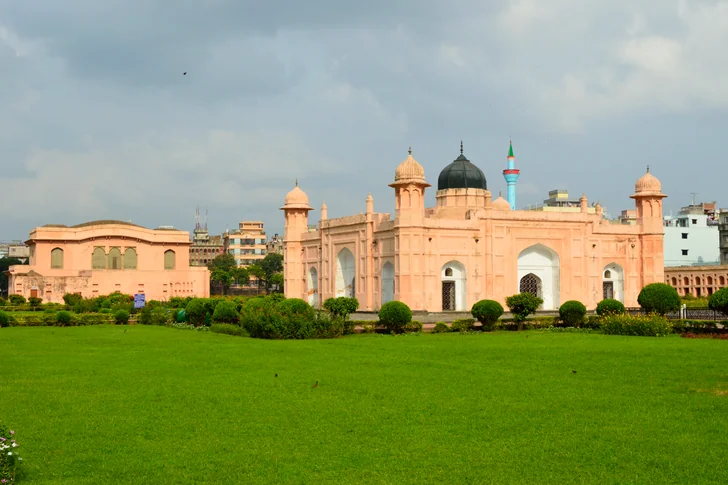
Lalbagh is an unfinished Mughal fort, begun by Prince Azam Shah in 1678. Its surviving buildings include a mosque and the tomb of Pari Bibi, set within the old-city complex. The garden setting lets you see these structures as an ensemble; the complex was never completed as a military fortress.
2. Ahsan Manzil
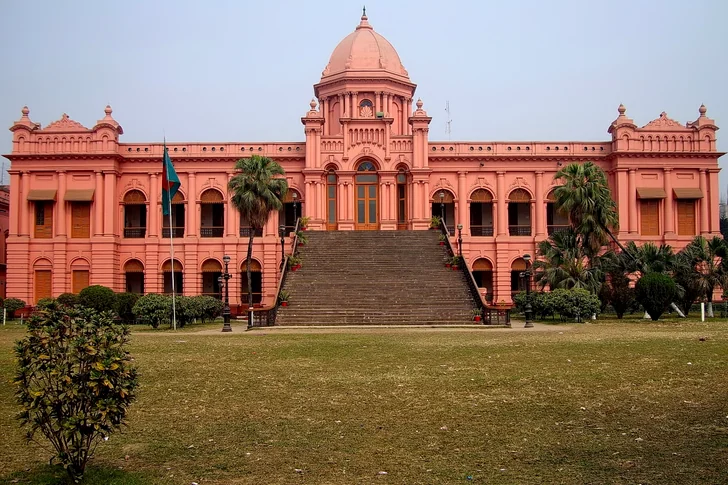
The pink palace beside the Buriganga was the residence of the nawabs of Dhaka. Abdul Ghani named it after his son Khwaja Ahsanullah in 1872, and it later became a museum. Its domed façade makes a strong contrast with Lalbagh's fort buildings, while the museum adds an indoor visit to a day otherwise spent outside. Arrange the palace around its opening day before fitting in the riverfront.
3. Sadarghat
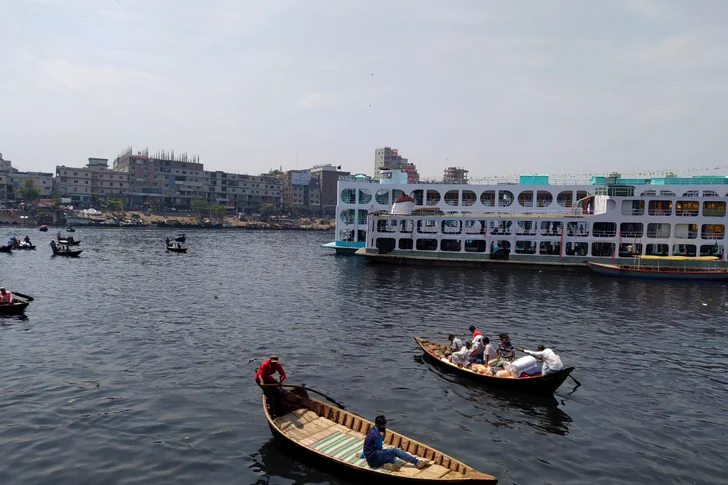
At Sadarghat, the Buriganga is part of Dhaka's working transport system. Passenger vessels and freight movements give the riverfront a different purpose from the palaces and monuments: this is an operating port. Pair it with Ahsan Manzil for a look at the city from the river side, but keep clear of boarding routes and working areas. Watching the boats does not require turning the visit into an improvised river crossing; arrange any passenger journey separately.
Sonargaon: the old street of Panam
1 place
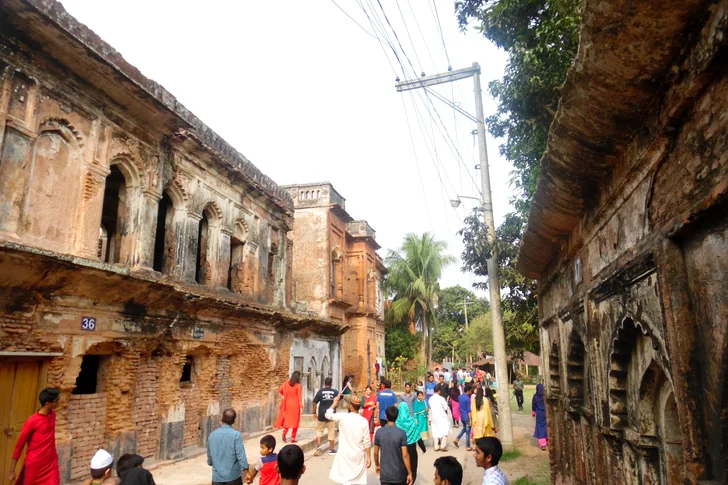
4. Panam City
Panam Nagar is a street of old houses facing one another in Sonargaon, a former capital of Bengal. The attraction is the surviving streetscape: look along the building fronts, then compare the details of doorways and façades. Treat it as a separate outing from Dhaka so that travel does not squeeze the visit between city sights. When checking admission, ask specifically about Panam Nagar; the nearby Folk Art and Craft Foundation has its own visitor arrangements, which should not be assumed to apply to this street.
The southwest: Bagerhat and the Sundarbans
2 places
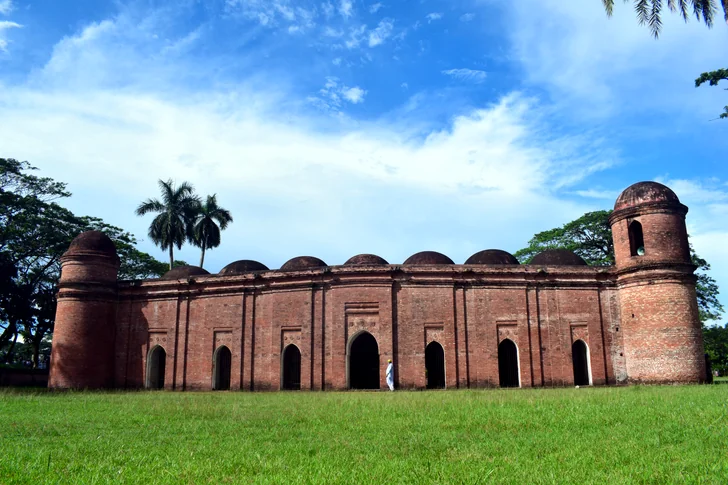
5. Sixty Dome Mosque, Bagerhat
The Sixty Dome Mosque, also called Shait-Gumbad, is part of the UNESCO-listed Historic Mosque City of Bagerhat. Its brick architecture belongs to the medieval city associated with Khan Jahan in the fifteenth century. The repeated domes and broad building give it a different silhouette from Dhaka's palace architecture. Make this your main architectural stop in Bagerhat, and distinguish access to the mosque from any museum visit when checking tickets and opening arrangements.
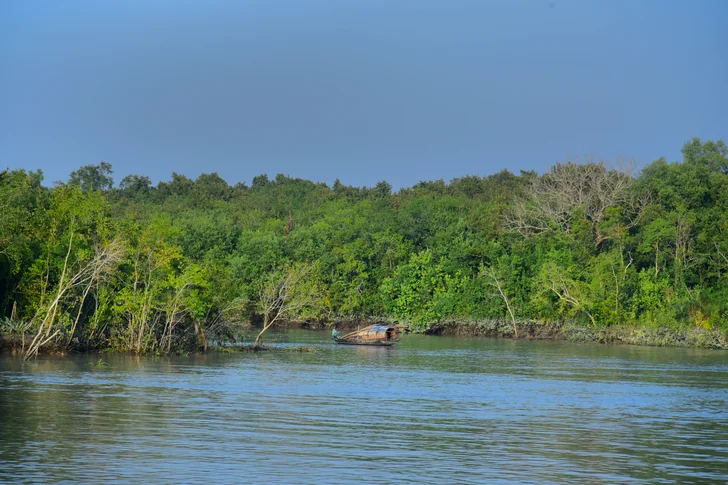
6. The Sundarbans
The Bangladeshi Sundarbans are a landscape of tidal waterways, islands and mangrove forest on the southwest coast. The UNESCO-listed forest supports wildlife including tigers and estuarine crocodiles, but the waterways and vegetation are a reason to travel here even without a large-animal sighting. Choose the route before comparing trips: an outing to Karamjal and a journey to remote forest locations involve different access arrangements.
The Forest Department distinguishes Karamjal, which does not require advance forest permission, from more distant destinations where permission and fees must be arranged beforehand. Check the current rules through its tourism service and your operator. A government report also describes a June–August tourism closure; confirm the current year's notice before committing to dates.
The north: archaeology and terracotta
4 places
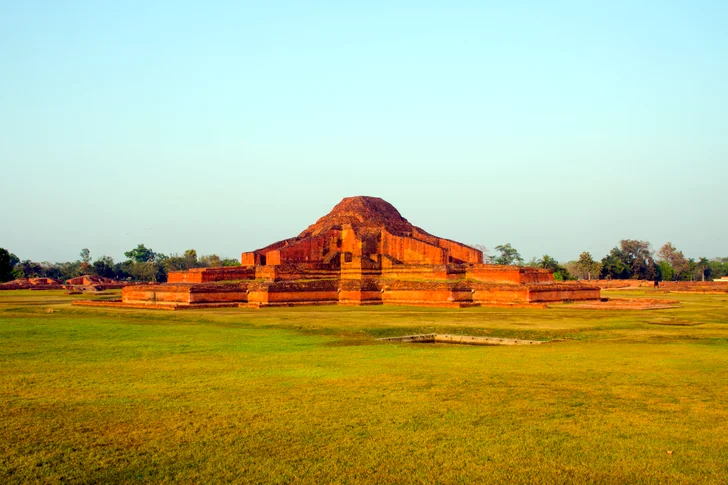
7. Somapura Mahavihara, Paharpur
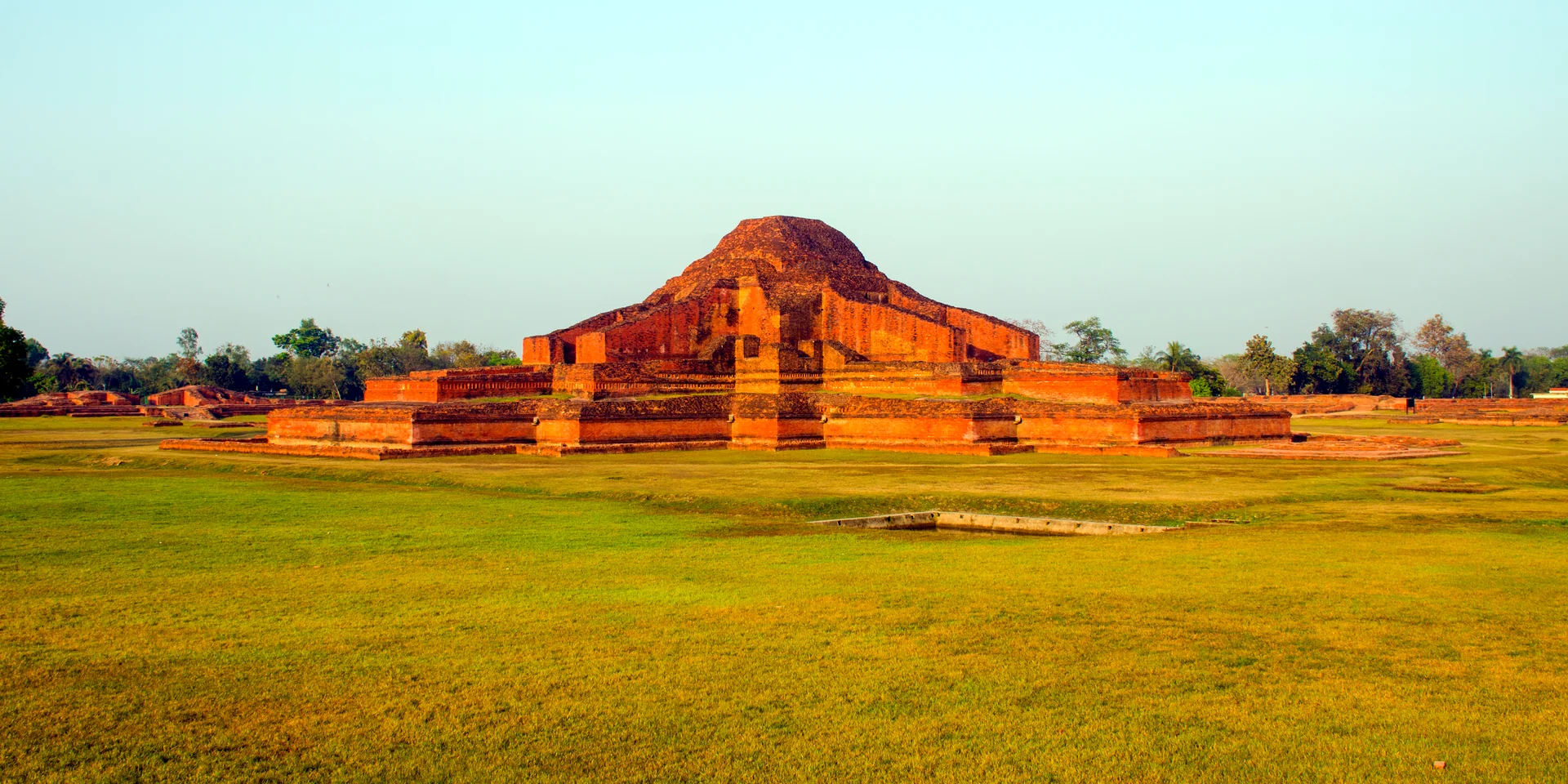
At Paharpur in Naogaon district, Somapura Mahavihara preserves the layout of a major Buddhist monastery associated with the ruler Dharmapala. The central cruciform shrine is the visual anchor, surrounded by the remains of the larger complex. UNESCO highlights the influence of its architectural form on Southeast Asia. Begin with the overall layout, then approach the central ruin to see its place within the monastery.
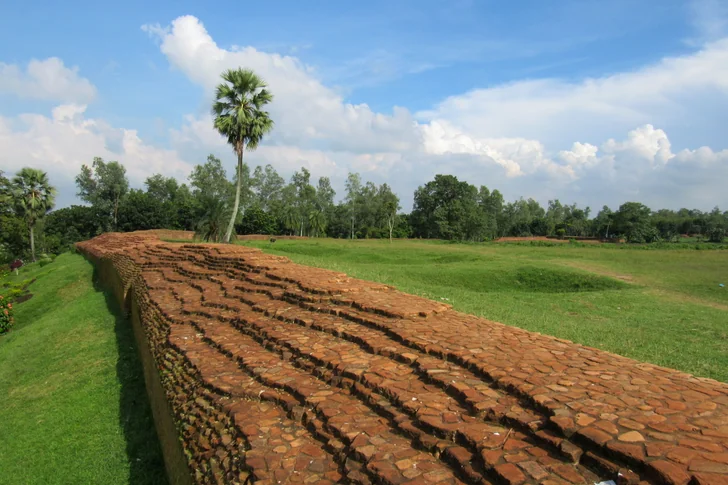
8. Mahasthangarh
Mahasthangarh in Bogura district contains the remains of ancient Pundranagara. An inscription found here places its history at least as far back as the third century BCE. Much of the visit involves foundations, mounds and the fortified site, so the appeal is tracing an ancient city rather than entering a collection of standing buildings. Consider the archaeological ground and the museum as separate parts of your plan, and check the museum's opening arrangements before travelling specifically for its displays.
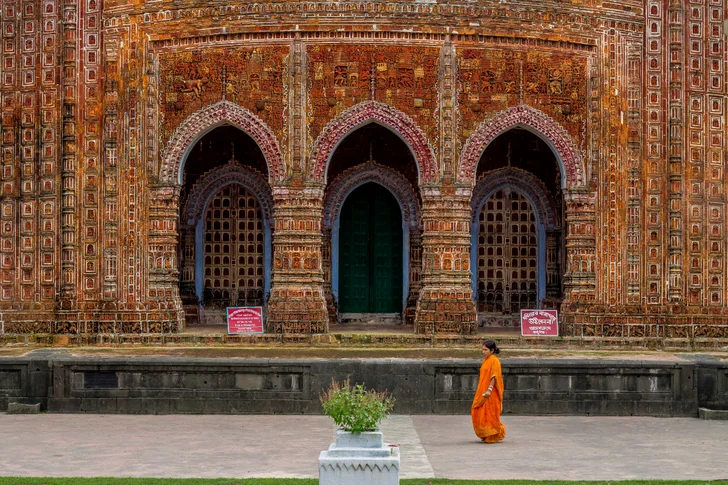
9. Kantajew Temple
Kantajew, also known as Kantanagar or Kantaji Temple, is an eighteenth-century brick Hindu temple in Dinajpur district. Its terracotta-covered walls reward a closer look than a quick photograph of the whole building: the surface decoration is the main reason to spend time here. Its original nine spires were lost in the earthquake of 1897. Ask locally about access to worship areas and give religious activity priority over photography.
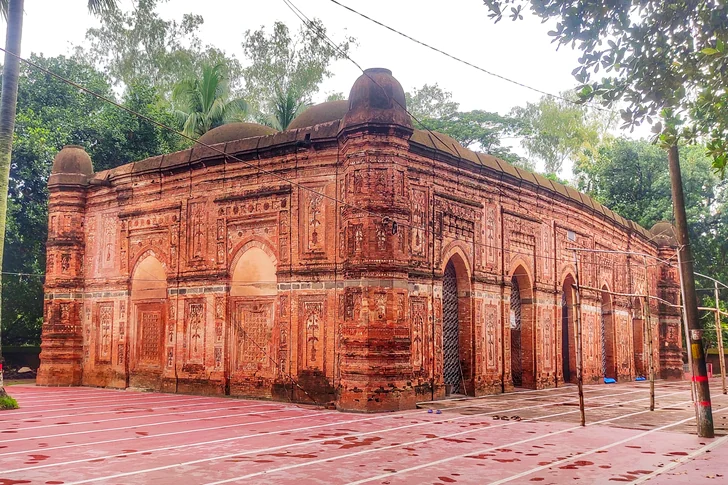
10. Bagha Mosque
Bagha Mosque lies southeast of Rajshahi, in Bagha. Built under Sultan Nusrat Shah in the early sixteenth century, it combines brickwork and terracotta ornament with a large adjoining pond. After Kantajew, it offers another way to look at decorated brick architecture, this time in a mosque. Focus on the historic building rather than assuming everything in the wider complex is equally old, and ask about access before entering areas used for prayer.
The northeast: Sreemangal and Lawachara
2 places
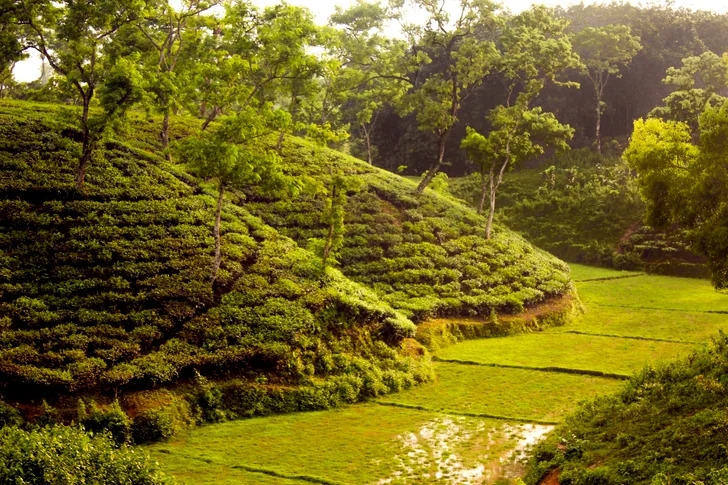
11. Sreemangal tea country
Sreemangal in Moulvibazar district is a base for seeing Bangladesh's tea-growing landscape. Rows of low tea bushes give the countryside a very different appearance from the archaeological sites of the north or the mangroves of the southwest. Plan this as time in a region rather than a guaranteed visit to a particular estate. Before walking into a plantation, agree access with its management; a view of tea fields is not evidence that the working property is open to visitors.
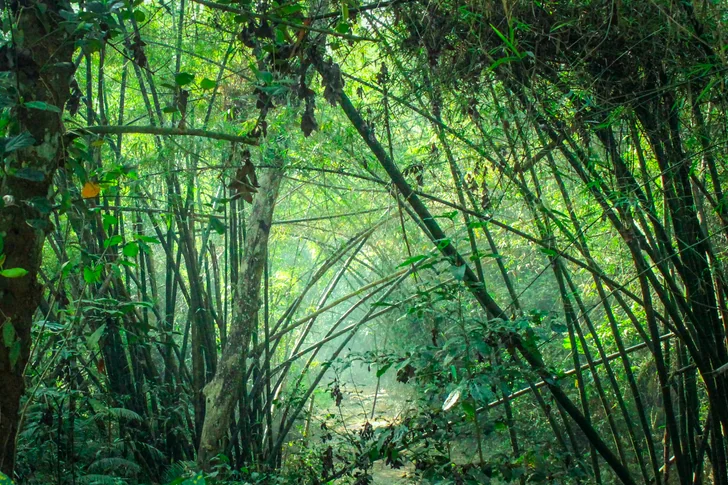
12. Lawachara National Park
Lawachara adds forest to a stay in the Sreemangal area. The national park contains semi-evergreen and mixed deciduous forest, contrasting with the ordered rows of nearby tea country. Make the forest itself the focus and allow for wildlife to remain unseen. Before setting out, check current access, trail arrangements and any guide requirements with the Forest Department or park staff.
The southeast: Cumilla, Chattogram and the coast
3 places
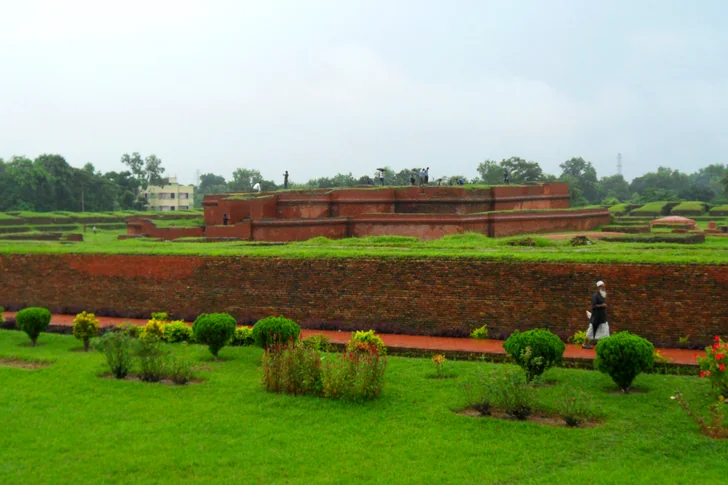
13. Mainamati–Shalban Vihara
Shalban Vihara, in the Mainamati archaeological area near Kotbari in Cumilla, preserves a square monastery plan with cells around a central temple. The nearby Mainamati Museum displays finds from the Lalmai–Mainamati hills, giving context to the ruins. Keep the monastery as the main outdoor visit and add the museum if its opening hours suit your journey. The two have separate entrances and ticket counters, so allow for both when planning the stop.
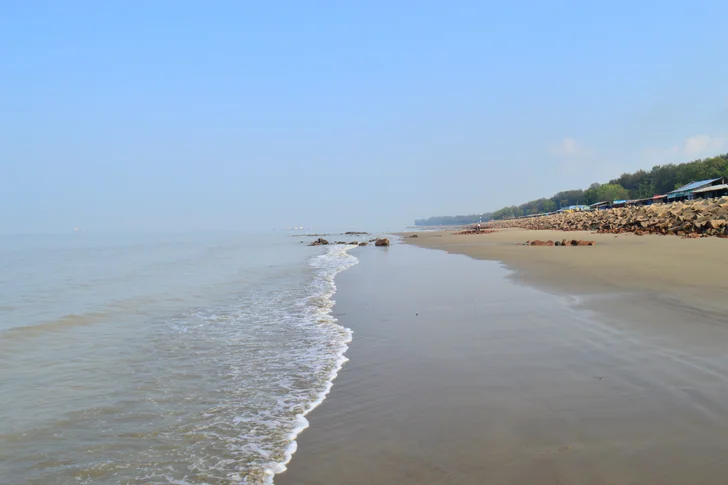
14. Patenga Beach
Patenga is a coastal outing from Chattogram, also known as Chittagong, near the mouth of the Karnaphuli River. Concrete protection and large stones shape this shore, so choose it for a waterfront visit rather than expecting an uninterrupted stretch of open sand. The district administration warns that swimming is risky. For a trip already passing through Chattogram, it offers a look at the meeting of the river and sea without adding a separate beach-resort stay.
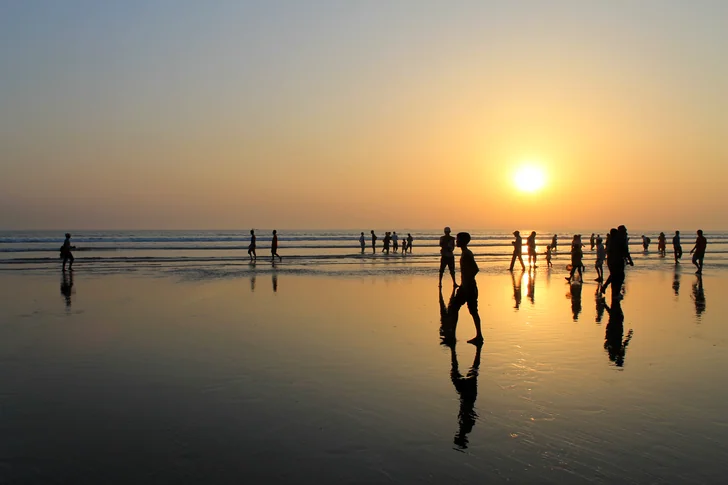
15. Cox's Bazar Beach
Cox's Bazar offers the broad sandy shore that distinguishes it from Patenga's protected waterfront. Set aside time for walking beside the Bay of Bengal. Before entering the water, follow current flags and local instructions; a red flag means staying out. Choose the part of the shore according to conditions that day, and ask about current supervised swimming areas rather than assuming every stretch has the same arrangements.
What to see in one, two or three days
One day in Dhaka: if opening days align, combine Lalbagh Fort with Ahsan Manzil and a look at Sadarghat. Let the palace's hours determine the order. If transfers make the programme too tight, choose the fort or palace rather than rushing all three; Friday's later palace opening changes the shape of the day.
Two days: keep the first day for Old Dhaka and set aside the second for Panam City in Sonargaon. Confirm Panam's own visitor arrangements before departure. This gives the street its own outing instead of making it an extra stop at the end of a capital-city tour.
Three days: spread the same area out: Lalbagh on the first day, Ahsan Manzil and Sadarghat on the second, and Sonargaon on the third, moving days around closures. Use the extra space for unhurried visits and transfers. The Sundarbans, Paharpur and Cox's Bazar are separate regional journeys.
For a longer trip, choose an extension: Bagerhat and a separately arranged forest journey for the southwest; an archaeological and terracotta itinerary for the north; Sreemangal with Lawachara for tea landscapes and forest; or Cumilla, Chattogram and Cox's Bazar for the southeast. The northern places are spread across different districts, so plan overnight stops and onward transport rather than reading their numbering as a day-trip circuit.
 Russia



 France
 Montenegro
 Hungary
 Venezuela